Khe Sanh Combat Base
Site of the 77-day 1968 siege that became a turning point in American public opinion. Now a small museum on the original airstrip, deep in the Quảng Trị highlands.
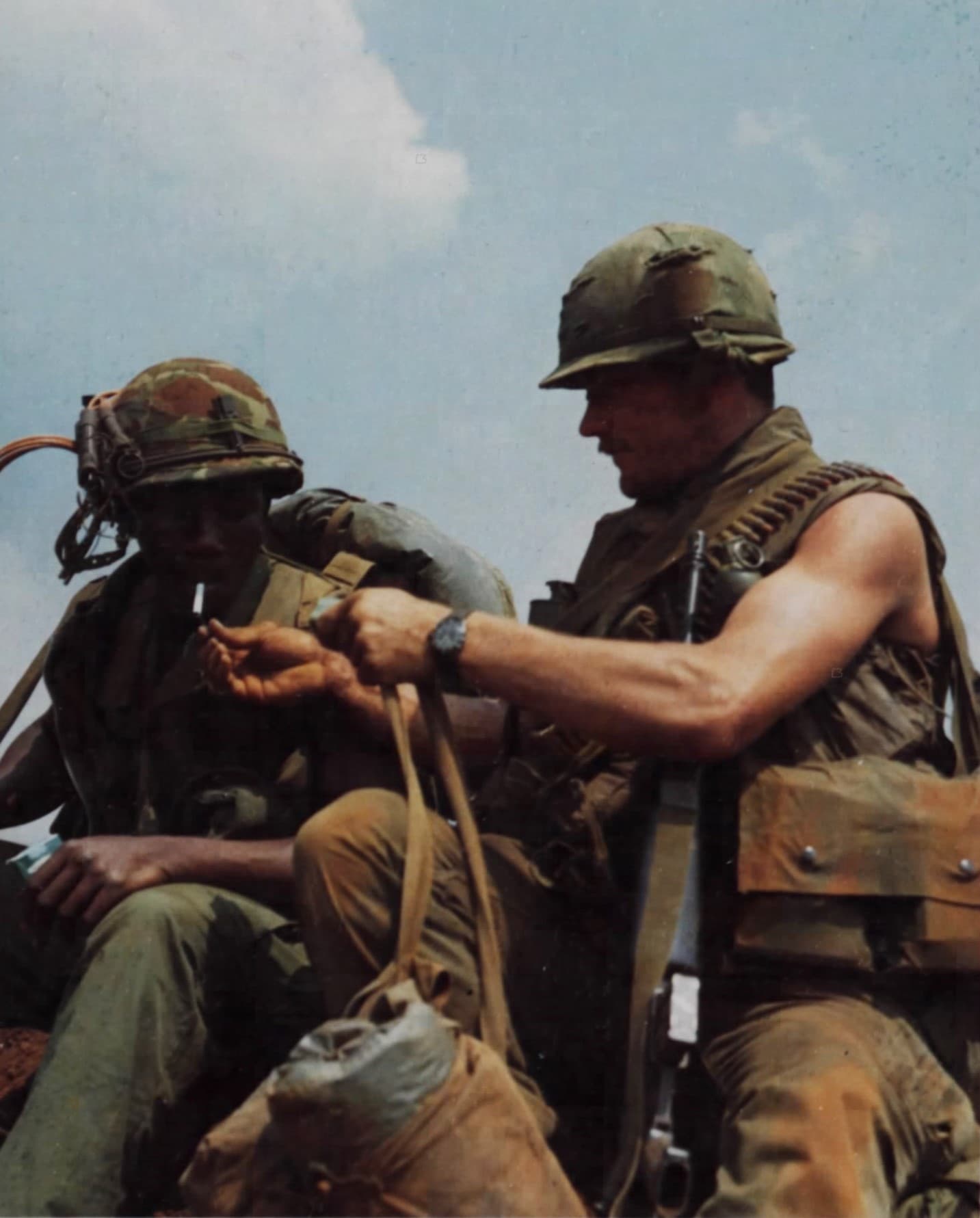
Khe Sanh combat base sits in the highlands of Quảng Trị province, 60 km west of Đông Hà and 25 km from the Lao border. From January to April 1968, ~6,000 US Marines defended the base against an estimated 20,000+ NVA troops — a 77-day siege that became one of the most-watched battles of the war.
Today the base is a small museum and memorial on the original red-clay airstrip. The hills around still show their scars.
What's there
- Airstrip — the original Marston-mat-paved airstrip, now mostly red dirt.
- Memorial to the Vietnamese and American dead.
- Small museum with photographs, artefacts (helmets, rations, mortar shells, parts of downed aircraft), Vietnamese-perspective narration.
- Restored bunker — concrete shelter where you can stand inside.
- CH-47 helicopter and a C-130 transport — preserved on display.
- Surrounding landscape — bare hills that were defoliated and bombed; vegetation has regrown but the topology still shows the scars.
It's compact — 45 minutes covers the essential walk.
A brief history
Khe Sanh was a US Special Forces base from 1962, expanded into a major Marine combat base in 1967 to monitor the Hồ Chí Minh Trail supply corridor in adjacent Laos.
In January 1968, the NVA encircled and besieged the base. For 77 days the Marines held out against artillery, mortar, sapper attacks, and ground assault — supplied by air drops as the C-130s flew through anti-aircraft fire to the airstrip.
The strategic interpretation has been debated since:
- The American military view: Khe Sanh was a successful defense that tied down NVA forces who couldn't reinforce the Tet Offensive elsewhere.
- The Vietnamese military view: Khe Sanh was a diversion — North Vietnamese command never seriously intended to take the base, but used the perceived threat to draw American forces out of the cities, enabling Tet.
- The siege killed an estimated 730 American Marines and the official Vietnamese figure for North Vietnamese casualties is 5,500+ (likely understated).
Two months after the siege ended, the Americans abandoned and demolished the base.
How to get there
| Option | Notes |
|---|---|
| DMZ day tour from HuếHuế (Hue)hwayFormer imperial capital of Vietnam under the Nguyễn dynasty, known for its citadel, royal tombs, and refined cuisine. | Standard inclusion ($40–60) |
| Private car from Huế | ~3 hr each way; more flexible |
| From Đông Hà | 60 km west on Route 9; 1.5 hr drive |
| Self-drive motorbike | Possible via Route 9; remote terrain |
Khe Sanh is the westernmost stop on most DMZ tours; some visitors do the eastern stops (Hiền Lương Bridge, Vĩnh Mốc) only, skipping Khe Sanh to save time. If you have the day, Khe Sanh adds historical depth.
When to visit
- Year-round accessible.
- March–April: dry, comfortable, the most visited window.
- September–November: avoid — heavy typhoon season closes the road.
- Summer (June–August): hot and humid; the upland location helps.
Practicalities
- Entry fee: 30,000 VND.
- Distance: small site, walking only.
- Limited shade — bring a hat.
- Time on site: 45 minutes to 1.5 hours, depending on interest.
What it feels like
Khe Sanh is remote and quiet. The museum is modest. The landscape is silent in a way that resonates differently from Củ Chi or Vĩnh Mốc — those sites are surrounded by villages and life; Khe Sanh sits on a defoliated hill with mountain views and very little human noise.
For visitors who've read about the siege, standing on the actual airstrip is significantly more powerful than the museum itself.
Pairing
- DMZ tour combination: Hiền Lương + Vĩnh Mốc + Khe Sanh + Trường Sơn cemetery (full day).
- Quảng Trị stops: La Vang Basilica (Catholic pilgrimage site), Đông Hà.
- Lao border crossing at Lao Bảo: 30 km further west — for travellers continuing to Savannakhet.
Honest take
Khe Sanh is the most remote and least-visited of the major DMZ war-heritage sites. For travellers with a war-history focus, it's essential. For travellers fitting Vietnam war heritage into a broader itinerary, the choice is: include Khe Sanh and skip something else, or stick to the eastern DMZ stops + Củ Chi + War Remnants Museum and consider that sufficient.
If you do include it, the long road journey is part of the experience — empty highway through landscape still scarred by what happened there.
Frequently asked questions
How long does a visit to Khe Sanh Combat Base take?
Is Khe Sanh worth including on a DMZ tour from Hue?
When is the best time to visit Khe Sanh?
Continue reading
Comments
No comments yet.