Traffic Safety in Vietnam
Road accidents — most commonly motorbike — are the leading cause of serious injury and death for foreigners in Vietnam. How to stay out of the statistics.
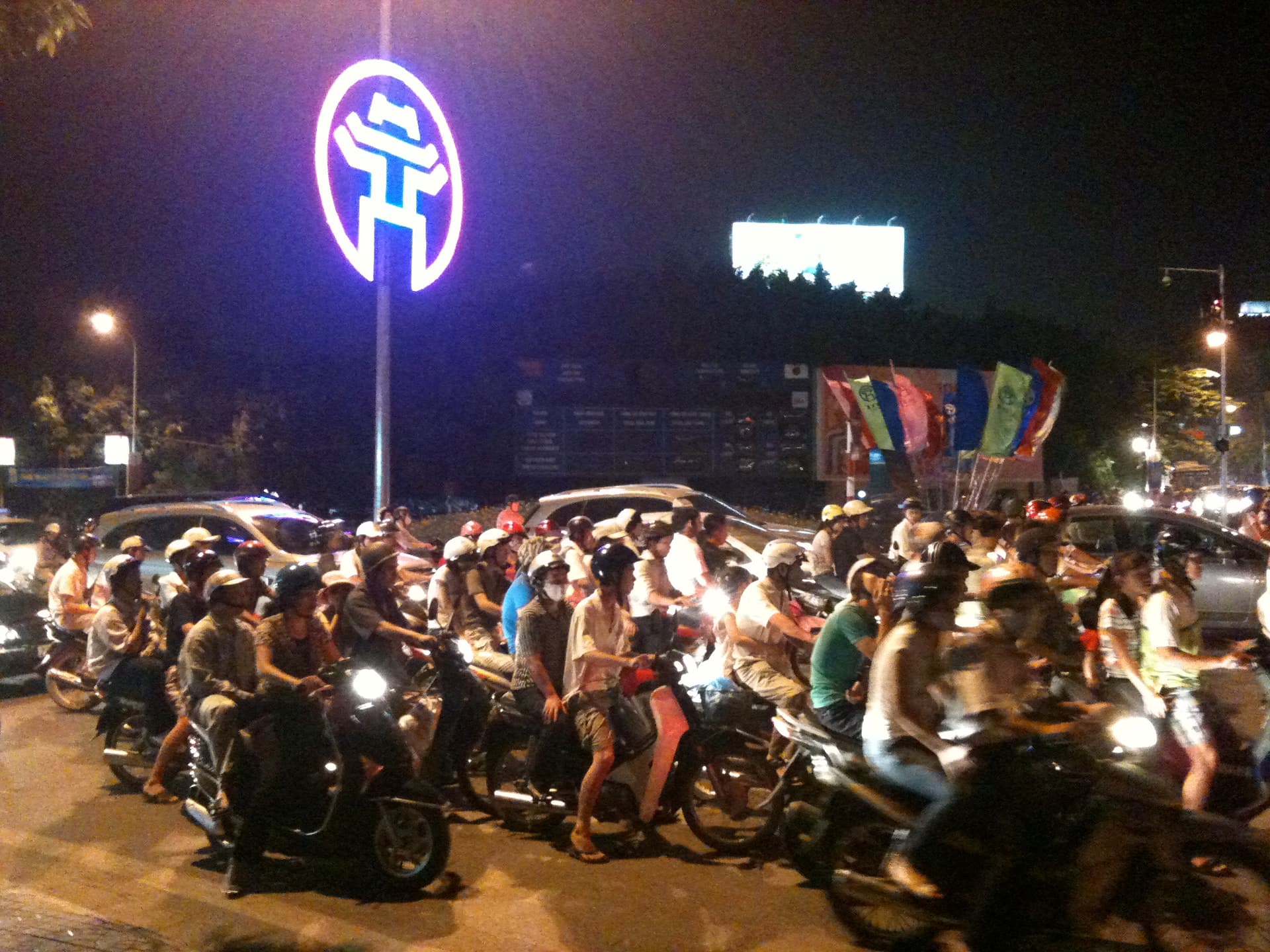
The single biggest health risk to foreigners in Vietnam is not malaria, dengue, or food poisoning. It is the traffic. Specifically, it is motorbikes. Embassy data from multiple countries consistently puts road accidents — most commonly involving motorbikes ridden by tourists — as the leading cause of death and serious injury for their citizens in Vietnam.
This is not a reason to avoid bikes if you actually know what you are doing. It is a reason to take the risk seriously.
For broader rental logistics, see motorbike rental and common rental deposit scams.
What actually happens
The typical accident is not the cinematic head-on collision. It is one of three patterns:
- Solo loss-of-control at low to moderate speed — gravel, oil, wet manhole cover, sudden braking — resulting in road rash, broken collarbone, and the side of the head meeting tarmac.
- Right-of-way assumption — a tourist assumes a side-street rider will yield because that is how it works at home. They do not. T-bone.
- Long-distance fatigue — Ha Giang loop, Hai Van Pass, Mui Ne dunes — a full day on a bike on roads you do not know, in heat you are not used to, and concentration drops in the last hour. Most serious accidents on these routes happen in the late afternoon.
The injuries are predictable: road rash (often badly infected by the time it gets treated), fractures (collarbone, wrist, ankle), head injuries, and — for the unlucky minority — spinal or fatal.
The legal stuff that matters
Helmets are legally required for rider and passenger. Police do enforce this with on-the-spot fines. The "helmets" sold at souvenir shops for 50,000 VND are decorative plastic and will protect you from approximately nothing. Spend 800,000 VND or more on a real helmet — full-face if you can stand the heat — at a proper shop (Royal Helmet, Andes, GRS, AGV). A good helmet is the single highest-leverage safety purchase you will make in Vietnam.
Alcohol is zero tolerance. Since 2020 Vietnam has had effectively a 0.00 BAC limit for any motor vehicle. Police set up checkpoints, especially in HCMC and Hanoi in the evenings. Penalties are large fines and bike confiscation. More importantly, a drunk crash voids your travel insurance and gets you arrested. If you drink, take a Grab or Grab/Be/Xanh SM.
Licence. Technically you need a Vietnamese licence or a 1968-convention International Driving Permit (Vietnam does not recognise the 1949 IDP). In practice police rarely check tourists on small-displacement bikes, but if you crash and have no licence, insurance refuses the claim. This matters enormously.
How traffic actually flows
Vietnamese traffic looks like chaos and is in fact a fluid, slow-speed system based on a few unwritten rules:
- Ride on the right, but expect bikes on the wrong side, especially near junctions and on short trips.
- The flow has priority — bigger flows beat smaller flows. A side street merging into a main road yields, but does so by slowly extruding into the flow rather than stopping.
- Eye contact at junctions is the negotiation. You signal intent with body language and slow movement, not horns.
- Horns are used to say "I am here," not "I am angry." Tap them lightly when overtaking or approaching a blind corner.
- Look right at junctions — that is where the next bike will come from.
- Buses and trucks typically win. Get out of their way.
- Predictability beats speed. Move slowly and consistently and the traffic flows around you.
Defensive riding rules of thumb
- Speed limits. Inner-city is generally 40 km/h, urban roads 50, intercity main roads 60–80. Stay under the limit, not at it.
- Assume rarely that anyone has seen you. Especially at night.
- Long sleeves and trousers. Even when it is 33°C. Gravel rash on a forearm is a six-week problem; on a thigh it is worse. Cheap textile riding jackets are sold at every motorbike shop.
- Closed-toe shoes. Flip-flops are the second-most-common preventable injury after no helmet.
- Sunglasses or visor. Insects and grit in the eye at speed cause crashes.
- Ride sober and rested. Pull over if you feel even slightly fuzzy.
- Watch the road, not the view. On scenic routes, stop and look.
Specific dangerous routes
- Ha Giang loop. Genuinely spectacular three- to four-day mountain route. Also where most tourist motorbike deaths in the north happen. Steep drops, gravel, weather changes, and exhausted riders on rented manual bikes they are not used to. If you are not confident on a manual bike on steep mountain roads, take it on an easy-rider tour with a local driver. There is no shame in this.
- Hai Van Pass (Hue–Da Nang). Beautiful, busy with trucks, blind corners. The road surface is mostly good but the descents are steep. Stay on the inside of corners.
- Mui Ne and beach areas. Tourist density plus sand on the road plus end-of-day drink culture means a higher accident rate than the actual roads warrant.
- Inner-city HCMC and Hanoi rush hour. Crashes here tend to be low-speed and bruising rather than fatal, but they are very frequent.
If you crash
- Stop and stay calm. Vietnamese drivers and bystanders are generally helpful, not hostile.
- Move bikes and yourselves out of traffic if you can do so safely.
- Take photos of the scene, bikes, plates, and any injuries.
- Exchange contact details with the other party and any witnesses.
- Do not pay cash on the spot for a "settlement" before you understand what happened — see scams for related issues.
- Get to a proper hospital — for anything beyond a graze, go to a private international hospital, not the nearest commune clinic. See hospitals by city.
- Contact your insurer within the timeframe they require — usually 24 hours.
- Get road rash cleaned properly. It infects faster than you would think in this climate. Antibiotic ointment, daily redressing, watch for fever.
The single best thing you can do
If you have rarely or not ridden a motorbike before, do not learn in Vietnamese traffic. Take a one-day training course (several agencies in HCMC and Hanoi run them for beginners), or stick to Grab and taxis. The view from the back of a motorbike taxi is the same as from the front, and the survival rate is significantly higher.
Frequently asked questions
Do I need a licence to ride a motorbike in Vietnam?
What kind of helmet should I buy?
What is Vietnam's drink-driving law?
Which routes tend to carry higher risk for tourists?
What should I do immediately after a crash?
How does traffic flow work in Vietnamese cities?
Continue reading
Comments
No comments yet.