An Giang: Sam Mountain, Châu Đốc and the Cambodian Border
The Mekong's western frontier — pilgrimage to Bà Chúa Xứ shrine on Sam Mountain, floating villages, Cham Muslim communities, and the land border to Cambodia.
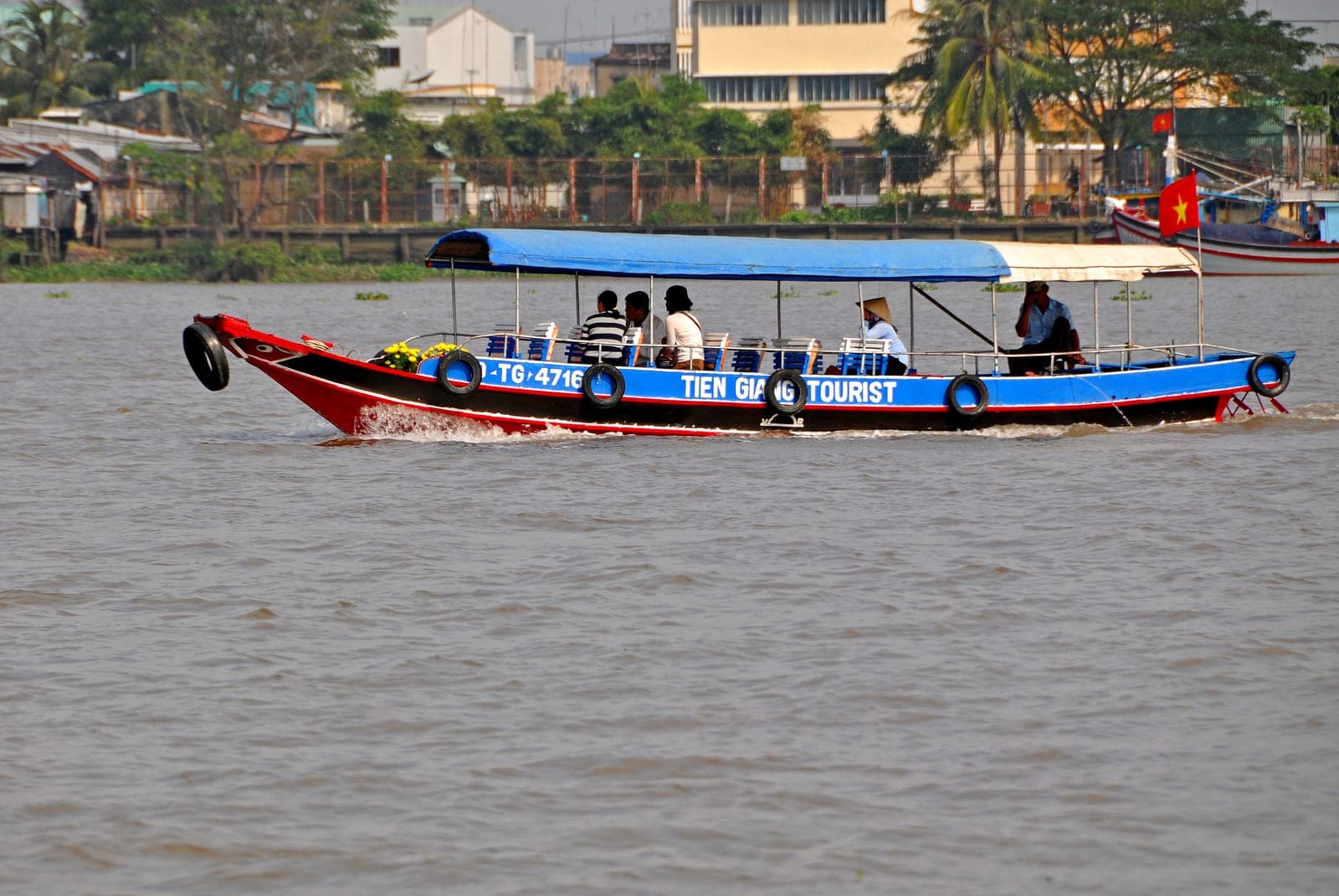
An Giang is one of the most culturally layered provinces in Vietnam — flat Mekong farmland giving way to the unexpected isolated peaks of the Bảy Núi (Seven Mountains), the most-visited pilgrimage shrine in the south, a substantial Cham Muslim population, and a major land crossing to Cambodia.
The tourist hub is Châu Đốc city, not the provincial capital Long Xuyên. Most visitors come specifically for Sam Mountain or as an overland route between Vietnam and Cambodia.
What's distinctive
Bà Chúa Xứ shrine and Sam Mountain
The Lady of the Country (Bà Chúa Xứ) shrine at the foot of Sam Mountain (Núi Sam) is one of the most-visited religious sites in Vietnam — an estimated 2 million pilgrims a year, mostly from southern Vietnam and the diaspora.
The original stone figure of the goddess sits in a small shrine, rebuilt in elaborate style in 1972 and continually expanded since. The annual Bà Chúa Xứ Festival (lunar 23rd–27th of the 4th month, roughly May/June) brings hundreds of thousands of devotees.
Sam Mountain itself (284 m) has hiking paths, the Tây An Pagoda, Thoại Ngọc Hầu tomb, and good views over the Cambodian border.
Châu Đốc floating houses
Châu Đốc river is lined with stilt houses and houseboats, many of which are also fish farms — the household sits on top, the farmed fish swim in cages below. Boat tours from Châu Đốc waterfront take you through the floating village.
Cham Muslim villages
Communities of Cham (sometimes called Cham Muslim or Bani) live on river-bank villages around Châu Đốc — most visibly at Châu Giang. Mosques rather than pagodas. The Cham have lived in the area for centuries and have a distinct language, dress, and cuisine.
Tà Pạ stone temple area
About 1 hour southwest of Châu Đốc — the Tà Pạ pagoda, Khmer-style, sits atop a hill above the seasonally-flooded fields. Especially photogenic in the rainy season when the fields below are mirror-like.
Tràm Chim alternative
Some travellers also visit Đồng Tháp province's Tràm Chim National Park (sarus cranes) from An Giang as a side trip.
How to get there
From HCMC: 6 hours by bus or car. From Cần Thơ: 3 hours west by bus.
No flights to An Giang.
From Phnom Penh, Cambodia: bus to the Vĩnh Xương / Kaam Samnor border, then boat or bus to Châu Đốc. This is one of the most popular Vietnam-Cambodia overland crossings (especially the fast boats via Mekong from Phnom Penh to Châu Đốc).
When to visit
- December–April: dry season, comfortable for hiking Sam Mountain.
- September–November: high water — Tà Pạ and the floating villages at their best.
- May/June Bà Chúa Xứ Festival: extraordinary cultural experience but accommodation books out months ahead.
Where to stay
- Victoria Châu Đốc Hotel — river-front colonial-style, mid-to-upper range.
- Murray Châu Đốc Hotel — newer, central.
- Châu Phố Hotel — budget-to-mid-range.
- Long Xuyên has a handful of business hotels if you're transit-stopping there.
Food
- Bún cá Châu Đốc — turmeric-yellow fish vermicelli with snakehead fish; Châu Đốc's signature dish.
- Mắm Châu Đốc — fermented fish, the most concentrated source of fish sauce variants in Vietnam. The market on the riverfront has whole stalls dedicated to types of mắm.
- Cham specialties in Châu Giang — beef curries with Indian influence, sticky-rice cakes wrapped in palm leaves.
- Thốt nốt — palm sugar; the syrup, hardened candy, and palm-juice drinks are local.
Practical: the Vĩnh Xương / Kaam Samnor border
- Boat ferries from Châu Đốc to Phnom Penh take 5–6 hours.
- Several operators (Hang Chau, Blue Cruiser, Sora) run scheduled service.
- Visa-on-arrival available at the Cambodian border for most nationalities.
- A genuinely scenic alternative to the bus crossing at Mộc Bài.
Honest take
An Giang is one of the most distinctive provinces in the south — pilgrimage shrine, floating villages, Cham culture, Khmer mountain temple, Cambodian border. Worth 2 nights in Châu Đốc as the standout endpoint of a Mekong itinerary.
Quick verdict
An Giang is Vietnam's spiritual gateway to Cambodia — a layered Mekong province where 2 million annual pilgrims visit the Bà Chúa Xứ shrine on Sam Mountain, houseboats and fish farms define the river landscape, and distinct Cham Muslim villages preserve centuries-old culture. Expect a slow-paced, intimate region that rewards staying put in Châu Đốc rather than rushing through.
Best for / not ideal for
Best for:
- Solo travellers and backpackers crossing overland into Cambodia (Phnom Penh ferries depart Châu Đốc daily).
- Cultural explorers interested in Cham Islam, Khmer temples, and Vietnamese pilgrimage traditions beyond the tourist trail.
- Slow-travel photographer-writers capturing river life, morning mist on floating villages, and off-season Buddhist festivals.
Not ideal for:
- Travellers seeking beaches, nightlife, or high-paced tourism infrastructure.
- Those on ultra-tight budgets uncomfortable with modest guesthouses or navigating Grab/local transport; English signage is sparse outside Châu Đốc.
How long to stay
Châu Đốc deserves 2–3 nights as a proper base: one day for Sam Mountain hiking and the Bà Chúa Xứ shrine, one for floating villages and Cham villages by boat, and a buffer day for Tà Pạ or Trà Sư wetland exploration if weather permits. A single night works as an overnight transit stop en route to Cambodia, but you'll miss the slower rhythms that define the province.
Climate by month
November–February offers the dry season's clearest skies and most comfortable Sam Mountain hiking (19–24°C mornings, 28–31°C afternoons). May–October is wet and humid but transforms the rice fields into mirror-like reflections and fills the Mekong with pilgrims during May/June's Bà Chúa Xứ Festival — book accommodation 2–3 months ahead if attending.
Day trips from here
- Châu Đốc floating villages — boat tours depart 7–8 a.m., return by noon; fishpond tours 250k–400k per boat.
- Cham villages at Châu Giang — mosque visit + lunch at a local curry stall, 90 minutes by Grab or guided tour (350k–500k).
- Tà Pạ pagoda and stone temple — 1.5 hours southwest; best visited September–November when fields flood.
- Trà Sư floating forest — 30 km north; dawn bird-watching boat tours (4–6 a.m., 350k–600k per person, book overnight).
- Đồng Tháp's Tràm Chim National Park — sarus crane sanctuary, 1.5 hours northeast by tour or car rental.
Local transport
Grab operates reliably in Châu Đốc from 5 a.m.; expect 15k–35k for in-city rides and 200k–400k for half-day rentals to outlying villages (driver-negotiated; agree rate beforehand). Motorbike taxis (xe ôm) are 10k–20k but require comfort with unpadded seats and no helmets for shorter guests. Most hotels arrange private drivers or English-speaking guides at 400k–600k daily. Boat tours to floating villages and Cham villages book through your hotel reception (180k–300k lunch included) or walk to the riverfront and negotiate with mooring operators (100k–250k for 2–3 hours, 2–6 person groups). The Vĩnh Xương border ferry to Cambodia (5–6 hours, 400k–800k) runs daily; confirm operators (Hang Chau, Sora) the evening before.
Frequently asked questions
How many pilgrims visit the Bà Chúa Xứ shrine on Sam Mountain?
Can you cross into Cambodia from An Giang, and how?
How long should I stay in Châu Đốc?
Continue reading
Comments
No comments yet.