Footwear and Garments: Vietnam, the World's Second-Largest Exporter
Vietnam is the world's second-largest exporter of both garments and footwear. Nike, Adidas and Puma have anchored the sector since the late 1990s.
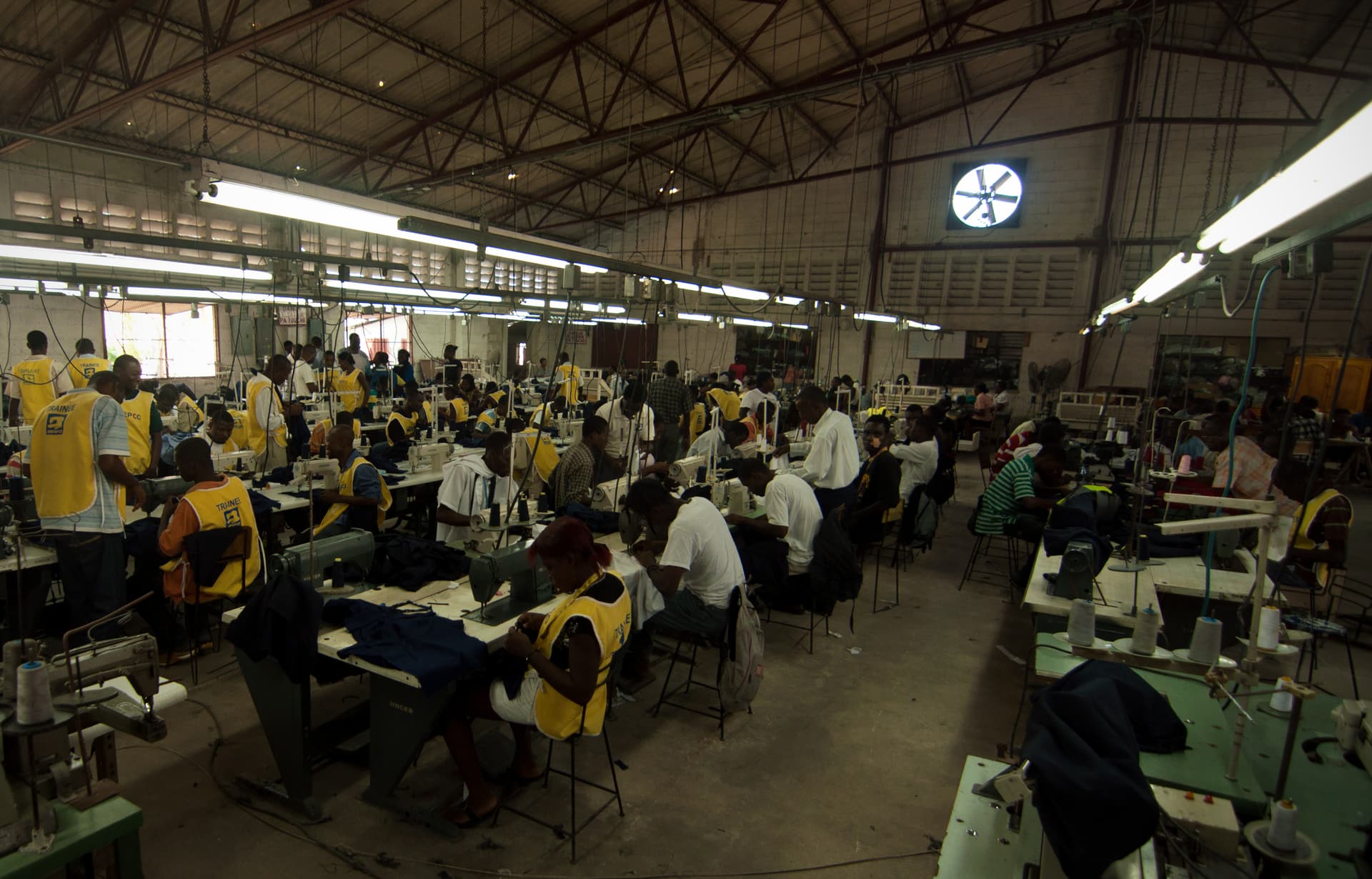
Garments and footwear remain Vietnam's two most labour-intensive export sectors, employing around 4 million people between them. In 2025 they shipped roughly 45 billion US dollars of garments and 22 billion US dollars of footwear, making Vietnam the second-largest exporter of both worldwide, behind China and ahead of Bangladesh and Indonesia respectively.
What it is / Background
The sector grew out of the state-owned textile combine Vinatex in the early 1990s and exploded after the 2001 US to Vietnam Bilateral Trade Agreement removed quotas. Nike has produced in Vietnam since 1995 through contract manufacturers, and Adidas since 1996. By 2010, Vietnam had overtaken China as Nike's largest single-country source of footwear, and as of 2025 produces roughly half of all Nike-branded shoes.
The shift accelerated with the 2018 to 2024 supply-chain diversification trend, as buyers looked for hedges against China-specific tariff and political risk. CPTPP from 2018 and EVFTA from 2020 brought significant tariff preferences into Japan, Canada, the UK and the EU.
Current state
Garment exports in 2025 reached about 45 billion US dollars, with the US taking roughly 45 per cent, the EU 18 per cent, Japan 12 per cent, Korea 8 per cent and the UK 4 per cent. Footwear exports of around 22 billion US dollars follow a similar geographic mix.
Domestic value added in garments remains modest at roughly 50 to 55 per cent because most fabric is imported (mainly from China and Korea). Local textile production cannot yet meet EVFTA "yarn forward" or CPTPP "fabric forward" rules of origin for the full preference, which has spurred new fabric mills in Nam Dinh, Hai Duong and Tay Ninh.
Key players / Major firms
Contract manufacturers (mostly Taiwanese and Korean owned, with Vietnamese suppliers): Pou Chen, Feng Tay, Hong Fu and Chang Shin in footwear; Eclat Textile, Far Eastern New Century, Hansae, Hansoll, Youngone and Crystal Group in garments. Together these firms operate hundreds of plants across Binh Duong, Dong Nai, Long An, Thanh Hoa, Hai Phong and the Mekong delta provinces.
Brand buyers: Nike, Adidas, Puma, Under Armour, Skechers, New Balance, Decathlon and Asics in footwear. In garments, Uniqlo, H and M, Zara (Inditex), Gap, Levi's, Ralph Lauren, Lululemon, Patagonia, Marks and Spencer, Primark and Walmart private label.
Domestic firms: Vinatex (the listed holding for what was the state combine), TNG Investment, May 10, Garmex Saigon, Phong Phu and Thanh Cong Textile. Footwear-side domestic brands such as Biti's and Ananas serve mainly the domestic market.
What's coming / Outlook
Wage growth of 7 to 9 per cent per year is squeezing low-end orders toward Bangladesh, Cambodia and Indonesia, and buyers are responding by automating cutting and stitching where possible. The big strategic question is whether Vietnam can climb the value chain into branded design and own-label production.
Sustainability requirements from EU buyers, including the Corporate Sustainability Due Diligence Directive (CSDDD) and the Digital Product Passport from 2027, will require significant investment in traceability and lower-emission energy.
What this means for visitors and expats
Domestic factory outlet shopping is concentrated around Saigon Square in HCMC and the markets of Tan Binh and Hanh Thong Tay; deep cuts on branded surplus stock are available though authenticity varies. Tailored garments are still excellent value in Hội AnHội An (Hoi An)hoy ahnUNESCO World Heritage ancient town in Quảng Nam province, famed for its lantern-lit old quarter and tailor shops., with two- to three-day turnaround for shirts, suits and dresses.
For job seekers, foreign nationals are most often hired as sourcing-office managers, quality auditors and compliance officers for Western brands, with offices clustered around HCMC's district 7 and district 2.
Sector at a glance
Vietnam's footwear and garments sectors are among the country's largest employers and export drivers. Combined, they contribute roughly 8 to 10 per cent of merchandise exports by value and represent one of the oldest pillars of industrialisation since the mid-1990s. Both sectors have grown in tandem with foreign investment waves, trade liberalisation, and anchor orders from multinational brands seeking diversification away from China and other concentrated suppliers.
| Metric | Value |
|---|---|
| Approx. share of merchandise exports | 8–10% |
| Combined workforce | ~4 million (garments ~2.7M; footwear ~1.3M) |
| Annual growth (2022–2025) | 2–5% (varies by subsector) |
| Key production regions | Binh Duong, Dong Nai, Long An, Thanh Hoa, Hai Phong, Mekong delta |
| Primary export markets | USA (45%), EU (18%), Japan (12%), Korea (8%), UK (4%) |
Key companies and operators
| Company | Role | Notable details |
|---|---|---|
| Pou Chen | Footwear contract mfg | Taiwan-owned; Nike's largest Vietnam producer; ~300K pairs/day |
| Feng Tay | Footwear contract mfg | Taiwan-owned; Adidas, Nike, Puma contracts |
| Hansae | Garment contract mfg | Korean-owned; major offices in HCMC; Uniqlo, H&M orders |
| Eclat Textile | Garment contract mfg | Taiwan-owned; operates multiple plants across Red River delta |
| Vinatex | State-holding / domestic | Listed; largest domestic textile conglomerate; ~100K employees |
| TNG Investment | Domestic integrated | Vertical integration from spinning to finished garments; ~40K workers |
| Nike | Anchor buyer (footwear) | ~60% of Vietnam output is Nike-contracted; 22+ Vietnam factories |
| Uniqlo | Anchor buyer (garments) | ~500M USD annual Vietnam sourcing (approx.); supply offices in District 7 |
Workforce and wages
The typical workforce in footwear and garment factories ranges from entry-level machine operators and cutters to supervisors, quality-control staff and compliance officers. Entry-level wages (stitchers, folder, cutters) typically range from 250 to 350 USD per month as of 2026, with variation of 20–30 per cent between Ho Chi Minh City and smaller manufacturing hubs such as Vinh Phuc or Binh Duong. Experience and skill bonuses can raise mid-level wages (senior operators, checkers, line leaders) to 450–650 USD; senior roles such as production managers and quality engineers earn 1,000–1,800 USD monthly.
Wage growth has averaged 7 to 9 per cent annually over the past decade, driven by tight labour supply in manufacturing zones and rising living costs in major cities. Foreign staff (sourcing agents, compliance auditors, country managers) typically earn 2,500–5,500 USD or higher depending on role and brand office tier. Benefits including health insurance, shift bonuses and dormitory allowances are common in the larger contract factories.
Labour turnover remains a persistent challenge, with many workers moving between factories for marginal wage gains or leaving manufacturing altogether for service-sector roles in retail and hospitality. The shift toward automation in cutting and basic stitching is expected to flatten entry-level headcount growth even as skilled technical roles (pattern makers, CAD operators, equipment maintenance) grow in demand.
Trends and outlook
-
Continued automation in basic tasks: Buyers are investing in cutting-room automation and advanced sewing systems to offset wage inflation and improve consistency; this could absorb 5–15 per cent of low-skill roles over the next three years.
-
Yarn-forward and sustainability compliance: New fabric mills in Nam Dinh and Hai Duong are gradually shifting Vietnam's position on rules of origin (EVFTA "yarn forward", CPTPP "fabric forward"), allowing higher local value-add and preference duty rates; expect domestic yarn output to grow 10–15 per cent annually through 2028.
-
Diversification into higher-margin products: Athletic and performance apparel (moisture-wicking, smart fabrics) and specialty footwear (orthotic, eco-friendly) command 15–25 per cent higher margins than basics; brands are testing pilot volumes in these categories with existing Vietnam suppliers.
-
Digital traceability and decarbonisation: The EU's Digital Product Passport (2027) and CSDDD requirements are driving adoption of blockchain and supply-chain transparency tools; factories with certified renewable energy or water-recycling systems are gaining preference for new orders.
-
Geographic diversification within the region: Some orders are shifting to Cambodia, Laos and Myanmar to hedge Vietnam exposure; however, Vietnam's infrastructure and scale advantage mean the country is expected to retain 40–50 per cent of regional garment and footwear volume through 2030.
Risks and caveats
-
Geopolitical tariff volatility: US–China tensions and potential shifts in trade policy (US tariff caps, EU preferential rules) could rapidly alter order flows; factories reliant on a single buyer face sharp downside if that buyer pivots or imposes tighter pricing.
-
Wage-driven orders leakage: Continuous wage growth (7–9% annually) is pushing low-margin orders to lower-cost competitors; unless Vietnam can move upmarket into branded design or higher-value segments, headcount could stagnate despite GDP growth.
-
Labour supply and skills gaps: Migration to cities and rising education attainment means fewer workers accept factory roles; simultaneous need for CAD, automation and quality-systems expertise outpaces training capacity in vocational schools.
-
Climate and energy constraints: The Mekong delta (key garment hub) faces salt intrusion and water scarcity; electricity demand for spinning mills and dyeing operations is rising at a pace outstripping renewable capacity, raising energy costs and regulatory risk.
For deeper data, see the FDI and manufacturing, Vietnam free trade agreements, and modern Vietnam pages, along with official sources cited in the frontmatter.
Related
Continue reading
Comments
No comments yet.