Vietnam's Free Trade Agreements: WTO, CPTPP, EVFTA, RCEP, UKVFTA
Vietnam is one of the most heavily networked trading nations in the world, with sixteen free trade agreements covering markets that account for roughly 60 per cent of global GDP.
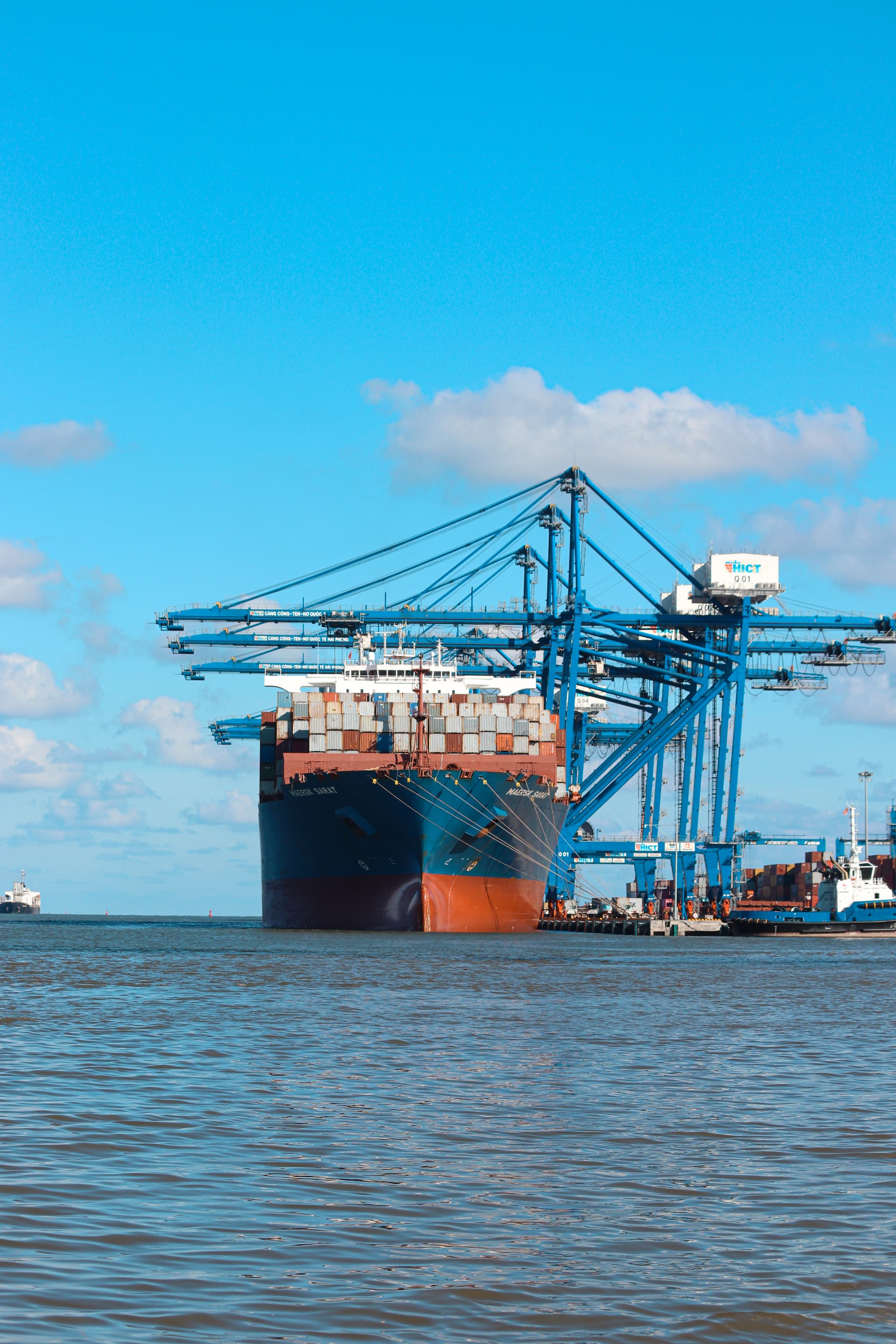
Vietnam pursues trade openness as a deliberate national strategy. As of 2026 it is party to sixteen free trade agreements covering more than 60 trading partners, with two more under negotiation. Together these agreements have helped lift goods exports from around 50 billion US dollars in 2007 to roughly 380 billion in 2025.
What it is / Background
The pivot started with the 2001 US to Vietnam Bilateral Trade Agreement, which normalised market access to the United States and triggered the first surge of FDI into garments and footwear. WTO accession followed in January 2007 after twelve years of negotiation, locking in tariff and services-market commitments and making Vietnam attractive to a much wider range of foreign investors.
Bilateral and regional deals proliferated thereafter, accelerating sharply during the US to China trade tensions of the late 2010s, which positioned Vietnam as a favoured "China plus one" alternative.
Major agreements in force
WTO membership (2007): general most-favoured-nation tariff treatment with all WTO members; bound services commitments.
ASEAN Trade in Goods Agreement (ATIGA) (consolidated 2010, in effect for Vietnam since 1995 via AFTA): near-zero tariffs across the ten ASEAN countries.
ASEAN-plus FTAs: separate ASEAN-wide deals with China (2010), Korea (2007), Japan (2008), India (2010), Australia and New Zealand (2010), and Hong Kong (2019).
Vietnam-Japan EPA (2009) and Vietnam-Korea FTA (2015): deeper bilateral deals on top of the ASEAN-plus frameworks.
CPTPP (Comprehensive and Progressive Agreement for Trans-Pacific Partnership, in force for Vietnam January 2019): 11 Pacific economies including Canada, Mexico, Peru, Chile, Japan, Australia, New Zealand, Singapore, Malaysia and Brunei. The UK acceded in late 2024.
EVFTA (EU-Vietnam FTA, August 2020): tariff elimination on roughly 99 per cent of tariff lines over a 7 to 10 year phase-in. The accompanying EVIPA investment protection agreement is still pending ratification by all EU member states.
UKVFTA (UK-Vietnam FTA, May 2021): bilateral continuity agreement after Brexit, with terms broadly mirroring EVFTA.
RCEP (Regional Comprehensive Economic Partnership, in force for Vietnam January 2022): 15 Asia-Pacific economies including all ASEAN, China, Japan, Korea, Australia and New Zealand. Unified rules of origin across the bloc.
Other bilaterals: Chile, Eurasian Economic Union, Israel (2023), and a framework deal with the UAE Comprehensive Economic Partnership Agreement signed 2024.
What's coming / Outlook
Active negotiations include an FTA with the EFTA bloc (Switzerland, Norway, Iceland and Liechtenstein), a Vietnam to Mercosur framework, and exploratory talks with Canada outside CPTPP for a deeper bilateral.
Compliance burden is the under-discussed cost. Rules of origin under CPTPP and EVFTA are strict (yarn-forward for garments, regional-value-content thresholds for electronics), and Vietnamese exporters often forgo preference for higher-input-content products simply because the paperwork is too complex. EU carbon-border adjustment (CBAM) from 2026 onwards is also reshaping export economics for steel, cement, aluminium, fertiliser, hydrogen and electricity.
What this means for visitors, expats and businesses
For importers buying from Vietnam into CPTPP, EU, UK, Japan or Korea markets, preferential tariffs (often zero) apply with a valid certificate of origin. Sourcing offices in HCMC and Hanoi handle the paperwork as a routine matter.
For consumers in Vietnam, EVFTA and UKVFTA gradually cut tariffs on European wine, cheese, cosmetics and cars; CPTPP has done the same on Japanese and Australian beef, fruit and wine. Korean and Japanese cars under VJEPA and VKFTA already enjoy reduced duties, which is one reason Toyota, Honda and Mazda dominate the new-car market.
Sector at a glance
Trade policy and FTA implementation is not a sector in the traditional sense, but rather a set of institutional frameworks that shape Vietnam's entire export economy. As of 2026, preferential tariff access via FTAs accounts for roughly 65–70 per cent of Vietnamese goods exports, concentrated in garments, footwear, electronics, machinery and agricultural products. The FTA architecture employs roughly 200–300 full-time dedicated officials across the Ministry of Industry and Trade, Ministry of Foreign Affairs, and Ministry of Finance, with a further 1,000+ customs brokers and trade-compliance consultants in the private sector. Annual trade growth under FTA partners averaged 8–12 per cent over 2020–2025, though individual agreements show variation: CPTPP-route partners grew at the higher end, while RCEP preferential usage remains modest owing to rules-of-origin complexity.
| Metric | Value |
|---|---|
| Share of exports under FTA preference (approx.) | 65–70% |
| Dedicated officials (public sector) | 200–300 |
| Private-sector compliance professionals | 1,000+ |
| Annual growth via FTA trade (2020–2025 average) | 8–12% |
| Key regions | CPTPP zone, EU, ASEAN, China |
| Main export markets | USA, EU, Japan, South Korea, China |
Key companies and operators
FTA implementation involves both public institutions and private service providers. Key players include the Ministry of Industry and Trade (policy coordination), General Department of Customs (rules of origin and preferential origin verification), major freight forwarders and logistics firms (certificate of origin facilitation), and export-oriented manufacturing firms that depend on preferential access.
| Name | Role | Notable Details |
|---|---|---|
| Ministry of Industry and Trade (MOIT) | FTA policy & negotiation | Coordinates all 16+ agreements; houses the FTA unit |
| General Department of Customs (GDC) | Origin verification & tariff collection | Approves/audits certificates of origin; enforcement |
| Deloitte Vietnam | Trade compliance advisory | CoO documentation, rules-of-origin mapping for exporters |
| FPT Trading Corporation | Garment & textile exporter | Supplies CPTPP-compliant apparel; manages origin tracking |
| Vinamilk | Agri-food exporter | Uses EVFTA/RCEP for dairy and derivative exports to EU & Asia |
| Samsung Vietnam | Electronics manufacturer | Major CPTPP user for components; regional-value-content tracking |
| Thai Binh Textile | Garment producer | Invests heavily in yarn-forward supply chains for CPTPP |
| Bergé & Associates Vietnam | Trade finance & logistics | Arranges preferential financing for FTA-route shipments |
| Frost & Sullivan Vietnam | Trade research | Market analysis for FTA-eligible sectors |
| VEFTA Consultants (boutique) | EU FTA specialist | EVFTA rule-of-origin compliance for SMEs |
Workforce and wages
Trade-policy and FTA-compliance roles span civil service, consulting, logistics and manufacturing quality-assurance. Entry-level customs brokers or trade-compliance officers in Hanoi and HCMC typically earn 1,200–1,500 USD per month (approx.) plus modest benefits. Mid-career specialists (5+ years), such as lead origin-compliance managers at export firms or senior trade consultants at Big Four firms, command 2,200–3,500 USD monthly plus performance bonuses, with variation by city and firm size. Senior roles—such as FTA unit heads at MOIT, customs risk-assessment directors, or trade-compliance directors at large exporters—range from 3,500–5,500+ USD per month in major cities, reflecting scarcity of expertise in rules-of-origin interpretation and tariff classification.
Wages vary materially between Hanoi and HCMC (HCMC typically 10–15 per cent higher), and further between public-sector stability (lower base, strong benefits) and private-sector pay-for-performance (higher upside, more volatility). Expat compliance specialists or auditors on assignment earn significantly more. The field has grown rapidly since 2019, driving competitive pressure for mid-level roles; retention challenges push firms to offer training in emerging FTA frameworks.
Trends and outlook
- RCEP utilization acceleration: Uptake of RCEP preferences remains low (5–10 per cent of eligible trade as of 2026) due to complexity, but technical capacity-building by ASEAN and increased digital certificate systems should drive adoption toward 20–30 per cent by 2028.
- EU carbon-border adjustment (CBAM): Phased in from October 2026, CBAM will create new compliance costs for steel, cement, and fertiliser exporters; Vietnamese producers are investing in carbon accounting and cleaner production to stay competitive on EVFTA routes.
- Digital certificates of origin: Most regional partners are advancing toward blockchain or API-based electronic certificates of origin to reduce fraud and paperwork; Vietnam's customs system is piloting systems to align with Singapore, Japan and Australia by 2027.
- Deeper labour/environment enforcement: CPTPP, EVFTA and RCEP all contain labour and environment chapters. Audits are increasing, pushing FTA-route exporters to upgrade workplace standards and environmental compliance, particularly in garments, footwear and chemicals.
- Bilateral supplementation: Active negotiations with EFTA, Mercosur and potential deeper Canada deals suggest Vietnam's strategy is to layer preferential access, reducing dependence on any single bloc or partner's policy shifts.
Risks and caveats
- Rules-of-origin complexity: Garment yarn-forward rules and electronics regional-value-content thresholds remain opaque and costly to verify; misclassification or margin errors can trigger tariff clawback and reputational damage, creating a "compliance tax" that small and medium exporters often cannot absorb.
- Political/trade-policy reversal: Future US or EU administrations could renegotiate CPTPP, EVFTA or CBAM terms; while unlikely in the short term, UK and EU CBAM expansion beyond 2026 and potential RCEP-bloc tensions add uncertainty to multi-year investment in FTA-oriented supply chains.
- Customs interpretation variance: Different customs agencies interpret rules of origin inconsistently; certificate denials or penalties sometimes reflect local discretion rather than agreed standards, creating unpredictable export delays and cost disputes.
- For detailed sourcing and official FTA texts, consult the related links in this article and the Ministry of Industry and Trade official announcements and FTA portal.
Related
Continue reading
Comments
No comments yet.