Vietnam's Banking System: State, Private and Foreign Banks
Vietnam has four big state-owned banks, a dozen mid-sized private joint-stock banks, and a small but growing foreign-bank presence, all heavily digital.
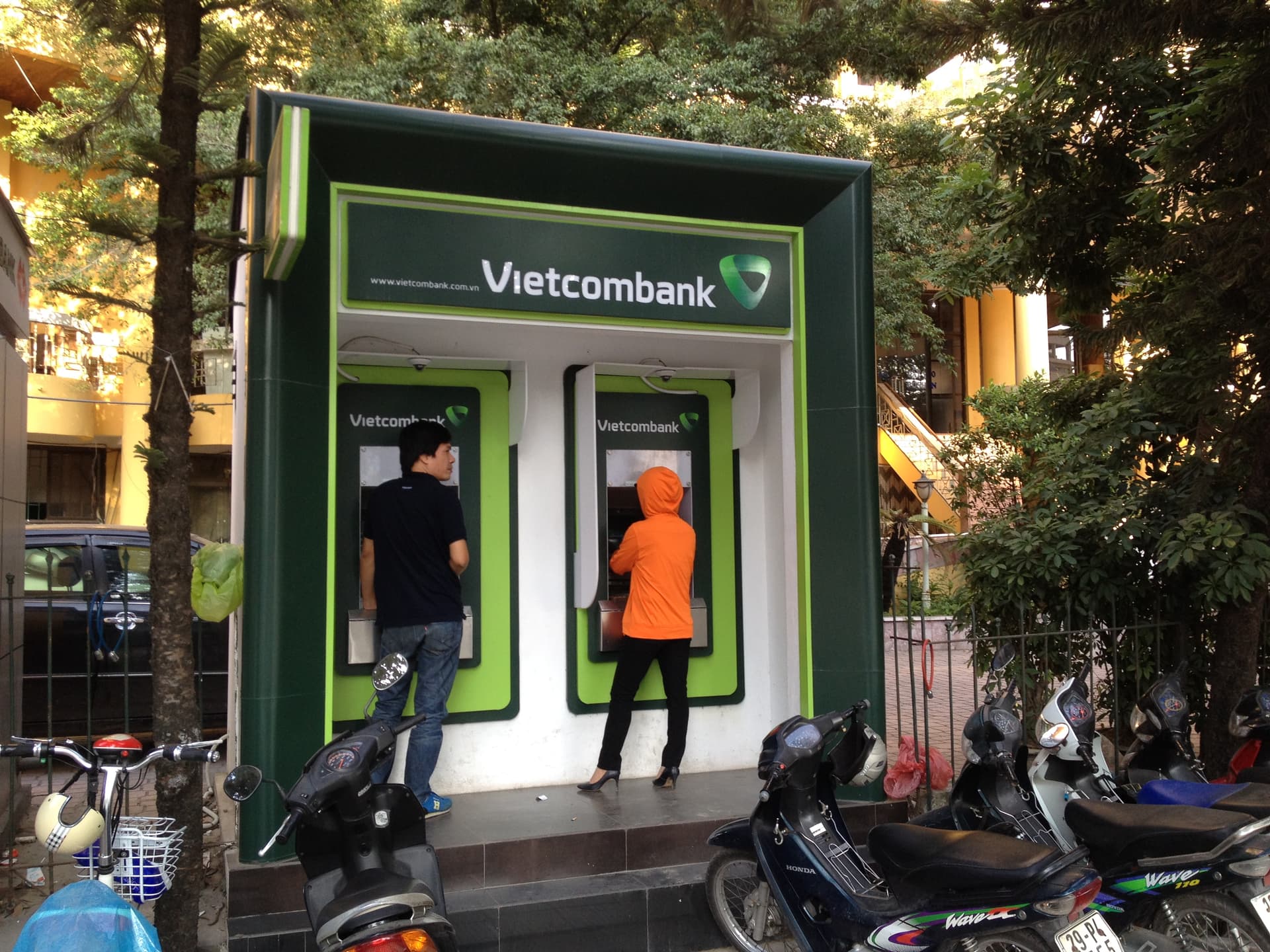
Vietnam's banking sector is dominated by four state-controlled commercial banks that together hold around 45 per cent of system assets, alongside roughly thirty private joint-stock banks and a handful of foreign-owned subsidiaries. Branch density is high in cities, and mobile banking has reached near-saturation among working-age adults.
What it is / Background
The modern two-tier banking system dates from 1990, when the monobank State Bank of Vietnam was split into a central bank and four specialist commercial banks (Vietcombank for foreign trade, BIDV for investment, Agribank for agriculture, VietinBank for industry and trade). Throughout the 1990s and 2000s, private joint-stock banks were licensed, several backed by state-owned enterprises or industrial conglomerates.
After the 2011 to 2015 sector clean-up that absorbed or restructured weak banks (the SBV bought three for a symbolic zero dong each), the system has been broadly stable. Non-performing-loan ratios at major banks are now in the 1 to 2 per cent range on official figures.
Current state
Total banking assets exceed 700 billion US dollars. Mobile banking and QR-code payments via VietQR have effectively replaced cash for urban under-40s. The most popular app, MoMo, has more than 30 million users for e-wallet payments; bank-native apps from Techcombank, VPBank and MB are equally heavily used.
Bank deposit rates in May 2026 sit around 4.5 to 5.5 per cent on twelve-month VND deposits at state banks, and 5.5 to 6.5 per cent at private banks. USD deposits earn zero by regulation, a policy designed to discourage dollarisation.
Key players / Major firms
State-owned tier: Vietcombank (the bluest of blue chips, market leader in cards and trade finance), BIDV (largest by assets), Agribank (rural network of over 2,000 branches), VietinBank (industrial lending).
Private joint-stock: Techcombank (premium retail and mortgages, backed by Masan-linked shareholders), ACB (conservative retail bank from HCMC), VPBank (consumer-finance leader via its FE Credit subsidiary, part-owned by Sumitomo Mitsui since 2023), MB Bank (military-linked, strong digital), Sacombank (broad retail), HDBank, SHB, OCB and TPBank.
Foreign-owned subsidiaries: HSBC Vietnam, Standard Chartered, Shinhan Vietnam (the largest foreign bank by branches, after absorbing ANZ's retail arm in 2018), UOB, Public Bank Berhad and Woori. Citi sold its consumer business to UOB in 2022.
What's coming / Outlook
The SBV is pushing a digital-banking framework that allows fully online account opening with biometric eKYC, already standard at the private banks. A long-discussed credit-scoring bureau using telco and utility data is expected to broaden access for thin-file borrowers. Basel III implementation is gradually being phased in across the larger banks.
Pressure points include exposure to real-estate developers after the 2022 to 2024 corporate-bond crisis, and the slow pace of state-bank equitisation, with Agribank still 100 per cent state-owned.
What this means for visitors and expats
For short visits, any Visa or Mastercard works at most ATMs; Vietcombank, BIDV and Agribank have the densest networks. For residents, opening an account requires a work permit or temporary residence card; Techcombank, VPBank and Shinhan are the most expat-friendly, with English apps and English-speaking staff at branches in district 1, district 2 and Tay Ho.
International transfers are easiest via Wise or Revolut into a local Techcombank or VPBank account; SWIFT into Vietcombank also works but with higher fees and slower turnaround.
Sector at a glance
Vietnam's banking sector is one of the country's most resilient service industries, underpinning rapid credit growth and financial inclusion across both urban and rural populations. As of 2026, the sector generates approx. 2.5–3 per cent of GDP and employs over 300,000 people across branches, back-offices and digital channels. The four state-owned banks remain the anchors, while private joint-stock competitors and foreign subsidiaries capture growing pockets of retail and corporate business.
| Metric | Value |
|---|---|
| Approx. share of GDP | 2.5–3% |
| Workforce | 300,000+ (approx.) |
| Annual growth (2023–2026) | 8–12% |
| Key region(s) | Hồ Chí Minh City, Hanoi, Hải Phòng; rural via Agribank network |
| Main export markets | N/A (domestic service); cross-border transfers via Wise, SWIFT |
Key companies and operators
| Name | Role | Notable details |
|---|---|---|
| Vietcombank (VCB) | State-owned, market leader | ~14% market share; cards, trade finance, FDI corridors |
| BIDV | State-owned, largest by assets | ~17% market share; investment banking, corporate lending |
| Agribank | State-owned, rural specialist | 2,000+ branches; 100% state-owned; agricultural credit |
| VietinBank | State-owned, industrial focus | ~8% market share; heavy industrial and trade exposure |
| Techcombank (TCB) | Premium private joint-stock | Masan-linked; retail mortgages, expat-friendly |
| ACB | Conservative private retail | HCMC-based; stable deposit franchise; ~3% market share |
| VPBank (VPB) | Consumer-finance leader | FE Credit subsidiary; part-owned by Sumitomo Mitsui (2023+) |
| MB Bank | Military-linked, digital-native | Strong mobile app; approx. 3% market share |
| Sacombank | Broad retail and SME | Post-2015 restructuring; recovering market share |
| Shinhan Vietnam | Largest foreign subsidiary | Absorbed ANZ retail (2018); English-speaking staff |
Workforce and wages
Vietnam's banking workforce spans three tiers. Entry-level tellers and customer-service staff in Hồ Chí Minh City earn approx. USD 400–600 per month (2026), rising to USD 700–900 in Hanoi; rural branches typically pay 10–15 per cent less. Mid-career analysts and loan officers earn USD 800–1,400, with private banks (Techcombank, VPBank) paying 15–20 per cent above state-bank peers in the same city. Senior managers and heads of retail at major banks typically range USD 1,800–3,500, plus housing and car allowances.
Technical roles (cybersecurity, data science, fintech architects) command a 30–50 per cent premium; a senior risk architect at a big-four state bank might earn USD 2,800–4,200 plus benefits. Most contracts include annual bonuses tied to deposit growth or loan origination, especially at state banks facing equitisation pressure. Foreign banks (HSBC, UOB, Shinhan) generally pay 10–25 per cent above local peers at equivalent seniority, though headcount is much smaller.
Wage growth has averaged 8–10 per cent annually since 2022, driven by digital-banking expansion and foreign bank competition. Turnover is highest among 2–4-year-tenure staff, who often move from state banks to higher-paying private competitors or fintech startups.
Trends and outlook
- Digital-first account opening: The SBV's eKYC framework is rolling out across the sector, making online account opening standard by 2027; this will accelerate lending to thin-file borrowers and SMEs with limited collateral.
- Fintech partnerships and open banking: Private banks and fintech platforms are integrating APIs; aggregator platforms (similar to Grab Financial) are reducing friction for consumer lending and micro-payments.
- Real-estate loan stress: Exposure to developers and property-backed collateral remains elevated after the 2022–2024 corporate bond crisis; expect a slow cycle of restructuring and NPL workouts through 2027–2028.
- State-bank equitisation, stalled: Agribank remains 100 per cent state-owned; VietinBank and BIDV are only 73 per cent and 75 per cent state-held respectively, but privatisation pressure is weak due to political and fiscal concerns.
- Basel III and capital ratios: Phased implementation will require larger banks to hold more capital; expect accelerated cross-border M&A (smaller banks absorbed by majors) and cost-cutting in regional branches.
Risks and caveats
- Property-sector contagion: If developer bankruptcies accelerate, collateral write-downs could spike NPL ratios from their reported 1–2 per cent to 4–5 per cent, eroding profitability across all four big-four banks simultaneously.
- Regulatory volatility: The SBV has pivoted lending caps, reserve requirements and credit-growth ceilings multiple times since 2020; sudden tightening could freeze SME credit and trigger deposit flight to foreign banks or informal money markets.
- Foreign-exchange exposure: USD-denominated corporate debt and unhedged borrower liabilities remain a structural vulnerability; VND depreciation episodes (seen in 2022, 2023) can cascade into loan defaults.
- Data sources: Figures in this section draw from SBV quarterly reports, Fitch ratings, and press releases from major banks; official SBV statistics at sbv.gov.vn and Moody's country reports provide the most recent baseline.
Related
Continue reading
Comments
No comments yet.