Bánh Xèo: The Sizzling Turmeric Crepe
A crisp turmeric-yellow rice-flour crepe filled with shrimp, pork and bean sprouts, wrapped in lettuce and dipped in fish sauce.
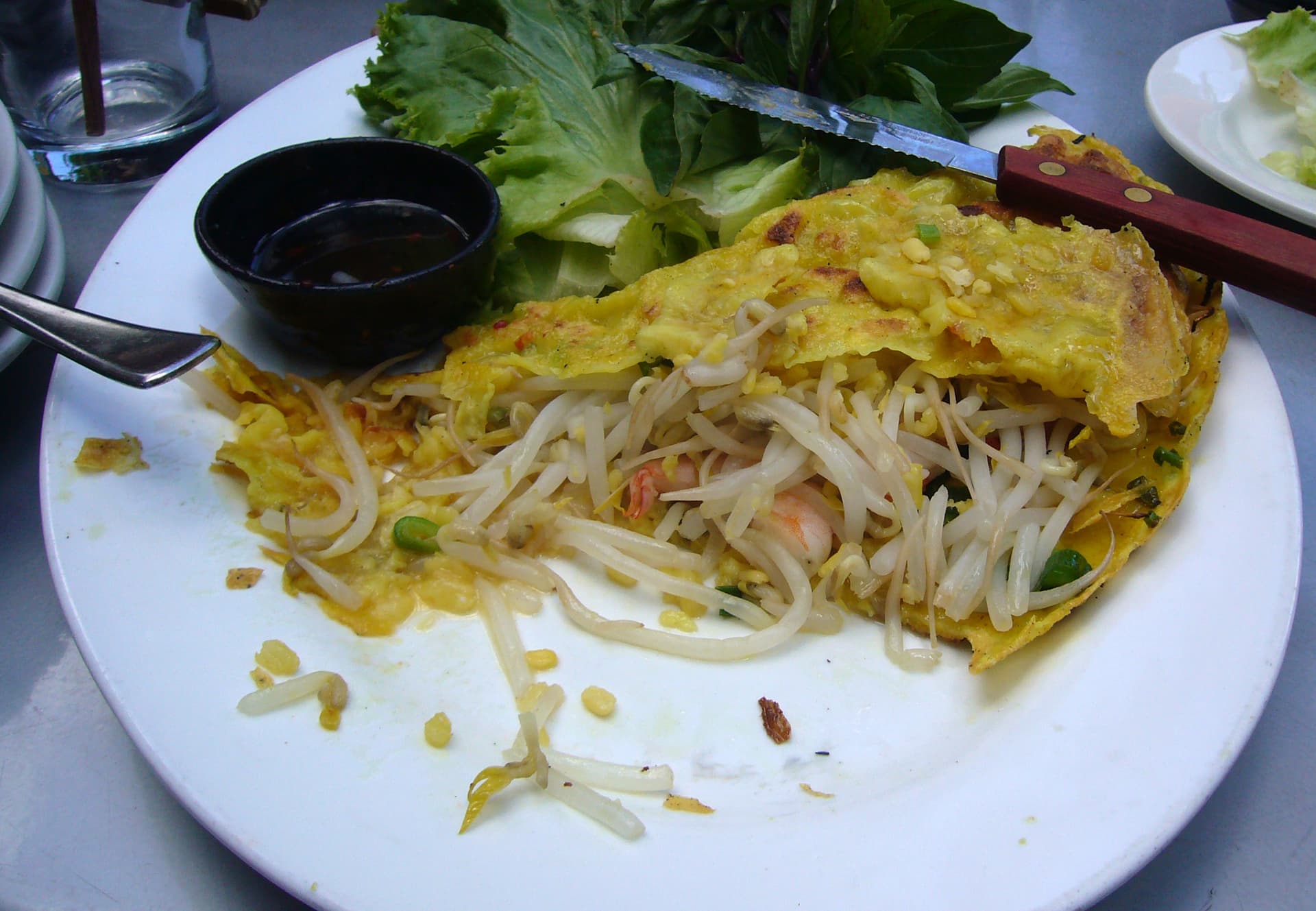
Bánh xèo means "sizzling cake", named for the sound the batter makes when it hits a hot pan. It is a thin, crisp, turmeric-yellow crepe folded around shrimp, pork and bean sprouts, eaten by tearing off pieces and wrapping them in lettuce.
What it is
A batter of rice flour, coconut milk, water and turmeric, poured thin into a very hot pan with a slick of oil. While it crisps, the cook scatters in halved shrimp, slices of pork belly, sometimes mung beans, and a heap of bean sprouts. The crepe is folded in half like an omelette and slid onto a plate. Around it: a mountain of lettuce, mustard greens, mint, perilla and rice paper, plus a bowl of fish-sauce dip (nước chấm).
Origin and history
The dish is recorded from the 17th century onwards in central and southern Vietnam. The Cham minority of central Vietnam have a similar pancake and the dish probably evolved from that tradition. The southern version grew larger and more lavish as the Mekong delta industrialised rice and coconut production.
Where to try it
In HCMC, Bánh Xèo 46A at 46A Đinh Công Tráng, District 1, has been the standard reference since the 1970s; expect 100,000 VND for a large crepe. In Đà NẵngĐà Nẵng (Da Nang)dah nangMajor coastal city in central Vietnam, known for its beaches, the Marble Mountains, and modern infrastructure., Bánh Xèo Bà Dưỡng on Hoàng Diệu serves smaller central-style crepes for around 50,000 VND. In Huế, the local variant is called bánh khoái — smaller, thicker, with a peanut-based dip instead of nước chấm.
How to eat it
Tear off a piece of the crepe with chopsticks. Lay it on a lettuce leaf, add fresh herbs, roll the lettuce around it, dip the whole bundle in the fish-sauce dip and eat in one or two bites. Do not eat the crepe straight from the plate with a knife and fork — you will lose the texture contrast that makes it work.
Regional variations
Southern bánh xèo is large (about the size of a dinner plate), thin, very crisp, golden from turmeric and coconut. Central versions are smaller, thicker, eaten more often. Northern bánh xèo barely exists. The central bánh khoái of Huế has its own peanut-liver dipping sauce and is usually served with cucumber and green starfruit alongside the herbs.
Honest take
Bánh xèo is a social dish — easier with two or more people, awkward alone. It is also one of the more forgiving Vietnamese dishes for the chilli-averse, since the spice lives in the dip rather than the filling.
Related reading: Gỏi cuốn, Central and southern cuisine, Đà Nẵng food guide, Huế food guide, Street food etiquette.
Pronunciation
Bánh Xèo (pronounced bahn sow — the "xè" is a sharp, barely-whispered s followed by a high tone that drops quickly, while "bánh" is low-rising and rhymes with "pong").
How to order it
"Cho tôi một bánh xèo" (cho toy mot bahn sow) — "Give me one bánh xèo." For specificity: "Bánh xèo tôm thịt" (toh-m tit) adds "with shrimp and pork." In Huế, ask for "bánh khoái" instead.
Price ranges
| Tier | Indicative price (VND) | USD |
|---|---|---|
| Street stall (central) | 40,000–60,000 | $1.60–$2.40 |
| Casual restaurant (HCMC/Saigon) | 80,000–120,000 | $3.20–$4.80 |
| Named specialist (Bánh Xèo 46A) | 100,000–150,000 | $4.00–$6.00 |
Best three neighbourhoods to try it
- District 1, HCMC: Home to Bánh Xèo 46A and multiple established stalls; expect the southern style, large and gossamer-thin.
- Hoàng Diệu, Đà Nẵng: Central-Vietnam heartland for bánh xèo; smaller, thicker crepes with purer regional character.
- Thái Phiên, Huế: The local variant, bánh khoái, dominates here—thicker, with peanut-liver sauce and served with cucumber and starfruit.
Common variants
- Southern (bánh xèo): Large, paper-thin, golden and crisp from coconut milk and turmeric; filled generously with shrimp and pork.
- Central (bánh khoái): Smaller, thicker, chewier texture; often served with a peanut and liver-based dip instead of fish sauce.
- Vegetarian: Shrimp and pork replaced by mushrooms, tofu and extra mung beans; still needs the lettuce wrap and dip for structure.
How to order in Vietnamese
| What you want | Vietnamese | Approximate pronunciation |
|---|---|---|
| One bánh xèo, please | Cho tôi một bánh xèo | Chaw toy moht bahn sow |
| Make it spicy | Cho cay | Chaw ky |
| No spice, please | Không cay | Khong ky |
| No cilantro | Không hành tây | Khong hahn ty |
| The bill, please | Tính tiền | Tính tien |
| Takeaway, please | Mang về | Mang vuh |
Price ranges
| Tier | Approximate price (VND) | Where you'll find it |
|---|---|---|
| Street stall | 40,000–70,000 | Mobile carts and small storefronts |
| Local sit-down restaurant | 80,000–150,000 | Casual neighbourhood eateries |
| Tourist-oriented restaurant | 120,000–200,000 | Named establishments, city centres |
Best neighbourhoods to find it
- District 1, HCMC: The southern classic; established stalls and named restaurants cluster around Đinh Công Tráng and nearby alleys.
- Đà Nẵng: Central-Vietnam heartland; smaller, thicker crepes served along Hoàng Diệu and in the backstreets.
- Huế: Home to the local bánh khoái variant; found throughout Thái Phiên and the old city.
- Hội An: Tourist-friendly bánh xèo stands near the night market; crepes tend toward larger southern style.
- Cần Thơ, Mekong Delta: Southern style abundant at its freshest; waterfront stalls serve bánh xèo from morning through lunch.
Regional variants
- Southern (Saigon/HCMC, Cần Thơ): Large, gossamer-thin crepes; coconut milk-forward batter; shrimp and pork fill generously; nước chấm (fish-sauce dip) the standard accompaniment.
- Central (Đà Nẵng, coastal regions): Smaller and thicker; less coconut milk in the batter; often cooked to a deeper gold; ratio of filling to crepe tends toward more filling.
- Huế variant (bánh khoái): Thicker still; peanut and liver-based dip replaces fish sauce; served with cucumber and green starfruit alongside the herb plate; earthier, less bright than the southern version.
How to tell a good version from a bad one
- Broth clarity: The crepe should be translucent gold, not opaque or grey—a sign of fresh oil and proper turmeric use.
- Herb freshness: Mint and perilla should smell peppery and bright, not wilted or oxidised.
- Crispness: A good crepe crackles when torn; a soggy one suggests old oil or too much filling.
- Queue length: In Vietnam, a long lunch queue at a bánh xèo stand typically signals consistent quality and high turnover.
- Filling distribution: Shrimp and pork should be scattered throughout, not clumped in one half; even distribution signals care.
Frequently asked questions
What is bánh xèo made of?
How do you eat bánh xèo?
What is the difference between bánh xèo and bánh khoái?
Continue reading
Comments
No comments yet.