Goi Cuon Near Me: Fresh Vietnamese Summer Rolls and Where to Find Them
Translucent rice-paper rolls of shrimp, pork, herbs and rice noodles, dipped in peanut hoisin. The lightest snack in Vietnam.
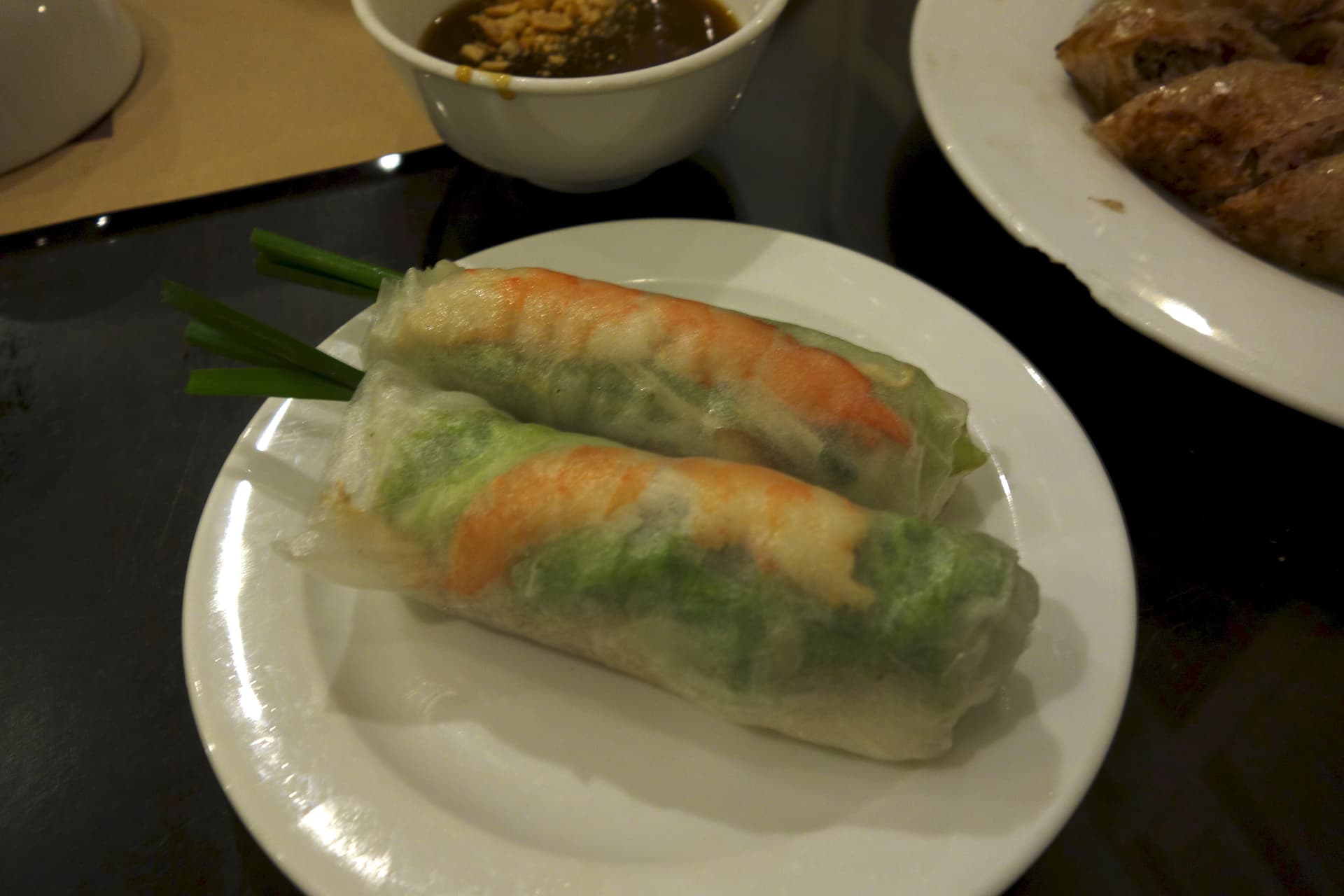
Gỏi cuốn — fresh summer rolls — are the dish foreigners often discover first and remember most fondly. Translucent rice paper wrapped around shrimp, pork, herbs and rice noodles, eaten dipped in peanut-hoisin sauce.
Goi cuon near me: how to find fresh summer rolls near you
If you searched "goi cuon near me", the short answer is: look for a Vietnamese restaurant or phở shop and check the menu for summer rolls, fresh spring rolls, salad rolls (the usual name in Canada) or rice paper rolls (the usual name in Australia) — all of these are gỏi cuốn. In Vietnam itself it is a southern dish, so it is easiest to find in Ho Chi Minh City and the Mekong Delta and rarer in Hanoi.
- Outside Vietnam: search your map app for "Vietnamese restaurant" rather than "goi cuon" — most Vietnamese menus abroad list the dish under one of the English names above, and phở-focused places often carry it as a starter. A vegetarian version (gỏi cuốn chay, usually with tofu) is often available.
- In Ho Chi Minh City or Hanoi: browse our restaurant listings for Ho Chi Minh City and Hanoi, or try the Vietnam food finder tool. The neighbourhoods and named restaurants further down this page are the ones we would send a first-time visitor to.
- What to expect to pay in Vietnam: roughly 8,000–15,000 VND per roll at a market stall and 25,000–60,000 VND at a local sit-down restaurant (full price table below).
- How to spot a good one: fresh, unwilted herbs, shrimp clearly visible through the wrapper and a thin, freshly ground peanut sauce — the full checklist is under "How to tell a good version from a bad one" below.
What it is
A round sheet of bánh tráng (rice paper) softened in warm water, then rolled around a layer of pink shrimp halves, a slice or two of poached pork belly, a tangle of bún (thin rice vermicelli), and a generous bundle of fresh herbs — typically lettuce, mint, perilla and chives, with one chive stalk poking out of one end of the roll like a tail. Served at room temperature, never hot, with a small dish of peanut hoisin sauce.
Origin and history
The dish is southern in origin and comparatively young — early-20th-century at most. It is the cold, fresh counterpart to nem rán/chả giò, the fried spring roll. The technique of rolling rice paper around fillings is, however, ancient and shared with neighbouring cuisines.
Where to try it
In HCMC, Quán Ngon at 160 Pasteur in District 1 makes a textbook version for around 60,000 VND for two rolls. Cuốn N Roll in District 1 is a casual sit-down spot that does several variations. In Hanoi, the southern-style rolls are best at southern-run restaurants like Quán Ăn Ngon at 18 Phan Bội Châu. Markets across the country sell them pre-rolled for breakfast for around 10,000 VND each — fine, but the herbs have usually wilted.
How to eat it
Pick up the roll with your hands, dip the end into the sauce, bite. Do not try to use chopsticks — the wrapper is too delicate and the rolls are meant to be eaten with fingers. Some southern households serve the same ingredients as cuốn tự cuốn — "roll your own" — with everything laid out on the table.
Regional variations
The shrimp-and-pork version is the southern standard. Central Vietnam has bò bía, a related roll filled with Chinese sausage, dried shrimp, jicama and egg. North Vietnam tends to stick with fried spring rolls and treats gỏi cuốn as a southern import.
Honest take
Gỏi cuốn is the antidote to a heavy day of eating. If you have just survived a bowl of bún bò HuếHuế (Hue)hwayFormer imperial capital of Vietnam under the Nguyễn dynasty, known for its citadel, royal tombs, and refined cuisine. and a beer, two rolls and a sauce are the perfect light dinner. The sauce matters more than the roll: a flat, sweet supermarket-style peanut sauce can ruin an otherwise excellent roll.
Related reading: Nem rán and chả giò, Bánh xèo, HCMC food guide, Street food etiquette, Central and southern cuisine.
Pronunciation
Gỏi cuốn (pronounced goi kwon — goi rhymes with "boy", cuốn is a rising tone like asking a question).
How to order it
"Cho tôi hai cuốn tôm" (cho toy hai kwan tom) — "give me two shrimp rolls". Or at a market stall: "Bao nhiêu một cuốn?" (bao nyoo-uh mot kwan) — "how much for one roll?"
Price ranges
| Tier | Indicative price (VND) | USD |
|---|---|---|
| Street stall / market | 10,000–15,000 | 0.40–0.60 |
| Casual restaurant | 25,000–50,000 | 1.00–2.00 |
| Tourist-trap zone (HCMC District 1) | 60,000–100,000 | 2.40–4.00 |
Best three neighbourhoods to try it
- District 1, HCMC — Quán Ngon (160 Pasteur) and Cuốn N Roll serve excellent versions; tourist-friendly but food is legitimate.
- Binh Tay Market area, District 5 (Cho Lon) — ground-floor vendors roll them fresh at dawn; cheapest and most authentic.
- Phan Bội Châu ward, Hanoi Old Quarter — southern-run eateries like Quán Ăn Ngon keep the tradition alive in the north.
Common variants
- Northern vs Southern: North tends to skip gỏi cuốn entirely, treating it as a southern specialty. When available in Hanoi, it's a deliberate choice, not casual street food.
- Shrimp-only vs. mixed: Shrimp and pork belly is standard in the south; some restaurants offer shrimp-only (lighter, slightly more expensive) or add crab meat.
- Herb balance: Southern rolls pack herbs generously; central and northern versions (rare) are more restrained. Ask for "nhiều rau" (nyoo-uh rau) — "lots of herbs" — if you prefer the fragrant version.
How to order in Vietnamese
| What you want | Vietnamese | Approximate pronunciation |
|---|---|---|
| One roll, please | Cho tôi một cuốn | Chaw toy mot kwan |
| Two rolls | Cho tôi hai cuốn | Chaw toy hai kwan |
| Not spicy, please | Không cay | Kohm kai |
| Very spicy | Rất cay | Ruht kai |
| No cilantro | Không rau mùi | Kohm rau moon |
| The bill, please | Tính tiền | Tin tee-un |
| Takeaway | Mang vềGỏi Cuốn (Goi Cuon)goy kwonFresh (unfried) rice-paper spring rolls filled with shrimp, pork, vermicelli, and herbs, served with hoisin-peanut dipping sauce. | Mang vuh |
Price ranges
| Tier | Approximate price (VND) | Where you'll find it |
|---|---|---|
| Street stall | 8,000–15,000 | Markets, mobile vendors, morning stalls |
| Local sit-down restaurant | 25,000–60,000 | Neighborhood eateries, local joints |
| Tourist-oriented restaurant | 60,000–120,000 | District 1 HCMC, Old Quarter Hanoi, tourist zones |
Best neighbourhoods to find it
- District 5 (Chợ Lớn), HCMC — Binh Tay Market vendors roll fresh batches at dawn; authentic and cheapest in the city.
- District 1, HCMC — Quán Ngon and Cuốn N Roll deliver consistent quality; tourist-accessible without sacrificing technique.
- Hanoi Old Quarter (Hoan Kiem district) — Southern-run restaurants on Phan Bội Châu and nearby lanes maintain the tradition in the north.
- Da Nang beach district — Central coastal versions appear alongside the southern standard; lighter herb profiles typical.
Regional variants
- South (HCMC, Mekong Delta): Shrimp and pork belly standard; generous herb bundles including mint, perilla, and chives; peanut hoisin dipping sauce is mandatory.
- Central (Hue, Da Nang): Bò bía variant uses Chinese sausage, dried shrimp, and jicama instead; herbs are more restrained; dipping sauce often includes fish sauce as a base.
- North (Hanoi): Gỏi cuốn treated as a southern import; less commonly encountered; when available, typically follows southern preparation but with slightly fewer herbs.
How to tell a good version from a bad one
- Broth and sauce: Peanut sauce should taste freshly ground with a thin, pourable consistency — thick or bottled supermarket sauce is a warning sign.
- Herb freshness: Mint and perilla should snap when bent; wilted or brown-edged leaves indicate the rolls have sat too long.
- Rice paper texture: Should be soft and slightly chewy, never tough or rubbery; look for a slight translucence that shows the fillings clearly.
- Queue length: A busy vendor with visible turnover typically means fresh batches rolling throughout the day; empty stalls suggest older stock.
- Shrimp visibility: You should clearly see pink shrimp halves through the wrapper; opaque rolls suggest poor quality or substitution.
Frequently asked questions
Where can I find gỏi cuốn near me?
What's the difference between gỏi cuốn and chả giò?
Should I eat gỏi cuốn with chopsticks?
How much do gỏi cuốn typically cost in Vietnam?
Continue reading
Comments
No comments yet.