Bún Mắm: The Mekong's Fermented-Fish Noodle Soup
A dark, deeply pungent noodle soup from the Mekong delta built on fermented fish — divisive, beloved, and unmissable if you can handle it.
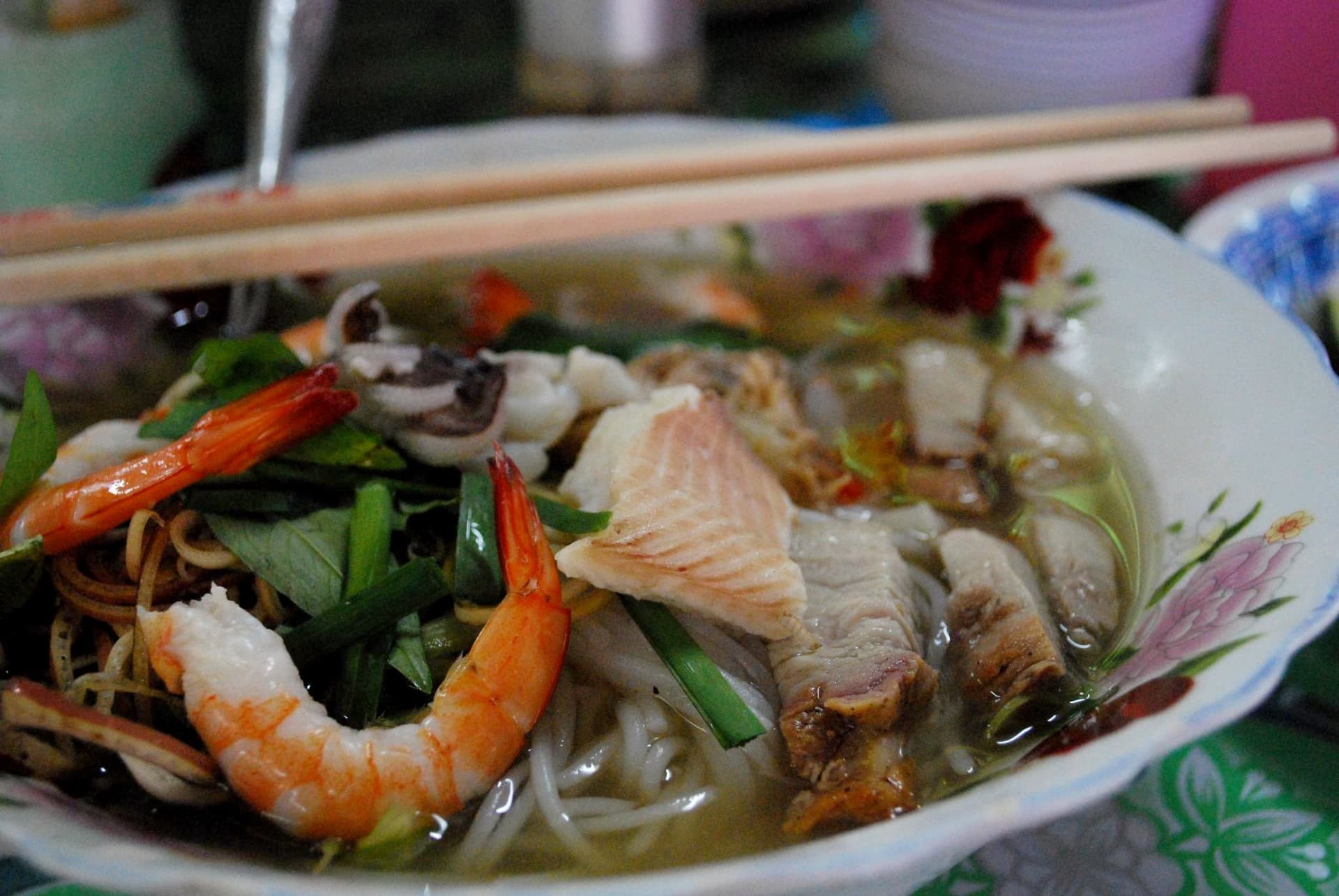
Bún mắm is the boldest dish of the Mekong delta: a brown, opaque noodle soup built on mắm cá linh and mắm cá sặc — fermented river fish — with a piling-on of shrimp, squid, pork belly and aubergine. If a kitchen smells unmistakably of fish from the street, there is probably a pot of bún mắm bubbling inside.
What it is
A broth made by simmering fermented fish in stock until the solids melt out, then straining, sweetening with rock sugar and rounding with lemongrass. The bowl: round rice vermicelli (bún), then a piece of slow-cooked pork belly, a few prawns, slices of squid, sometimes catfish, a chunk of stewed aubergine, garnished with chopped chives and chilli. The herb plate alongside is large — banana flower, water spinach, mint, perilla and bean sprouts.
Origin and history
Bún mắm comes from the Khmer-Vietnamese border zone of the Mekong delta — Sóc Trăng, Trà Vinh and Cần Thơ in particular — and is closely related to Cambodian num banh chok. The fermented-fish technique is centuries old in the region; the soup itself, in its modern form, dates from the early 20th century.
Where to try it
In HCMC, Bún Mắm Cô Hai at 22 Phan Bội Châu (in the Bến Thành area) is the convenient introduction for around 70,000 VND. Bún Mắm 444 on Lê Quang Định in Bình Thạnh is the long-running neighbourhood favourite. In Cần Thơ or Châu Đốc — the dish's heartland — almost any morning market will have a bún mắm pot.
How to eat it
Pile the herbs into the bowl, tearing the larger ones. Add lime and chilli. The broth is strong; one taste from the spoon first will tell you whether you need more lime to balance it. Use chopsticks for the noodles and meats, spoon for the broth.
Regional variations
Cambodia's num banh chok is the cousin: similar fish-base, lighter broth, often with morning-glory greens. Within Vietnam, the dish does not really exist outside the south; Hanoi attempts are unconvincing.
Honest take
Bún mắm is the dish that divides foreigners more than any other. The fermented-fish smell hits the table before the bowl does, and the flavour is huge — earthy, fishy, deeply savoury. If you love anchovy, fish sauce or doenjang, you will probably love this. If not, order a phởPhở (Pho)fuhVietnam's national noodle soup: a clear beef or chicken broth served with flat rice noodles, fresh herbs, and lime. instead.
Related reading: Bún bò Huế, Central and southern cuisine, HCMC food guide, Street food etiquette, Ho Chi Minh City.
Pronunciation
Bún Mắm (pronounced boon mahm — the ắ is a sharp 'ah' sound, and mắm rhymes with the English word "palm" but shorter and more nasal).
How to order it
"Cho tôi một bát bún mắm" (cho toy mot bat boon mahm) — "give me one bowl of bún mắm". If you want to specify a size: "Một bát bún mắm lớn, vui lòng" (one large bowl, please).
Price ranges
| Tier | Indicative price (VND) | USD |
|---|---|---|
| Street stall | 35,000–50,000 | $1.50–$2.20 |
| Casual restaurant | 50,000–75,000 | $2.20–$3.30 |
| Tourist-trap zone | 80,000–120,000 | $3.50–$5.30 |
Best three neighbourhoods to try it
- Châu Đốc (An Giang) — the heartland origin point; morning markets run morning-to-noon with 5–7 active stalls.
- Cần Thơ Ninh Kiều district — the Mekong's largest city and home to Cần Thơ's signature darker, heavier broth variant.
- HCMC Bình Thạnh district — Lê Quang Định and surrounding lanes host the city's best long-established bún mắm restaurants, many 30+ years old.
Common variants
- Northern broth vs. southern concentration — Châu Đốc versions are lighter and brothier; Cần Thơ and HCMC run darker, more concentrated, with heavier fermented-fish paste ratios.
- Meat protein additions — Crab claws and blood cake (cubes of cooked pork blood, deeply savoury) appear alongside shrimp and squid in premium bowls; budget stalls stick to one protein.
- Morning vs. evening — breakfast bún mắm (6–9 a.m.) is lighter and faster; evening versions simmer longer and run thicker, with more cooked pork belly.
How to order in Vietnamese
| What you want | Vietnamese | Approximate pronunciation |
|---|---|---|
| One bowl of bún mắm | Một bát bún mắmBún Mắm (Bun Mam)boon mahmMekong Delta fermented-fish noodle soup with a pungent, deeply savoury broth, topped with pork, squid, eggplant, and fresh herbs. | Moht baht boon mahm |
| Not spicy, please | Không cay, vui lòng | Khong kai, vwee-lung |
| Hold the cilantro | Không hành lá | Khong hahn lah |
| The bill / Check, please | Tính tiền / Tính tiền giúm | Tenh tee-uhn / Tenh tee-uhn yoom |
| Takeaway | Mang đi | Mang dee |
Price ranges
| Tier | Approximate price (VND) | Where you'll find it |
|---|---|---|
| Street stall | 35,000–50,000 | Morning markets, pushcart vendors in Mekong towns |
| Local sit-down restaurant | 50,000–85,000 | Neighbourhood holes-in-the-wall, 10–30 years established |
| Tourist-oriented restaurant | 80,000–150,000 | HCMC central districts, tourist-focused guides |
Best neighbourhoods to find it
- Châu Đốc (An Giang) — the original heartland; morning markets (5–7 a.m. to noon) run active stalls at source prices.
- Cần Thơ, Ninh Kiều district — the Mekong delta's largest hub; signature darker broth variant with concentrated fish-paste ratio.
- HCMC, Bình Thạnh district — Lê Quang Định corridor and adjacent lanes host the city's longest-running establishments, many 30+ years.
- Trà Vinh town — quieter border region with lighter, brothier versions and Khmer-Vietnamese fusion influences.
Regional variants
- North–south concentration — Châu Đốc styles run lighter and brothier; Cần Thơ and HCMC versions simmer darker with heavier fermented-fish-paste ratios, building deeper umami.
- Protein tiers — Budget stalls use one protein (shrimp or squid); mid-tier and up add pork belly, catfish, crab claws, and cooked blood cake (deeply savoury cubes).
- Broth cooking time — morning service (6–9 a.m.) is faster and lighter; evening pots simmer 4+ hours, thickening and concentrating the fermented-fish base.
- Khmer influence in Trà Vinh — border towns occasionally substitute morning-glory or water-spinach-only greens instead of the full herb plate, and reduce sugar slightly.
How to tell a good version from a bad one
- Broth clarity and colour — good bún mắm is deep brown, opaque (not cloudy or separated); avoid pale or oily surfaces.
- Herb plate freshness — mint, perilla and banana flower should smell green and alive, not wilted or fermented; a rotten smell is a red flag.
- Noodle texture — vermicelli should be soft but not mushy; it should hold shape in the spoon, not break apart or clump.
- Queue length as a proxy — stalls with lines during service hours typically turn stock faster and serve fresher broths; solo stalls may have older batches.
- Pork belly consistency — meat should be tender enough to break with chopstick pressure; overly firm or rubbery indicates extended sitting time or low-quality pork.
Frequently asked questions
What is the broth in bún mắm made from?
Where does bún mắm come from?
How much does a bowl of bún mắm typically cost?
Continue reading
Comments
No comments yet.