Chè: The Sweet World of Vietnamese Desserts
Bean soups, fruit soups, jellies and coconut creams — chè is a whole category of dessert that doesn't quite map to any Western equivalent.
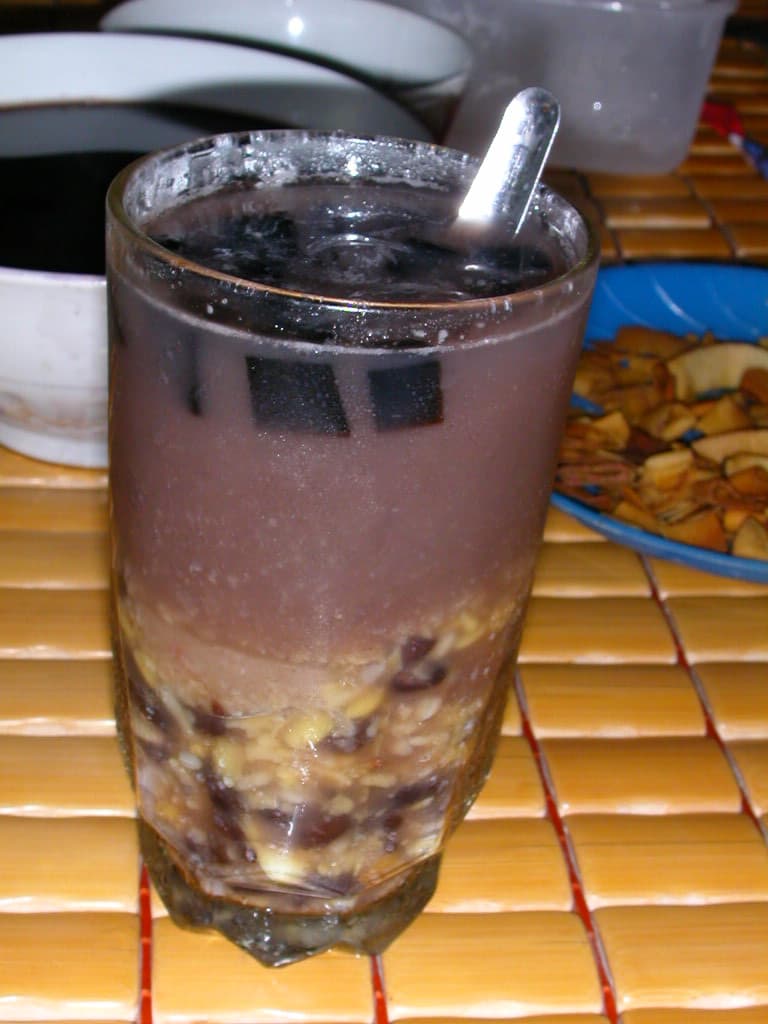
Chè is the umbrella word for Vietnamese sweet things eaten with a spoon: bean soups, tapioca puddings, jellied drinks, fruit-in-coconut-milk concoctions, sweet broths poured over crushed ice. It is dessert, snack and street drink at once, and the range is enormous.
What it is
A chè is built from a base — beans (mung, black, red), tapioca pearls, jellies, taro, sticky rice, fruit — combined with a sweet liquid and sometimes a coconut-cream topping. Served hot in cooler weather and cold over crushed ice when it is warm.
The main families
Chè ba màu — the southern "three-colour" parfait. Red beans, mung bean paste, green pandan jelly, layered in a glass with coconut milk and crushed ice. Around 20,000 to 30,000 VND.
Chè đậu xanh — sweet mung bean soup, eaten hot or cold. Smooth, simple, often the entry-level chè for visitors.
Chè bưởi — pomelo-rind chè from Bến Tre. The white pith is candied until it becomes a chewy translucent jelly, then served with mung bean and coconut cream.
Chè chuối — banana cooked in coconut milk and tapioca, usually warm, with peanuts.
Chè trôi nước — glutinous rice balls filled with mung bean paste, floating in a ginger-and-sugar syrup. Eaten at the Lunar Hàn Thực festival in the third lunar month.
Chè HuếHuế (Hue)hwayFormer imperial capital of Vietnam under the Nguyễn dynasty, known for its citadel, royal tombs, and refined cuisine. — the imperial city specialises in tiny portions of many varieties; a proper chè Huế tour will involve six or eight thimble-sized glasses.
Where to try it
In Hanoi: Chè Bốn Mùa at 4 Hàng Cân in the Old Quarter is the long-running standard. In HCMC: Chè Hiển Khánh on Nguyễn Tri Phương, or any of the chè stalls in District 5's Chinese quarter. In Huế: Chè Hẻm at 17 Hùng Vương is the institution.
How to eat it
Stir from the bottom. The pleasure of a layered chè ba màu is the contrast between coconut milk on top and pandan jelly at the bottom; eat each layer separately first if you like, then stir and finish. A short plastic spoon is standard.
Regional variations
The south is sweeter, colder and more tropical (mango, jackfruit, durian). Huế makes precise, small, finicky chè. Hanoi keeps a more austere range, leaning on mung bean and lotus seed.
Honest take
Chè is the easiest cheap pleasure in Vietnam. After a heavy lunch, a glass of chè ba màu for 25,000 VND eaten on a pavement stool is more satisfying than any sit-down dessert. Order one of each on your first visit to a chè shop and find your favourite.
Related reading: Vietnamese fruits, Central and southern cuisine, Huế food guide, Hanoi food guide, HCMC food guide.
Pronunciation
Chè (pronounced chuh — short schwa sound, not "shay"). Major varieties: Chè ba màu (chuh bah mow), Chè đậu xanh (chuh dau sahn), Chè bưởi (chuh boo-uh-ee).
How to order it
"Cho tôi một ly chè ba màu" (cho toy mot lee chuh bah mow) — "give me one glass of three-colour chè". At a chè shop: "Một chè đậu xanh, một chè bưởi" (one mung bean chè, one pomelo chè) to sample two varieties.
Price ranges
| Tier | Indicative price (VND) | USD |
|---|---|---|
| Street stall | 12,000–25,000 | 0.50–1.00 |
| Casual chè shop | 20,000–40,000 | 0.85–1.70 |
| Tourist-zone cafe | 35,000–80,000 | 1.50–3.40 |
Best three neighbourhoods to try it
Hanoi's Old Quarter — Chè Bốn Mùa on Hàng Cân serves classic mung bean chè and is the benchmark. HCMC's District 5 (Chợ Lớn) — the Chinese quarter's chè stalls offer the widest southern-style range: ba màu, durian, mango. Huế — Chè Hẻm on Hùng Vương for the finicky imperial-style portions and rare regional chè you won't find elsewhere.
Common variants
North vs south — Hanoi favours hot mung bean and lotus seed; southern shops go tropical and cold, layering mango, jackfruit, and durian. Chè ba màu layers — always red bean base, mung paste middle, pandan jelly top; regional cooks vary sweetness and coconut-cream ratio. Seasonal chè — chè trôi nước (glutinous rice balls) appears only around lunar Tết and Hàn Thực festival; durian chè peaks May–August.
How to order in Vietnamese
| What you want | Vietnamese | Approximate pronunciation |
|---|---|---|
| One bowl of chè | Một chèChè (Che)chehA broad category of Vietnamese sweet dessert soups and puddings, made with beans, jelly, coconut milk, and taro in countless regional variations. | Moht chuh |
| Not spicy / mild | Không cay | Khong kah-ee |
| No cilantro | Không rau mùi | Khong row moo-ee |
| The bill | Tiền | Tee-en |
| Takeaway | Mang đi | Mang dee |
Price ranges
| Tier | Approximate price (VND) | Where you'll find it |
|---|---|---|
| Street stall | 12,000–25,000 | Pavement vendors, market kiosks, busy intersections |
| Local sit-down restaurant | 20,000–40,000 | Dedicated chè shops, casual neighbourhood cafés |
| Tourist-oriented restaurant | 35,000–80,000 | Hanoi Old Quarter, District 1 HCMC, downtown Huế |
Best neighbourhoods to find it
- Hanoi's Old Quarter — home to Chè Bốn Mùa, the long-running standard for hot mung bean and classic chè
- HCMC's District 5 — the widest southern-style range: chè ba màu, durian, mango, and seasonal tropical varieties
- Huế — Chè Hẻm on Hùng Vương for imperial-style finicky portions and rare regional types
- Da Nang's waterfront — modern chè shops catering to locals and visitors, typically with both cold and hot options
Regional variants
- Northern style — tends toward hot mung bean and lotus seed chè, with emphasis on clarity and simplicity of broth
- Central (Huế) — characterized by tiny portions of many varieties served in sequence, with precise ratios and rare regional ingredients
- Southern style — favour for cold, heavily sweetened chè with tropical fruits (mango, jackfruit, durian), heavier coconut cream, and colourful layered presentations
How to tell a good version from a bad one
- Broth clarity — a proper chè broth should be translucent and free of cloudiness or sediment; murky broth suggests stale ingredients or poor preparation
- Herb and ingredient freshness — pandan jelly should have a pale green colour and faint floral scent; beans should not taste fermented or off
- Texture consistency — jellies should be firm but tender (not rubbery), beans soft but not mushy, tapioca pearls chewy with no grit
- Queue length as proxy — busy chè shops typically turn stock faster; a quiet shop mid-afternoon may be serving day-old bases
- Coconut cream layer — in chè ba màu, the cream should be rich but not oily; thin, separated cream indicates poor-quality milk or storage issues
Frequently asked questions
What exactly is chè?
How much does a glass of chè typically cost?
What's the difference between northern and southern chè?
Continue reading
Comments
No comments yet.