Hủ Tiếu: Saigon's Sino-Vietnamese Noodle Soup
A clear pork-bone broth with rice noodles, prawns and crackling — Saigon's everyday alternative to phở, with Chinese roots.
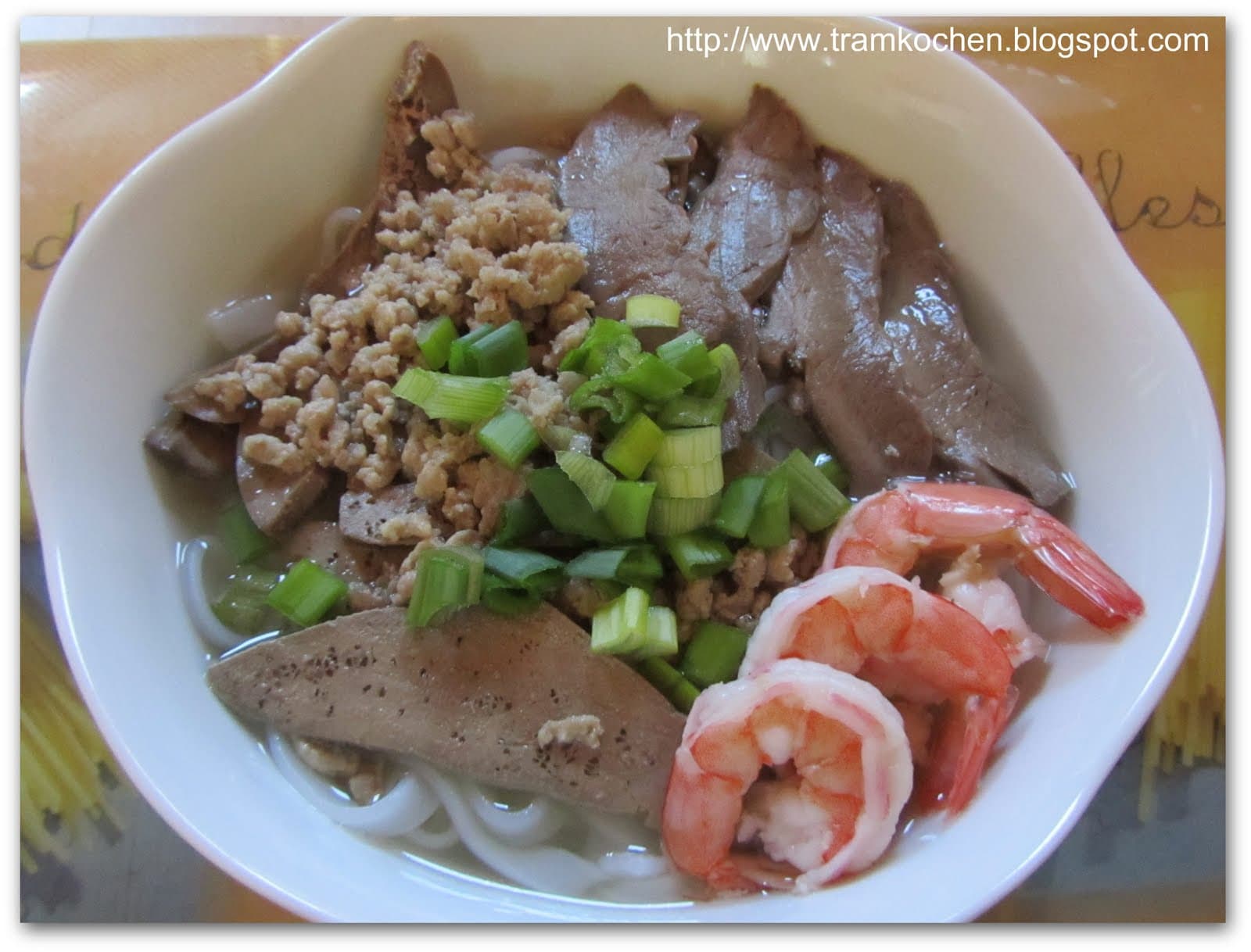
Hủ tiếu is the noodle soup Saigon eats when it isn't eating phởPhở (Pho)fuhVietnam's national noodle soup: a clear beef or chicken broth served with flat rice noodles, fresh herbs, and lime.. The broth is clearer and less aromatic than phở's, the noodles are usually thinner, and the toppings reach for the sea as well as the farmyard: pork, prawn, squid and quail eggs in the same bowl.
What it is
A clear pork-and-dried-shrimp broth. The noodles are usually hủ tiếu — fine, slightly chewy rice noodles — though many stalls offer mì (egg noodles) or hủ tiếu mềm (soft fresh rice noodles) as alternatives. Toppings: poached prawns, slices of pork, minced pork, liver, pork crackling, a quail egg or two, chives and bean sprouts. Served with lime, chilli, soy sauce and a small dish of hoisin on the side.
The main versions
Hủ tiếu Nam Vang — the Phnom Penh-style version that became the Saigon standard. Pork-and-shrimp broth, the full house of toppings. Brought south by ethnic Chinese cooks via Cambodia in the early 20th century.
Hủ tiếu Mỹ Tho — from the Mekong delta town of Mỹ Tho. Slightly sweeter broth, denser noodles.
Hủ tiếu khô — "dry" hủ tiếu. The noodles are tossed in a soy-and-oyster-sauce dressing, and the broth comes in a separate bowl alongside. Eat the noodles, sip the broth.
Where to try it
In HCMC, Hủ Tiếu Nam Vang Liến Húa at 313 Võ Văn Tần in District 3 is the long-running classic for around 70,000 VND. Hủ Tiếu Hồng Phát on Võ Văn Tần is the rival. Hủ Tiếu Mỹ Tho Thanh Xuân on Tôn Thất Thiệp is the place to compare regional styles. Cheaper neighbourhood bowls run 40,000 to 55,000 VND.
How to eat it
Hủ tiếu is more flexible at the table than phở. Add hoisin and chilli sauce directly to the broth if you want — locals do. The soy-and-vinegar dish is for dipping pork, not seasoning the soup. Pickled chillies on the table are sharp and worth using.
Regional variations
Hủ tiếu is a southern dish; in the north it is almost unknown. Within the south, every Mekong town has its own version, and the Phnom Penh style remains the benchmark in HCMC itself.
Honest take
If you eat phở every breakfast for a week in Saigon, you have eaten wrong. Alternate with hủ tiếu — particularly the dry version, which is unlike anything in northern cuisine and is the easiest way to understand the Chinese influence on southern Vietnamese cooking.
Related reading: Phở, HCMC food guide, Central and southern cuisine, Ho Chi Minh City, Cơm tấm.
Pronunciation
Hủ tiếu (pronounced hoo-tee-uh — the ủ is a mid-back rounded vowel, like the 'oo' in "foot" but shorter). The regional variants: Hủ tiếu Nam Vang (Nam Vang means Phnom Penh), Hủ tiếu Mỹ Tho (mee tuh).
How to order it
"Cho tôi một bát hủ tiếu Nam Vang" (cho toy mot bat hoo-tee-uh nam vang) — "give me one bowl of Phnom Penh-style hủ tiếu". Or ask for "hủ tiếu khô" if you prefer the dry version.
Price ranges
| Tier | Indicative price (VND) | USD |
|---|---|---|
| Street stall | 40,000–55,000 | 1.60–2.20 |
| Casual restaurant | 65,000–80,000 | 2.60–3.20 |
| Tourist-trap zone | 120,000–180,000 | 4.80–7.20 |
Best three neighbourhoods to try it
District 3 (Ba Đình) — home to the long-running Hủ Tiếu Nam Vang Liên Húa on Võ Văn Tần, the Saigon benchmark. District 1 (Quận 1) — central Saigon bowls near Ben Thanh Market, often cheaper and less touristed. Mỹ Tho, Tiền Giang — the Mekong delta source for the sweeter, regional variant.
Common variants
Hủ tiếu Nam Vang — the Phnom Penh-style standard in HCMC: pork and dried shrimp broth with the full house (prawns, pork, liver, crackling, quail eggs). Hủ tiếu khô — dry style, noodles tossed in soy-oyster dressing with broth on the side; less aromatic, easier for tourists unfamiliar with Vietnamese soup etiquette. Hủ tiếu Mỹ Tho — sweeter, denser broth from the delta; denser noodles than Nam Vang.
How to order in Vietnamese
| What you want | Vietnamese | Approximate pronunciation |
|---|---|---|
| One bowl of hủ tiếu | Cho tôi một bát hủ tiếuHủ Tiếu (Hu Tieu)hoo tyewSouthern noodle soup of Chinese-Cambodian origin, featuring clear pork broth, rice or tapioca noodles, and various toppings including pork and seafood. | Cho toy mot bat hoo-tee-uh |
| Not spicy | Không cay | Khong kai |
| No cilantro / no coriander | Không hành | Khong hahn |
| The bill, please | Tính tiền | Tinh tien |
| Takeaway | Mang đi | Mang dee |
Price ranges
| Tier | Approximate price (VND) | Where you'll find it |
|---|---|---|
| Street stall | 40,000–55,000 | Neighbourhood cart or corner stall |
| Local sit-down restaurant | 65,000–85,000 | Dedicated hủ tiếu shop or simple diners |
| Tourist-oriented restaurant | 120,000–180,000 | Central districts near landmarks |
Best neighbourhoods to find it
- District 3, Ho Chi Minh City — home to the benchmark Hủ Tiếu Nam Vang Liên Húa, the Saigon standard since the 1950s.
- District 1, Ho Chi Minh City — central Saigon bowls near Ben Thanh Market, typically less touristed than District 3.
- Mỹ Tho, Tiền Giang — the Mekong delta source for the regional variant; sweeter broth, denser noodles.
- District 5, Ho Chi Minh City — historic Chợ Lớn (Chinatown), where Chinese cooks first brought the dish south.
Regional variants
- North: Hủ tiếu is almost unknown in the north; northern eaters typically favour phở instead.
- Central (Mỹ Tho, Tiền Giang): Slightly sweeter broth and denser, chewier noodles than the Phnom Penh style; less reliance on dried shrimp.
- South (HCMC): The Phnom Penh style dominates — clear pork-and-shrimp broth with the full house of toppings (prawns, pork, liver, crackling, quail eggs). The dry version (hủ tiếu khô) is unique to southern markets.
How to tell a good version from a bad one
- Broth clarity: A good bowl has transparent, pale amber broth — murky or cloudy is a sign the pork bones were boiled too vigorously or reheated multiple times.
- Herb freshness: Bean sprouts and chives should be crisp and bright, not wilted or discoloured.
- Noodle texture: Noodles should be slightly chewy, not soft or mushy; they should hold the broth without absorbing it into mush.
- Topping quality: Prawns should be pink (not grey), pork should not taste gamy, and crackling should crackle — soft crackling suggests day-old oil.
- Queue length as a proxy: A stall with a morning queue of locals (not tourists) typically means broth is freshly made that day.
Frequently asked questions
What's the difference between hủ tiếu and phở?
What is hủ tiếu khô?
How much does a bowl of hủ tiếu typically cost?
Continue reading
Comments
No comments yet.