Ho Chi Minh City (Saigon)
Vietnam's largest city — commercial, cosmopolitan, hot year-round, and full of motorbikes. Still widely called Saigon by locals.
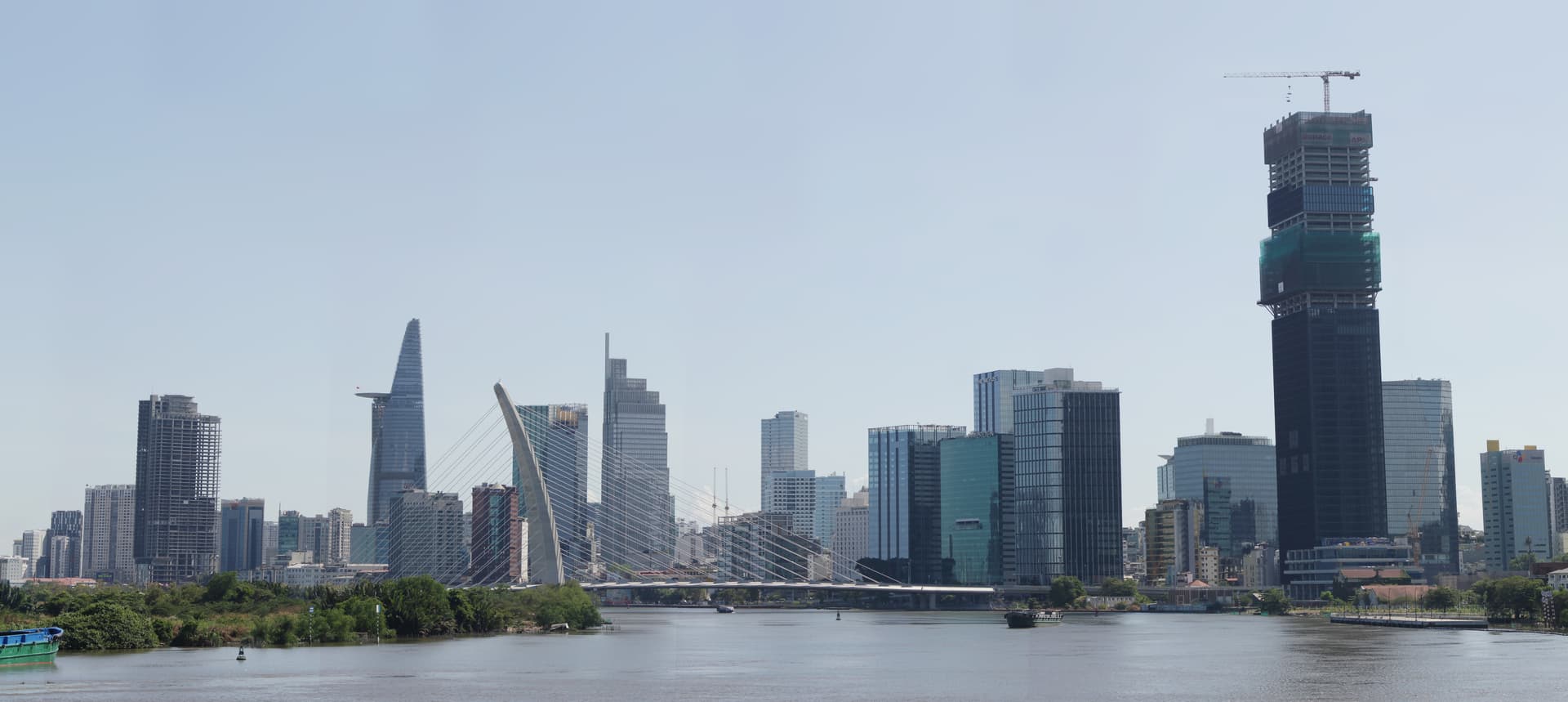
Ho Chi Minh City — renamed in 1976, still universally called Saigon by locals — is Vietnam's largest city with about 9 million people in the inner city and over 14 million in the broader metropolitan area. It's the commercial and financial centre, more international-facing and more frenetic than Hanoi.
The basic layout
HCMC has 24 districts, numbered (District 1, 2, 3…) and named (Bình Thạnh, Phú Nhuận, Tân Bình…). Useful ones to know:
- District 1 — the historic core, French colonial architecture, government buildings, the major hotels and tourist sights, Bến Thành market.
- District 3 — pleasant residential streets, Tao Đàn park, some excellent restaurants.
- District 5 (Chợ Lớn) — the historic Chinese quarter, dense markets, Cantonese food, Thien Hậu temple.
- District 2 / Thảo Điền — expat enclave, international restaurants, river views.
- Bình Thạnh / Phú Nhuận — middle-class residential districts, increasingly trendy.
- Tân Bình — airport district.
What to see
- Reunification Palace (former Independence Palace) — preserved as it was on 30 April 1975 when North Vietnamese tanks crashed through the gates.
- War Remnants Museum — sobering, very well-presented account of the American war from the Vietnamese perspective.
- Notre-Dame Cathedral Basilica — French-built 1880, currently under restoration.
- Central Post Office — built 1891, designed in the style of (but not by) Gustave Eiffel.
- Bến Thành Market — central market, food court upstairs is decent.
- Saigon Opera House — French colonial, performances most nights.
- Cu Chi Tunnels — day trip, ~70 km north of city. War-era Việt Cộng tunnel network.
- Mekong Delta day trip — Mỹ Tho or Bến Tre is the standard. For a real delta experience, go for an overnight to Cần Thơ.
Food highlights
The south's food culture is exuberant, sweeter, and more diverse than the north's:
- Cơm tấm — broken-rice plate with grilled pork chop, the classic Saigon lunch.
- Bánh xèo — large turmeric rice-flour crepe with shrimp and pork.
- Phở — southern style, sweet broth, big garnish plate. See: Phở
- Hủ tiếu — Sino-Vietnamese noodle soup.
- Bánh mì — bánh mìBánh Mì (Banh Mi)ban meeVietnamese baguette sandwich filled with meats, pâté, pickled vegetables, fresh coriander, and chilli — a fusion legacy of French colonialism. culture is at its peak here. See: Bánh mì
- Cà phê sữa đá — the iced milk-coffee that defines Vietnamese coffee for most foreigners.
- Chợ Lớn Cantonese food — Hủ Tiếu Hồ, dim sum, Hoa specialty restaurants.
Getting around
- Grab / Be / Xanh SM — universal ride-hailing. Cars and motorbikes. Use these instead of street taxis. See: Taxi scams
- HCMC Metro Line 1 — opened December 2024; runs from Bến Thành to Suối Tiên. Line 2 partially under construction. Useful for the eastern axis.
- Walking — the heat and traffic make this less pleasant than in Hanoi, but District 1 is doable.
- Buses — extensive network, AC, cheap. Useful once you figure them out.
When to visit
- Dry season (Nov–Apr) — best weather. December–January is mild and dry.
- Wet season (May–Oct) — daily afternoon downpours, but predictable. Lush, fewer crowds.
- Temperatures range 25–35°C year-round.
How it differs from Hanoi
- HCMC is bigger, hotter, more commercial, more international.
- Saigon Vietnamese is the southern accent — softer, slower, merges two tones.
- More French-era architecture has survived.
- More 24-hour culture — Hanoi sleeps earlier.
- More Western food, expat-oriented bars, English signage.
- Less historic depth (HCMC is essentially a 19th-century French foundation; Hanoi is a millennium old).
Where to stay
- District 1 for first-time visitors — close to everything, lots of choice.
- District 3 for a quieter, residential feel.
- Thảo Điền (District 2) for upmarket international atmosphere.
- Phạm Ngũ Lão / Bùi Viện — backpacker street, loud bars, cheap rooms.
Bình Dương
This area, immediately north of the old HCMC city limits, is now part of Ho Chi Minh City and is best known for its dense concentration of foreign-owned factories and a centuries-old lacquerware tradition. Before the merger it had roughly 2.5 million people and was already functionally part of the HCMC metropolitan area — a continuous belt of industrial parks, factories, worker housing, and increasingly upscale suburban development.
Industry. The area has roughly 30 industrial parks with thousands of foreign-invested factories — Korean (Samsung and LG suppliers), Japanese (auto parts, electronics), Taiwanese (footwear, textiles), and increasingly Chinese (electronics, solar panels). It pioneered Vietnam's industrial-park model in the early 1990s; VSIP I (Vietnam-Singapore Industrial Park) was the original. Land-use planning and infrastructure here are notably more orderly than in newer industrial provinces.
Lacquerware (sơn mài). Thủ Dầu Một, the former provincial capital, has a 300-year-old lacquerware tradition. Craftsmen still produce traditional and contemporary pieces — boxes, panels, furniture, art — in the layered-and-polished sơn mài style, and a handful of workshops accept visits.
Đại Nam Văn Hiến. A 450-hectare theme park combining a small zoo, a Buddhist temple complex, a racetrack, a man-made beach, and a somewhat melancholy historical-Vietnam pavilion, owned by a single Vietnamese tycoon. Popular with Vietnamese families on weekends; bizarre to most foreign visitors, but memorable.
Getting there. Thủ Dầu Một is 30 minutes to an hour from central HCMC depending on traffic, by bus, Grab, or car — no train, though metro lines under construction may eventually connect the two, with an ETA in the late 2020s. Thủ Dầu Một has business hotels serving the industrial-park ecosystem, but most visitors treat it as a day trip rather than an overnight stay. For sightseeing beyond factories and lacquerware, Đồng Nai (Cát Tiên National Park) and Tây Ninh (Cao Đài Holy See, Black Lady Mountain) are better day-trip choices from HCMC.
Quick verdict
Ho Chi Minh City is Vietnam's commercial powerhouse — a sprawling, hot, and traffic-choked megacity that pulses with motorbikes and street-food vendors. It's most loved for its French colonial architecture, explosive southern food culture (sweet broths, crispy bánh xèo, ubiquitous cà phê sữa đá), and relentless energy. It's not for visitors seeking tranquility or pristine nature; it's urban chaos at its finest.
Best for / not ideal for
Best for:
- First-time Vietnam visitors who want urban orientation, major museums, and culinary introduction before heading to quieter regions
- Business travellers and expat-minded explorers who thrive on international dining, 24-hour nightlife, and modern infrastructure
- History buffs interested in French colonialism, the American War, and Vietnamese independence (War Remnants Museum, Reunification Palace)
Not ideal for:
- Visitors seeking a beach or rural experience (day-trip only; better to base in Nha Trang or Phú Quốc)
- Those with low tolerance for heat, humidity, traffic noise, and motorbike exhaust (especially May–October)
How long to stay
Most visitors spend 2–3 nights in HCMC before moving on to the Mekong Delta, Mũi Né, or the highlands. Three nights allows time for the War Remnants Museum, Reunification Palace, one neighbourhood walk, and a day trip (Cu Chi Tunnels or Mỹ Tho). Stay four nights if you want to add Bến Thành market, coffee culture sessions, and a Mekong overnight. Less than two nights feels rushed.
Climate by month
December–January offer the best weather: dry, mild (25–28°C), and busy with tourists. May–October bring daily afternoon downpours and high humidity (32–35°C), but the city is greener and less crowded. November marks the start of the comfortable season. See full details.
Day trips from here
- Cu Chi Tunnels (~70 km north, 2 hours) — preserved Việt Cộng tunnel network from the American War; book with a guide
- Mỹ Tho and the Mekong Delta (~70 km southwest, 2 hours) — slow boat tours, fruit orchards, noodle factories; standard day trip or overnight base
- Bến Tre across the Mekong (~90 km, 2.5 hours) — quieter delta town with coconut villages and fewer tour groups
- Biên Hòa (~30 km north) — home to the historic Bien Hoa Cathedral and less-touristy local atmosphere
Local transport
Most visitors rely on Grab or Be for point-to-point rides (cheaper, safer, and English-speaking than street taxis). The newly opened Metro Line 1 (Bến Thành to Suối Tiên) handles the eastern corridor but doesn't yet cover the full city. Walking is feasible in District 1 and District 3 but the heat and traffic make longer walks punishing. Buses are cheap and extensive but routes require local knowledge; motorbike rentals are common for independent travellers but navigating traffic takes confidence.
Frequently asked questions
Why do locals still call it Saigon if the official name is Ho Chi Minh City?
Which district is best for a first-time visitor to stay in?
How long should I plan to spend in Ho Chi Minh City?
Is the new Metro useful for getting around the city?
What is the best time of year to visit Ho Chi Minh City?
How does Ho Chi Minh City differ from Hanoi as a destination?
Continue reading
Comments
No comments yet.