Cát Bà Island
The largest island in the Hạ Long archipelago and the practical base for Lan Hạ Bay — the quieter, kayak-friendly half of the karst seascape.
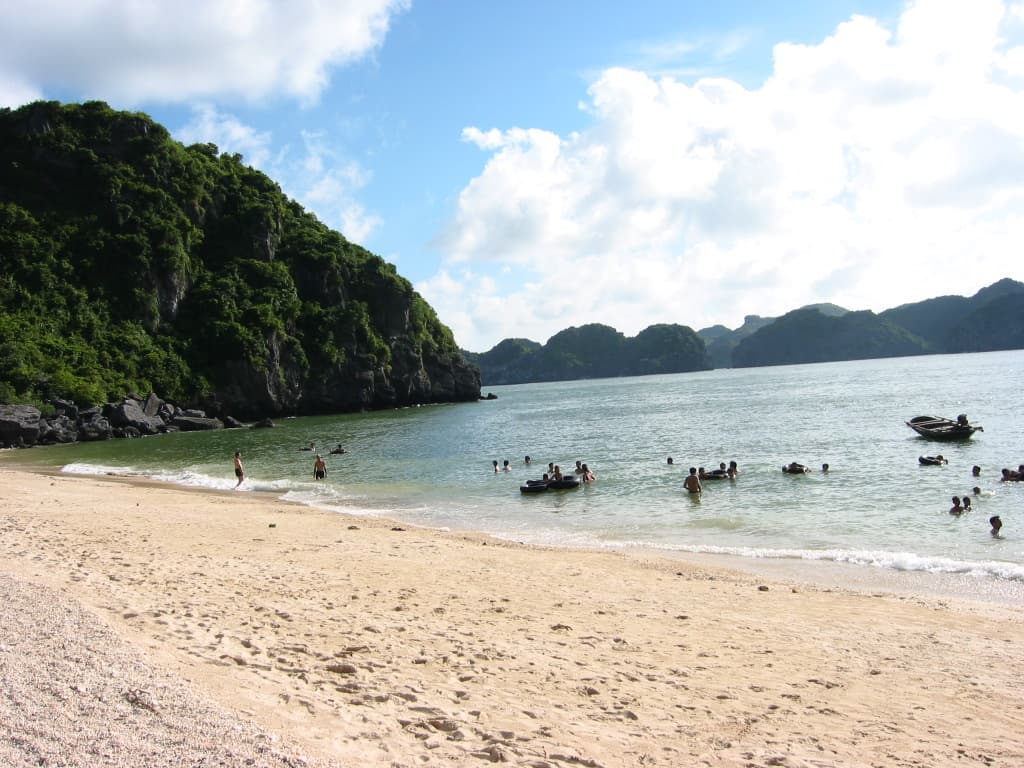
Cát Bà is the largest island in Hạ LongHạ Long (Ha Long)hah longBay in northeastern Vietnam featuring thousands of limestone karst islands; a UNESCO World Heritage site and top cruise destination. Bay and administratively part of Hải Phòng rather than Quảng Ninh. What that means in practice: the karst seascape on the Cát Bà side is called Lan Hạ Bay, and it gets a fraction of the cruise traffic the main Hạ Long bay does. Same geology, same green water, half the boats. For a lot of travellers it is now the better choice.
What's distinctive
Lan Hạ Bay. 300+ karst islands south-east of Cát Bà town. Kayaking, swimming and rock-climbing are all feasible because the bay is quieter and the protected anchorages are not full of cruise boats. Standard day trip from Cát Bà town: 600,000–900,000 VND for boat, kayak, lunch, two beach stops and a swim cave.
Cát Bà National Park. Covers half the island. The Frankfurt Zoological Society runs the Cat Ba Langur Conservation Project here — fewer than 70 of the golden-headed langurs are left, all on this one island. Two trekking routes: the easy 4 km loop from the headquarters, and the harder 18 km Ao Ếch route to Việt Hải village (guide recommended).
Việt Hải. A tiny village inside the national park, reached on foot or by boat from Lan Hạ. Two small homestays; almost no traffic.
The Cannon Fort. Hilltop fortifications above Cát Bà town. The cannons are Vietnamese-era; the view of the harbour and karsts is the reason to go. 80,000 VND.
How to get there
Cát Bà is accessible by ferry only — there is no airport. From Hanoi the standard option is a bus-boat-bus combination sold by Daiichi, Cát Bà Express or Good Morning Cát Bà:
| Leg | Time |
|---|---|
| Hanoi → Hải Phòng (Got pier) by bus | 2.5 hours |
| Got pier → Cái Viềng by speedboat ferry | 25 min |
| Cái Viềng → Cát Bà town by bus | 45 min |
Total around 4.5 hours door-to-door, 280,000–350,000 VND. Several departures daily; book a day ahead in summer.
A new cable car from Cát Hải island also operates (the world's longest sea-crossing cable car), useful if you are driving.
From Hạ Long city: ferry from Tuần Châu to Gia Luận on the north of Cát Bà, then 30 km by road. This is the route the Hạ Long–Cát Bà cruises stitch together.
When to visit
April–May and September–October are the windows: warm, dry, swimmable, no typhoons. June–August is hot and busy with Vietnamese domestic tourism; July is the worst month for crowds in Cát Bà town. November–March is grey, cool (15–20°C) and quiet, with cheap rooms but cold sea.
Typhoons (Aug–Oct) can shut ferries for two or three days at a time — build slack into the schedule.
Where to stay
Three zones:
- Cát Bà town: Most accommodation, restaurants and bars. Loud, neon, fine for one night. Sea Pearl, Sunrise Resort, and the long-running Cát Bà Sunrise are the usual choices.
- Cát Cò beaches (1, 2, 3): Walkable from town but quieter. Cat Ba Beach Resort sits above Cát Cò 1.
- The west side / Xuân Đám: Quiet, ricefields, a small handful of homestays and the Whisper Nature Bungalow.
For the bay itself, sleep on the water: an overnight Lan Hạ Bay cruise from Cát Bà costs US$120–250 depending on the boat (Orchid, Heritage Bình Chuẩn at the upper end). One night sleeping on the bay beats three in town.
Food
Cát Bà cha mực (grilled cuttlefish patties) is the local snack. Mussel hotpot (lẩu vạng) is the group dish. The fishing-village seafood is good but priced for tourists; eat where Vietnamese families eat, two blocks back from the harbour.
Honest take
Cát Bà is the more pleasant alternative to a Hạ Long cruise from Tuần Châu, particularly if you like kayaking or climbing. The town itself is dull. Use it as a base, sleep one night on a Lan Hạ boat, and leave. Pair with Ninh Bình for the karst-on-land follow-up.
Quick verdict
Cát Bà is the quietest gateway to karst seascape in the Hạ Long archipelago, with Lan Hạ Bay delivering kayaking and climbing that the crowded main bay doesn't. The island is small, the town is functional rather than charming, and most visitors spend one night ashore and one night on a cruise boat. Best for active travellers who want karst without the Tuần Châu crowds.
Best for / not ideal for
Best for:
- Kayakers and rock climbers wanting quieter water than Hạ Long proper
- Overnight Lan Hạ cruise bookings (the sleeping-on-water experience is the highlight)
- National park trekking to spot rare golden-headed langurs
Not ideal for:
- Beach-focused holidays (Cát Bà's beaches are modest)
- Travellers seeking a charming island town (Cát Bà town is noisy, neon-lit, and utilitarian)
How long to stay
Two nights minimum: one to reach the island and do a Lan Hạ day trip, one on an overnight cruise boat. Three nights is ideal if you want to add a national park trek to Việt Hải. Much longer than that and you'll exhaust the island's quiet appeal — it's best paired with Hạ Long city or Hanoi as a stop, not a base.
Climate by month
April–May and September–October are optimal: warm, dry, water is swimmable, typhoon risk is low. June–August brings heat and peak Vietnamese domestic tourism (July is worst for crowds). November–March is grey and cool (15–20°C) with occasional rain, but ferries run reliably and rooms are cheap. See /practical/weather-by-month for Vietnam-wide seasonal detail; note that typhoons (Aug–Oct) can close ferries for 2–3 days.
Day trips from here
- Lan Hạ Bay kayaking and swimming (600,000–900,000 VND, 6–7 hours) — the primary reason to visit
- Việt Hải village trek (4–5 hours, guide recommended) — walk through the national park or take a boat from Lan Hạ
- Cát Bà National Park easy loop (4 km, 2 hours) — goldhead langur spotting from the headquarters trailhead
- The Cannon Fort (80,000 VND) — hilltop views above Cát Bà town
- Overnight Lan Hạ Bay cruise (most popular: Orchid, Heritage Bình Chuẩn, US$120–250) — sleeping on the bay is the standout experience
Local transport
Within Cát Bà town, walking covers everything; taxis and Grab are available but unnecessary unless returning late from the waterfront. For the Lan Hạ day trip, your tour operator arranges pickup. To reach the national park trailhead or Xuân Đám homestays on the west side, rent a motorbike (120,000–150,000 VND/day) or use Grab. Ferries to and from Hải Phòng are the only water transport for island-hopping; the cable car from Cát Hải is useful if you're driving.
Frequently asked questions
Is Cát Bà better than Hạ Long Bay?
How do you get to Cát Bà from Hanoi?
How many days do you need in Cát Bà?
Continue reading
Comments
No comments yet.