Hanoi: The 1,000-Year-Old Capital
Vietnam's capital — old quarter, lakes, French boulevards, and the cultural and political heart of the country.
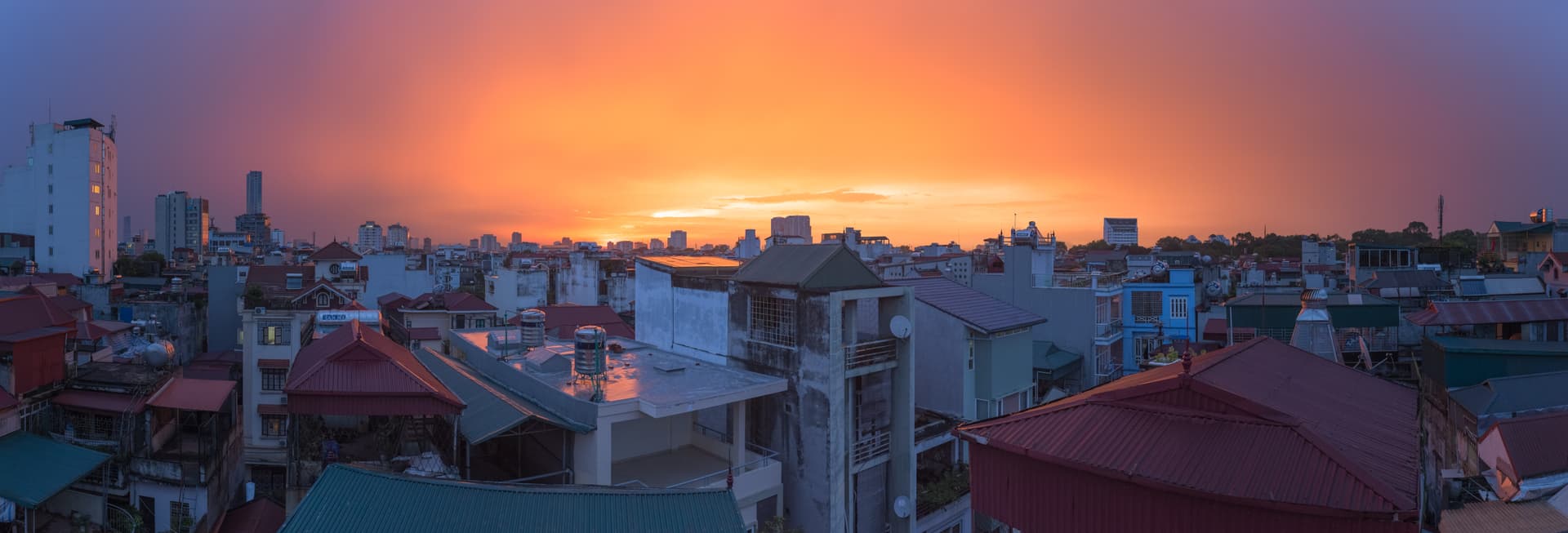
Hanoi is the capital — the political, administrative, and cultural centre — and the country's second-largest city, with about 8 million people. It's a thousand years old as a continuously inhabited urban centre (founded as Thăng Long in 1010 by the Lý dynasty) and still feels it.
A quick orientation
The city sits in the Red River delta, with the Red River (Sông Hồng) forming a natural boundary to the east. The historic centre is wedged between Hoàn Kiếm Lake (the city's symbolic centre) and West Lake (Hồ Tây — much larger, fancier district).
Main areas:
- Old Quarter (Phố Cổ) — 36-streets historic merchant district, dense tube houses, street food, motorbikes. Where most visitors stay.
- French Quarter — wide boulevards, the Opera House, embassies, colonial architecture. Just south of Hoàn Kiếm.
- Ba Đình — government district. Hồ Chí MinhHồ Chí Minh (Ho Chi Minh)hoh chee minLargest city in Vietnam, formerly Sài Gòn; the commercial and economic capital of the country in the south. Mausoleum, Presidential Palace, Temple of Literature.
- Tây Hồ (West Lake) — expatriate-heavy, upscale restaurants, boutique hotels.
- Long Biên — across the Red River, the area around the iconic 1903 Long Biên Bridge.
What you should see
- Hoàn Kiếm Lake — central, walkable around (1.7 km loop), Ngọc Sơn temple on a small island. Especially atmospheric early morning when locals exercise.
- Old Quarter walk — the 36 streets are still named for the trades they once held: Hàng Bạc (silver), Hàng Gai (silk), Hàng Mã (paper).
- Temple of Literature (Văn Miếu) — Confucian university from 1070, the original university of Vietnam.
- Hồ Chí Minh Mausoleum and complex — the mausoleum, his stilt house, the one-pillar pagoda, the Presidential Palace. Open mornings only; check schedule.
- Hỏa Lò Prison ("Hanoi Hilton") — French colonial prison; later held American POWs. Well-presented museum.
- Vietnamese Women's Museum — quietly excellent.
- Ethnology Museum — the country's 54 ethnic groups, large outdoor architectural section.
- West Lake circuit — about 17 km around; the Trấn Quốc Pagoda on the peninsula is the city's oldest.
Food highlights
Hanoi is a food destination in its own right. Beyond the famous dishes:
- Bún chả — Hanoi's signature lunch. See: Bún chả
- Phở — Hanoi-style, austere. See: Phở
- Chả cá Lã Vọng — grilled freshwater fish with turmeric and dill.
- Bún thang — chicken-and-egg vermicelli soup; a Tết speciality, now year-round.
- Bánh cuốn — steamed rice-flour pancakes with minced pork.
- Egg coffee (cà phê trứng) — Hanoi specialty; tiramisu in a cup.
- Bia hơi — fresh draft beer, sold on pavement corners in the late afternoon.
Getting around
- Walking — the Old Quarter is best on foot. Be alert; motorbikes weave everywhere.
- Grab / Be — universal ride-hailing.
- Motorbike taxi (xe ôm) via Grab — fastest in traffic.
- Cyclo — touristy now, fine for short rides.
- Hanoi Metro — Line 2A (Cát Linh–Hà Đông) opened 2021; Line 3 partially opened. Useful for specific routes but coverage is limited.
- Buses — extensive but require some figuring out.
- Taxis — Vinasun and Mai Linh are the real ones. See Taxi scams.
When to visit
- Spring (Mar–Apr) — best weather; mild and clear.
- Autumn (Oct–Nov) — second-best; classic Hanoi weather.
- Summer (Jun–Aug) — hot (35°C+) and humid. Sudden afternoon storms.
- Winter (Dec–Feb) — cool to cold (10–18°C), damp, grey. Less crowded; layers needed.
Where to stay
Most visitors stay in the Old Quarter for atmosphere or West Lake for upmarket comfort. The French Quarter has classic colonial-era hotels (Sofitel Metropole is the famous one).
Day trips
- Ninh Bình (~2 hr drive) — "Hạ Long on land," limestone karsts.
- Bát Tràng ceramic village (~45 min) — pottery, easy half-day.
- Mai Châu (~3 hr) — White Thái ethnic-minority villages, rice paddies.
- Hạ Long Bay (~2.5 hr to the harbour) — overnight cruises depart from Tuần Châu or Hòn Gai. See: Hạ Long Bay
- Sapa (overnight train or short flight) — northern hill country. See: Sapa
Quick verdict
Hanoi is Vietnam's 1,000-year-old capital: a sprawling, traffic-heavy metropolis with a living Old Quarter, lakes, French colonial architecture, and some of Southeast Asia's best street food. It's most loved for its raw energy, the dense sensory experience of the Old Quarter, and its position as Vietnam's cultural and intellectual heart. It's not a beach destination, and it's noisier and less polished than HCMC — expect chaos on the streets and grey winter months.
Best for / not ideal for
Best for:
- Backpackers and budget travellers seeking the classic Old Quarter atmosphere and street-food scene
- Foodies wanting authentic Vietnamese regional cuisine and egg coffee culture
- History and culture travellers interested in colonial architecture, temples, and 1,000 years of continuous urban life
Not ideal for:
- Travellers seeking pristine beaches or island relaxation
- Those sensitive to air pollution, traffic noise, or intense urban density
- Winter travellers who dislike grey, damp, cool weather (Dec–Feb)
How long to stay
Most visitors spend 2–4 nights in Hanoi. Two nights is the minimum to walk the Old Quarter, visit Hoàn Kiếm Lake, and try the food; three to four days allows time for the Hồ Chí Minh Mausoleum complex, the Ethnology Museum, and day trips to Ninh Bình or a nearby village. Budget 1 extra night if you're arriving by train and acclimatizing.
Climate by month
Spring (Mar–Apr) and autumn (Oct–Nov) are the best times: mild, dry, and clear. Summer is hot and humid (35°C+) with afternoon storms; winter (Dec–Feb) is cool to cold (10–18°C), grey, and damp. For the full breakdown, see Weather by Month.
Day trips from here
- Ninh Bình (~2 hr drive) — limestone karsts and river scenery, sometimes called "Hạ Long on land"
- Hạ Long Bay (~2.5 hr to port) — overnight cruises depart from nearby harbours; see full guide
- Bát Tràng ceramic village (~45 min) — centuries-old pottery village; accessible half-day excursion
- Mai Châu (~3 hr) — White Thái ethnic-minority villages set in rice paddies
- Sapa (overnight train or 1 hr flight) — northern mountain town with trekking and hill-tribe markets; see full guide
Local transport
Grab and Be are the dominant ride-hailing apps; most visitors use Grab for motorbike taxis (xe ôm via the app) and cars. The Old Quarter is best explored on foot, though motorbikes move constantly and require alertness. Hanoi Metro (Line 2A running since 2021) covers limited routes but is useful for specific trips. Cyclos and buses exist but are less efficient; avoid metered taxis unless using trusted operators like Vinasun or Mai Linh.
Frequently asked questions
How long should I spend in Hanoi?
What is the best time of year to visit Hanoi?
Where do most visitors stay in Hanoi?
What are the must-try foods in Hanoi?
How do I get around Hanoi?
What day trips are possible from Hanoi?
Continue reading
Comments
No comments yet.