Đắk Lắk Province
Vietnam's coffee capital — 75% of national output — plus Yok Đôn National Park, Lak Lake homestays, and the changing ethics of elephant tourism.
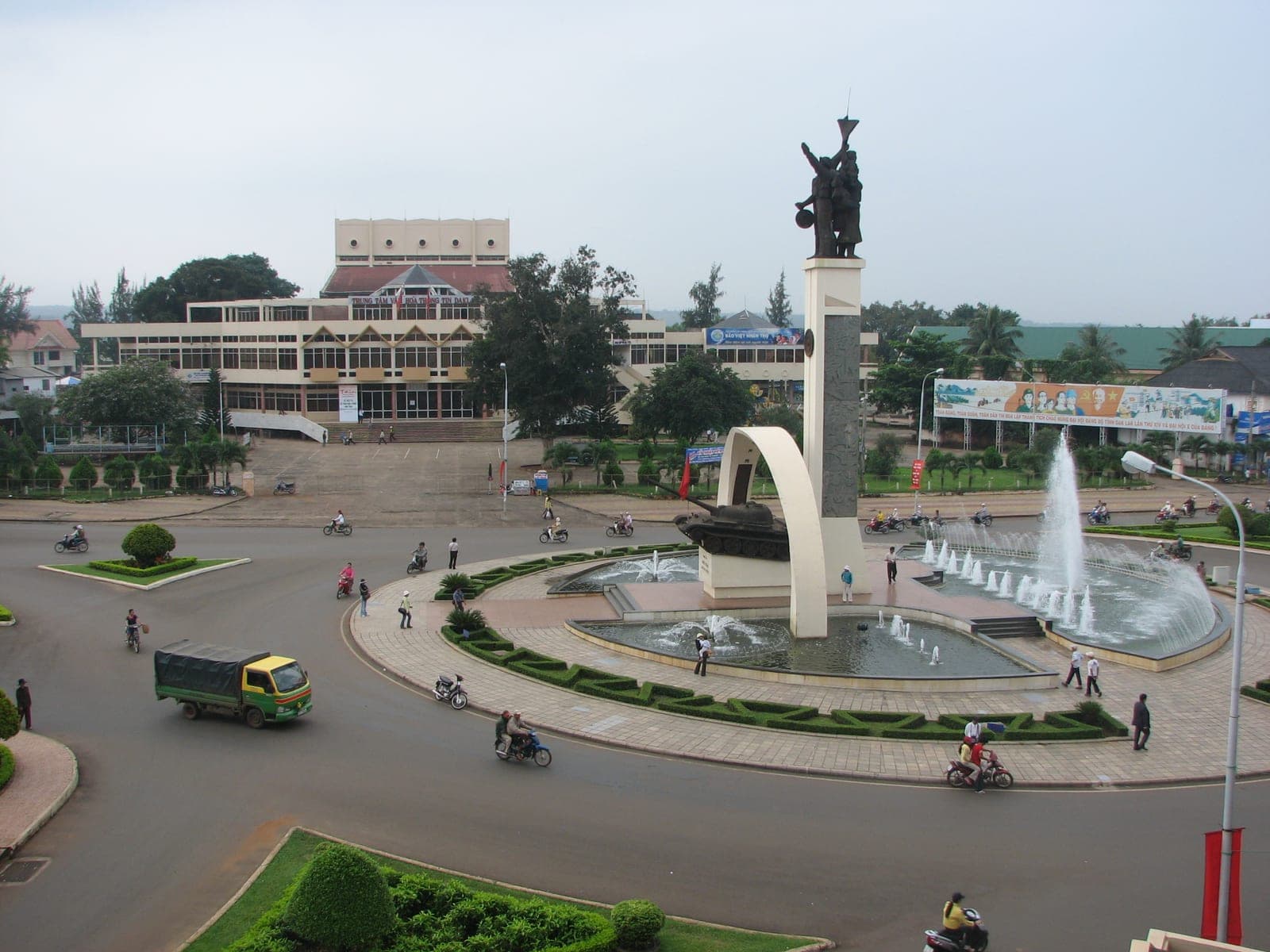
Đắk Lắk is the largest of the Central Highlands provinces and the centre of Vietnam's coffee industry — by some estimates, three-quarters of the country's coffee comes from this single province. It is also the historic Ede heartland and the place where elephant tourism, long a fixture, is being slowly remade.
What's distinctive
Buôn Ma Thuột is the only city in Vietnam where coffee is a serious cultural identity rather than a side industry. The biennial Buôn Ma Thuột Coffee Festival (usually March, odd years) is the largest in the region. The province is also home to the Ede (Ê Đê) and M'Nông ethnic groups, both of whom traditionally kept domesticated elephants, which is the historical reason elephants have been part of tourism here.
What to see
- Buôn Ma Thuột city — large, low-rise, defined by its big coffee houses, the Victory Monument tank, and the Đắk Lắk Provincial Museum (one of the best ethnographic museums outside Hà Nội).
- The World Coffee Museum (Trung Nguyên) — built by Trung Nguyên Legend, the country's largest coffee company. Genuinely substantial; expect two hours.
- Buôn Đôn — village in the north-west famous for its elephant traditions. Long-distance suspension bridges over the Sêrêpôk river. The elephant-riding here is being phased out in favour of "elephant-friendly" walking visits.
- Yok Đôn National Park — Vietnam's largest national park. Home to a wild elephant population and, importantly, the site of the country's most public transition away from elephant-riding tourism. Animals Asia and Yok Đôn now run "ethical elephant" walking tours where visitors observe semi-released elephants in forest, with no riding. Choose this option, not the riding alternatives.
- Lak Lake (Hồ Lắk) — large freshwater lake 50 km south of Buôn Ma Thuột. M'Nông villages around the lake offer homestays; dugout canoes replace the older elephant-back tours.
- Dray Sap and Dray Nur waterfalls — twin falls on the Sêrêpôk, 30 km from the city. Best in the wet season.
- Buôn Ako Dhong — Ede village absorbed into the city, with traditional stilt longhouses and a small museum.
On elephants: the honest take
The Central Highlands has had domesticated elephants for centuries. From the 1990s, elephant-riding became one of the most visible tourism activities here. From the late 2010s the public, NGO and Vietnamese government view has shifted. Yok Đôn National Park ended elephant-riding in 2018 with Animals Asia's support; Lak Lake operators have followed in stages. There are still places offering rides — please do not give them business. The walking observation tours are inexpensive, more interesting, and they pay the mahouts.
How to get there
| From | Mode | Time | Price (approx.) |
|---|---|---|---|
| HCMC | Flight to Buôn Ma Thuột (BMV) | 1 hr | 900k–1.8m VND |
| Hà NộiHà Nội (Ha Noi)hah noyCapital of Vietnam, in the north. Population ~8 million. 1,000+ years as a Vietnamese capital. | Flight | 1 hr 50 | 1.2–2.2m VND |
| Đà Lạt | Bus | 4–5 hr | 150–250k VND |
| Nha Trang | Bus | 5 hr | 200–300k VND |
| Pleiku (Gia Lai) | Bus | 4 hr | 150k VND |
BMV airport is 8 km from the city. Daily flights from major cities make this the easiest highlands province to reach.
When to visit
| Period | Verdict |
|---|---|
| Nov–Apr | Best — dry, clear, cooler nights |
| Feb–Mar | Coffee blossom; brief, white, fragrant |
| Mar (odd years) | Coffee Festival |
| May–Oct | Wet season; greener, fewer crowds |
The plateau is around 500 m; days are warm, nights pleasant.
Where to stay
| Hotel | Style | Price range |
|---|---|---|
| Mường Thanh Luxury Buôn Ma Thuột | Top end | 1.5–2.5m VND |
| Sài Gòn–Ban Mê | Reliable mid-range | 800k–1.2m VND |
| Coffee Tour Resort | Themed mid-range | 800k–1.4m VND |
| Mini-hotels around Lê Duẩn | Budget | 300–500k VND |
| Lak Tented Camp | Mid-range lakeside | 1.5–2.5m VND |
| Jun Village (Lak Lake) homestays | M'Nông village stay | 200–400k VND |
Practicalities
- Grab works in Buôn Ma Thuột; outside the city, hire a motorbike (130k/day) or car. See transport/motorbike-rental.
- For Yok Đôn ethical-elephant visits, book ahead at the park headquarters in Krông Na.
- ATMs reliable in the city; sparse in the districts.
Food / what to eat
- Bún đỏ Buôn Ma Thuột — "red noodles" in a deep-orange annatto-and-tomato broth with crab and pork.
- Gà nướng kiến vàng — chicken grilled with yellow-ant salt; a highland specialty.
- Cà phê chồn / cà phê arabica — try the local single-origin coffees at any of the Trung Nguyên, An Thái, or smaller specialty roasters.
- Cơm lam with grilled wild boar at Lak Lake villages.
Related: Gia Lai, Đắk Nông, Kon Tum, Central Vietnam.
Phú Yên
Phú Yên's coastline is now part of Đắk Lắk province. It is a stretch of central coast where the mountains push close to the water, producing small bays, headlands and offshore rocks, quieter than Quy Nhơn to the north or Nha Trang to the south. The area entered Vietnam's domestic consciousness in 2015 when the film Tôi thấy hoa vàng trên cỏ xanh ("I see yellow flowers on green grass") used its landscapes as a backdrop, and it has stayed on the domestic-tourism map since, while remaining largely unknown to foreign visitors.
The standout site is Mũi Điện (also called Mũi Đôi), the easternmost point of mainland Vietnam — a 30-minute hike from the car park to a French-built lighthouse dating to 1890, and a popular sunrise pilgrimage; locals camp out overnight for it. Bãi Môn, the small beach next to it, is almost always empty. Bãi Xếp and the adjoining Gành Đá Đĩa — a cliff of hexagonal basalt columns beside a small fishing cove — also featured in the 2015 film and are now heavily photographed; dawn is about the only time to see them without crowds. Further along the coast are Đại Lãnh beach, a long curving stretch of sand with a photogenic fishing village at its south end; Vũng Rô, a sheltered deepwater bay that served historically as a wartime supply landing for North Vietnamese ships; and Ô Loan lagoon, a brackish coastal lagoon known for oysters and blood cockles. In Tuy Hòa, the former provincial capital, Núi Nhạn hill carries a Cham brick tower, Tháp Nhạn, and is a sundown spot in the middle of town.
The coast's food is distinct from the highland cooking further inland: mắt cá ngừ đại dương (tuna eye stew) is the signature dish, sò huyết Ô Loan are blood cockles from the lagoon grilled with scallion oil, bánh hỏi lòng heo is a regional breakfast of fine rice noodles with pork organ, and bún sứa — jellyfish noodle soup — is a summer-only item. The sites are spread along the coast rather than clustered, so a rented scooter or a hired car and driver is the practical way to cover them; English is rare outside the resort hotels.
Quick verdict
Đắk Lắk is Vietnam's coffee heartland, where sustainable farming meets highland tourism. The province is most known for its vast coffee plantations, the ethical elephant-experience transition at Yok Đôn National Park, and the M'Nông and Ede ethnic traditions. Visitors should expect a slower pace than the coast, genuine conservation efforts replacing old-style elephant tourism, and some of Southeast Asia's best single-origin coffee.
Best for / not ideal for
Best for:
- Coffee enthusiasts willing to spend time at roasteries and plantation visits (Trung Nguyên tour included in most itineraries)
- Responsible wildlife tourists interested in ethical elephant observation walks and birding at Yok Đôn
- Travellers seeking authentic ethnic homestays and quieter highlands retreats away from Sapa crowds
Not ideal for:
- Beach-focused holidays or beach-to-highlands day-trippers from coastal towns
- Those expecting vibrant nightlife or tourist infrastructure on par with Hà Nội or HCMC
How long to stay
A 2–3 night base in Buôn Ma Thuột is realistic if doing the coffee museum, city streets, and one half-day trip (Buôn Đôn or Lak Lake). If you add Yok Đôn park and Lak Lake homestay, extend to 3–4 nights. Day-tripping in is possible from Đà Lạt or Pleiku but wastes travel time; better as a 2-night minimum stop on a highlands loop.
Climate by month
November to April is the dry season and best window — cool mornings (13–15°C), pleasant afternoons (25–28°C), and clear visibility on coffee plantations. February sees brief white coffee blossoms; March hosts the biennial Coffee Festival (odd years). May–October is wet and green, with afternoon downpours, but fewer tourists and lower prices.
Day trips from here
- Yok Đôn National Park (15 km north-west) — ethical elephant walks, forest trails, and wild-animal spotting
- Lak Lake (50 km south) — M'Nông villages, dugout canoe rides, and lakeside homestays
- Dray Sap and Dray Nur waterfalls (30 km, Sêrêpôk river) — twin cascades, best May–October
- Pleiku (Gia Lai province) (4 hr bus) — secondary highlands hub with Ia Ksor waterfall and Jarai ethnic sites
Local transport
Grab operates reliably in Buôn Ma Thuột (short rides 40–80k VND). Outside the city, rent a motorbike (130–150k VND/day via tourist shops on Lê Duẩn Street) or hire a car with driver (600–800k VND/day). Buses to Lak Lake and Yok Đôn depart from Buôn Ma Thuột bus station (30–60k VND) but running times are variable; arranging with your hotel or a tour operator (300–500k VND per person for group tours) is more reliable.
Frequently asked questions
Can you still ride elephants in Đắk Lắk?
How many days do you need in Đắk Lắk?
When is the best time to visit Đắk Lắk?
Continue reading
Comments
No comments yet.