Cần Thơ: Capital of the Mekong Delta
The Mekong Delta's largest city — 1.5 million people, the famous Cái Răng floating market, and the natural overnight base for any serious delta itinerary.
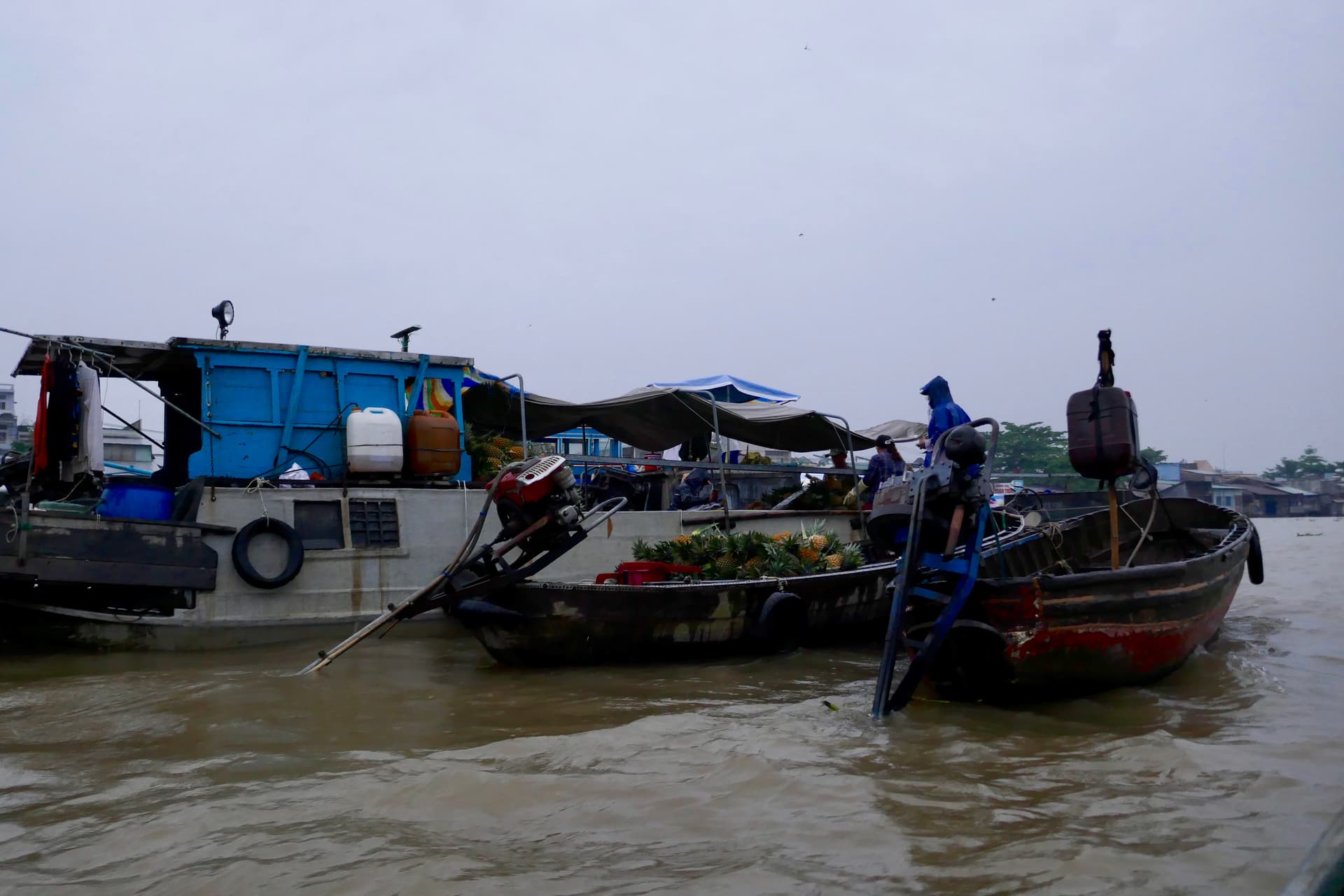
Cần Thơ is the largest city in the Mekong Delta — ~1.5 million people, a river-port economy, the regional centre for agriculture, education, and seafood processing. For visitors, it's the natural overnight base for the delta and the gateway to the famous Cái Răng floating market.
It's the only delta city with a real airport (flights from HCMC, Hanoi, Đà NẵngĐà Nẵng (Da Nang)dah nangMajor coastal city in central Vietnam, known for its beaches, the Marble Mountains, and modern infrastructure., Phú Quốc, Côn Đảo), making it a viable entry point for travellers who don't want to start in HCMC.
What's distinctive
Cái Răng floating market
The Mekong's biggest still-functioning wholesale river market — boats laden with fruit and vegetables congregating before dawn to trade with mid-stream buyers. Sellers tie a sample of what they're selling to a high pole on the boat (pineapples, watermelon, pumpkins) so buyers know from a distance.
Visit at 5–6 am. By 7 am the wholesale trade thins; by 9 am the tourist boats outnumber the real boats. Smaller boats can be hired from Ninh Kiều waterfront the evening before (200–400k VND for a 2–3 hour trip).
A second smaller market, Phong Điền, operates 8 km away and is less touristed but also smaller.
Ninh Kiều waterfront
Cần Thơ's central promenade — pleasant in the cool of the evening, lined with restaurants, with views across to Xóm Chài on the opposite bank. Ho Chi Minh statue at one end; the Quang Trung Bridge in the distance.
Bình Thuỷ Ancient House
A late-19th-century French-Vietnamese-style house, still owned by the original family who occasionally guide visits themselves. Featured in Tran Anh Hung's film The Lover (1992). Small entry fee, atmospheric.
Mekong canal cycling
The far side of the river (Xóm Chài and onwards) is a network of small canals and orchards — easy cycling on flat back-roads, often with a local guide arranged through your hotel.
How to get there
| Mode | From | Duration | Notes |
|---|---|---|---|
| Flight | HCMC / Hanoi / Đà Nẵng / Phú Quốc / Côn Đảo | 45 min from HCMC | Vietnam Airlines, Bamboo, Vietjet |
| Express bus | HCMC | 3.5 hr | Mien Tay station; Phương Trang, Mai Linh, Futa |
| Private car | HCMC | 3.5 hr | Door-to-door |
| Bus from delta provinces | Mỹ Tho, Bến Tre, Vĩnh Long | 1–2 hr | Frequent |
When to visit
- December–April: dry season, clearest water, easiest road conditions.
- June–October: wet season, lush, occasional flooding on rural roads.
The floating market operates year-round but is most active in the dry season when wholesale fruit volumes are highest.
Where to stay
- Victoria Cần Thơ — French-colonial-style mid-range/upper-range, on the river south of the centre.
- Vinpearl Hotel Cần Thơ — corporate-modern, central.
- Iris Hotel Cần Thơ — mid-range business standard.
- Numerous guesthouses in the Ninh Kiều area for budget.
Book Cần Thơ for the night BEFORE you want to visit the floating market — you need to be on a boat by 5:30 am.
Food
- Bún cá Cần Thơ — fish vermicelli, the city's breakfast specialty.
- Bánh tét — sticky rice cylinder; a delta staple, especially at Tết.
- Bánh xèo Mekong style — large, generous with bean sprouts and shrimp.
- Hủ tiếu Nam Vang — the southern Sino-Vietnamese noodle soup; Cần Thơ does it well.
- Cá lóc nướng trui — grilled snakehead fish wrapped in straw.
- Mekong fruit — straight from the orchard farms, especially the small mangoes.
Practicalities
- Cần Thơ Airport is 10 km from the city centre; Grab works.
- The city is flat and walkable around Ninh Kiều; bicycle rental is easy.
- Khmer ethnic minority is present but smaller than in Trà Vinh or Sóc Trăng.
Onward
Cần Thơ is mid-delta. From here, common onward destinations:
- West to Châu Đốc (An Giang) — 3 hours, Cambodia border, Sam Mountain pilgrimage.
- South to Cà Mau — 4 hours, the southernmost point of Vietnam.
- Boat to Phú Quốc — via Rạch Giá ferry, full-day journey.
Most delta itineraries spend 1–2 nights in Cần Thơ then either return to HCMC or push west.
Sóc Trăng
Sóc Trăng city, about an hour south of central Cần Thơ, is now part of Cần Thơ province and remains known for its Khmer heritage. It had the second-largest ethnic Khmer population in Vietnam (after Trà Vinh) and more than 90 working Khmer Theravada pagodas, most still home to monks who welcome quiet visitors.
The standout stop is the Bat Pagoda (Chùa Dơi, also called Wat Mahatup), a 16th-century Khmer Theravada temple where large fruit bats — flying foxes — roost by the hundreds in the trees on the grounds, hanging upside-down through the day and flying out to forage at dusk. Monks tolerate and protect them. The pagoda itself is painted in Khmer style with a gold-tipped roof and narrative murals on the prayer hall walls; entry is free and dress should be modest.
Nearby is the Clay Buddha Pagoda (Chùa Đất Sét), a small, unusual temple where the Buddhas, candles and decorative figures are all made of unfired clay, built up by one family over decades. Some of its candles weigh over 200 kg and have been burning continuously for years. Also free, also atmospheric.
The other reason to time a visit here is the Ok Om Bok festival, the Khmer "Moon Worshipping" celebration held on the full moon of the 10th lunar month, typically around October. It features lantern releases and sticky-rice-cake offerings, but the headline event is the ghe ngo boat races on the Maspero river — long racing canoes crewed by 50–60 paddlers each, with drums and flags — one of the most spectacular festivals in the south. Accommodation books out months ahead for it.
For food, look for bún nước lèo Sóc Trăng, a fish-based noodle soup with a prahok-style fermented paste that rivals Trà Vinh's version, and bánh pía Sóc Trăng, flaky pastries filled with mung bean paste and salted egg yolk that are sold nationally. There are also Khmer sweets made with palm sugar and coconut. Sóc Trăng city itself has mid-range business hotels (Quê Tôi, Khánh Hưng) and budget guesthouses, but no international chains.
Hậu Giang
The area around Vị Thanh, roughly 30 minutes south of central Cần Thơ, is now part of Cần Thơ province and remains one of the delta's least-visited corners, built almost entirely around rice and catfish farming. It has almost no dedicated tourist infrastructure, and visitors here tend to be locals, officials, contractors, or researchers rather than tourists.
The one real natural attraction is the Lung Ngọc Hoàng Nature Reserve, about 2,800 hectares of seasonally-flooded forest and wetland with notable bird life, including rare species. Organised tours are infrequent, and the reserve is most easily visited with a Vietnamese-speaking guide.
The area is one of the major centres for basa (pangasius) catfish farming — pond operations line the rivers everywhere. It isn't a tourist draw in itself, but it's a distinctive look at the aquaculture economy that underpins much of the Mekong's exports; rice paddies fill out the rest of the landscape. Khmer communities live in scattered villages here too, a smaller presence than in Trà Vinh or Sóc Trăng but still present.
Vị Thanh town has basic phở and cơm tấm vendors and street stalls selling catfish curry and rice pancakes for under 50,000 VND, but no Western-oriented cafes — coffee is strong, iced, and Vietnamese-style. Accommodation is limited to business hotels aimed at officials and contractors (roughly 25–50 USD/night) and a few family-run guesthouses in smaller towns (15–25 USD/night); there are no tourist-grade resorts. English is minimal outside Vị Thanh, with fewer than 5% of locals speaking it, so Grab and Google Translate matter more than usual here. The area is very safe, with minimal petty theft, though it's best to avoid photographing government facilities given local sensitivity around them.
Vĩnh Thạnh Island, about 45 minutes east, offers fruit orchards and narrow waterways reachable by motorbike ferry, and is the most-cited nearby day trip.
Realistically, most visitors will pass through this area en route elsewhere in the delta rather than stop specifically for it.
Quick verdict
Cần Thơ is the Mekong Delta's working hub — 1.5 million people, a real city rather than a town, built on agriculture and river trade. It's best known for the pre-dawn Cái Răng floating market, where wholesale boats still gather to trade produce before sunrise. It's not a beach destination or a major cultural attraction, but it's the natural overnight base if you want to see the delta's rhythm beyond the tourist orchards.
Best for / not ideal for
Best for:
- First-time delta visitors who want an early start at Cái Răng and a real city atmosphere
- Backpackers and mid-range tourists cycling through the delta on a tight itinerary
- Travellers arriving/leaving via Can Tho Airport (the delta's only international gateway)
Not ideal for:
- Beach holidays or resort relaxation
- Those looking for colonial-era charm (Cần Thơ is modern and functional rather than picturesque)
How long to stay
Most visitors spend 1–2 nights: one night before the floating market tour (4–5 am start), then a day cycling or resting before moving on. If you have time, 3 nights lets you add a second day trip into the deeper delta (Phong Điền market, Xóm Chài orchards) or a canal cycling loop.
Climate by month
December–April is the dry season and best for travel — coolest mornings, clearest water for floating market photos, and firm roads. June–October is wet season: lush green, fewer tourists, but occasional rural flooding and sticky humidity. The floating market operates year-round but is most active (highest wholesale volumes) in the dry season. See /practical/weather-by-month for the full regional breakdown.
Day trips from here
- Cái Răng floating market — 10 km north, pre-dawn boat tour (5–6 am) to watch the Mekong's biggest wholesale fruit market in action
- Phong Điền floating market — 8 km west, smaller and less touristy than Cái Răng, better for a quieter experience
- Mekong canal cycling (Xóm Chài side) — flat back-road loops through orchards and small canals on the far bank, easily arranged through hotels
- Bình Thuỷ Ancient House — late-19th-century French-Vietnamese mansion still run by the original family, worth a short visit
Local transport
Grab works reliably within the city and to the airport. Motorbike rental is easy and affordable for exploring the delta side roads. Walking works well around Ninh Kiều waterfront in the evenings. The floating market is accessed by hiring a small boat from Ninh Kiều the evening before (200–400k VND for 2–3 hours).
Frequently asked questions
What time should I visit Cái Răng floating market?
How many nights should I spend in Cần Thơ?
How do I get to Cần Thơ from Ho Chi Minh City?
Continue reading
Comments
No comments yet.