Củ Chi Tunnels (Day Trip from HCMC)
The Việt Cộng tunnel network outside Saigon — 250 km of underground passages, hospitals, kitchens, command posts. Two main visitor sites and a stark history.
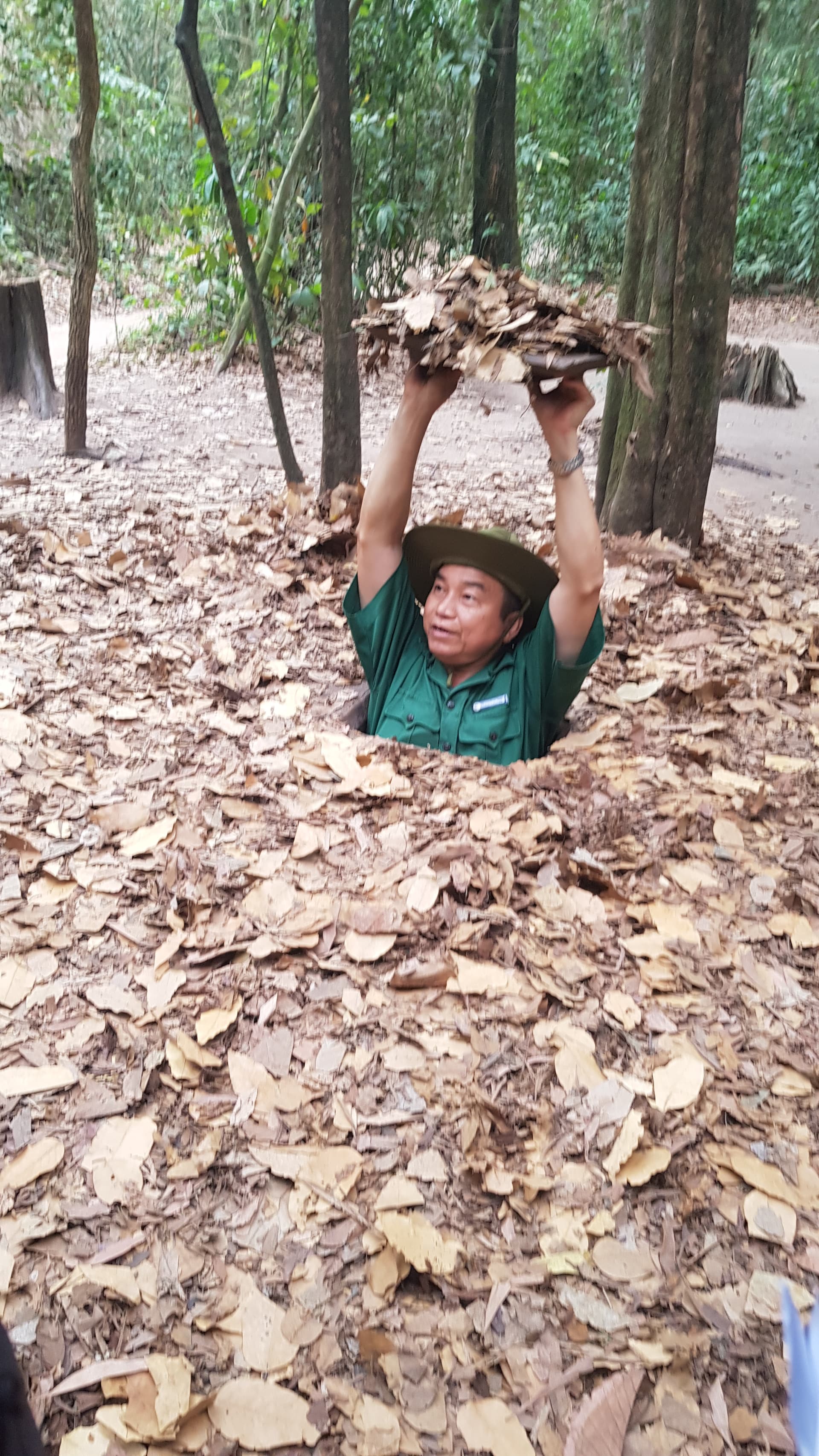
The Củ Chi tunnel network outside Ho Chi Minh City is the most-visited war-history site for foreign tourists in southern Vietnam. About 250 km of underground passages, built and maintained by the Việt Cộng over 25 years, contained hospitals, kitchens, command posts, weapon factories, and living quarters — all under the noses of (and bombs of) the US military.
It's a standard day-trip from HCMC and worth the half-day, with reservations about the more theme-park elements of the experience.
Two main sites
| Site | Distance from HCMC | Atmosphere |
|---|---|---|
| Bến Đình | 35 km, 1 hr drive | Closer, more developed for tourists, more crowded |
| Bến Dược | 50 km, 1.5 hr drive | Less developed, more atmospheric, fewer foreigners |
Most international tours go to Bến Đình. If you have your own driver or want a quieter experience, Bến Dược is the recommendation.
What you see
- The tunnels themselves — short demonstration sections widened for foreign tourists (the originals are much narrower). You can crawl through a 100m section.
- Booby trap exhibits — punji-stick traps, swing-arm traps, the spike-board, the trap door. Models, not live.
- Reconstructed bunker rooms — kitchen, dormitory, command room.
- Tay Ninh shooting range — fire AK-47, M16, .50 cal at $1.50 per bullet. Optional, popular with some visitors, considered tasteless by others.
- Documentary film — a black-and-white short shown in the visitor centre, made in the 1960s, dramatic Vietnamese narrative; it's of its era.
How to get there
| Option | Cost (USD) | Notes |
|---|---|---|
| Group tour from HCMC | $15–35 | Bus, lunch sometimes included, fixed itinerary |
| Private tour | $80–120 | More flexible, English guide |
| Speedboat tour | $50–80 | Sài GònSài Gòn (Sai Gon)sigh gonThe historic and colloquial name for Ho Chi Minh City, still widely used by locals and expats alike. River via boat to Bến Dược — scenic, less crowded |
| Self-drive (Grab / motorbike) | Variable | 1 hr to Bến Đình; guide on-site at entrance |
The speedboat to Bến Dược is the most distinctive option — 2 hours up the river, smaller groups, atmospheric arrival.
When to visit
- Year-round accessible.
- Mornings are cooler and less crowded; aim to arrive by 8:30 am.
- Avoid Sunday mornings (Vietnamese family groups).
History (the briefest summary)
The tunnels were begun in the late 1940s during the French war, then expanded dramatically through the American war. At peak, they housed an estimated 16,000 people. The US military launched Operation Crimp in 1966 and Operation Cedar Falls in 1967 specifically to destroy the network — including saturation bombing of the surrounding "Iron Triangle" and chemical defoliation. The tunnels mostly survived; their occupants did not always.
The Vietnamese perspective on Củ Chi is patriotic memorial. Most foreign visitors arrive with American-movie-shaped expectations and leave with a more textured sense.
What to bring
- Old clothes — the tunnels are dusty.
- Closed shoes — sandals are impractical underground.
- Water — humid year-round.
- Mosquito repellent for the surrounding jungle area.
Practicalities
- Tunnel size: tourist-widened sections are ~80cm × 1m. Claustrophobic visitors can opt out — most tour groups have a designated "above ground" alternative path.
- Entry fee: 110,000–125,000 VND at the site.
- Shooting range: optional, charged separately. Some travellers find it incongruous with the memorial context.
Beyond Củ Chi: pairing with Cao Đài Temple
A common day-trip combination: Củ Chi tunnels in the morning, then Cao Đài Holy See in Tây Ninh for the noon ceremony. Many group tours sell this as a single full-day itinerary at $35–50.
Honest take
Củ Chi is worth a half-day for anyone interested in the Vietnam War. The tourist-widened tunnels can feel theme-park-like — but the surrounding museum, the original narrow tunnels you can see (without entering), and the documentary footage carry the weight.
For deeper war history, follow with the War Remnants Museum in HCMC the same evening or next day. For the northern equivalent in atmosphere, see Vĩnh Mốc tunnels in Quảng Trị, which housed civilians rather than fighters and feels markedly different.
Why visit cu-chi-tunnels
Củ Chi offers a tangible walk through 25 years of Việt Cộng ingenuity and survival — you're literally walking through (widened versions of) the same passages that housed soldiers, medics, and craftspeople while fighter jets dropped napalm overhead. The reconstructed bunker rooms and booby-trap exhibits give visceral context to the Vietnam War that textbooks can't match. Unlike pure museums, you descend underground and feel the confined reality of tunnel life.
When to go
November to February are the best months — cool mornings (19–24°C) and low humidity make the tunnels less claustrophobic and sweaty. Avoid May to September (heat + rain); June is particularly oppressive. The site stays open year-round, though it can flood lightly in October. Mornings are always preferable — arrive by 8:30 am to beat both heat and crowds, especially on weekends when Saigon families descend en masse.
How to get there
From Ho Chi Minh City's central districts, Bến Đình is 35 km northwest (1–1.5 hours by Grab or tour bus); Bến Dược is 50 km (1.5 hours). A private Grab driver costs 200,000–300,000 VND (USD $8–12); group tours from backpacker hotels run $15–25. The scenic alternative is a speedboat up the Sài Gòn River to Bến Dược (2 hours, $50–70), available through tour operators near the Bến Nghé waterfront. See Day trips from Ho Chi Minh City for combined itineraries.
What to see and do
- Crawl through a 100m section of tourist-widened tunnels (original passages are 60cm high) — genuinely claustrophobic
- Study authentic booby traps (punji sticks, trapdoor pits, swinging blades) in the on-site museum
- Explore reconstructed command posts, kitchens, and sleeping quarters showing daily tunnel life
- Optional: fire an AK-47 or M16 at the shooting range ($1.50 per round) — historically awkward but popular
- Watch the 1960s propaganda documentary for Vietnamese narration of the network's strategic importance
Where to stay nearby
Củ Chi has minimal accommodation; most visitors day-trip from HCMC. Budget: homestays in Củ Chi town (100,000–150,000 VND / $4–6); mid-range: Saigon Outpost eco-lodge 30 km away ($30–45); premium: stay in HCMC's Bitexco/District 1 and drive out. Most tours include transport from your hotel.
Practicalities
- Entry fee: 110,000–125,000 VND (USD $4.50–5); shooting range separate (pay per bullet).
- Hours: 8:00 am–5:00 pm daily. Claustrophobic visitors can skip the tunnel crawl; guides always offer an above-ground alternative path.
- Common pitfall: Do not wear new white trainers or light-coloured clothes — the tunnels are dusty and the red clay stains permanently. Closed shoes and old clothes essential.
Frequently asked questions
Which is better, Bến Đình or Bến Dược?
Can I actually crawl through the tunnels, and is it too small for me?
Is the shooting range worth doing?
Continue reading
Comments
No comments yet.