Hội An Lantern Festival
Every lunar full moon, the Old Town pedestrianises and lights up — silk lanterns above, paper lanterns floated on the river. Monthly, predictable, photogenic.
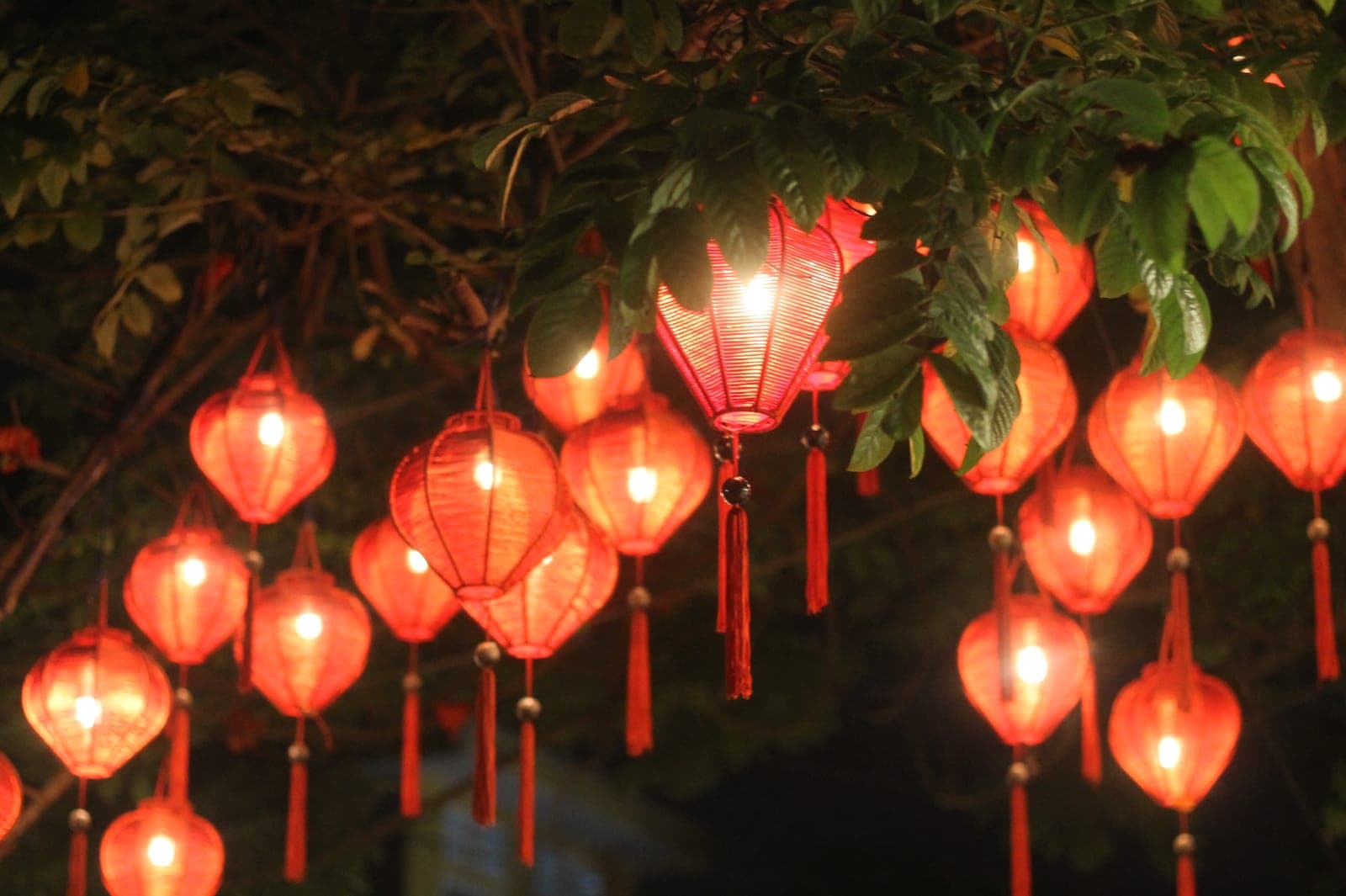
The Hội An Lantern Festival happens every full moon — the 14th day of each lunar month. The Old Town is pedestrianised, electric lights are dimmed, silk lanterns hang across every street, and paper lanterns are floated on the river. It's the most consistent and photogenic monthly festival in Vietnam.
When it happens
| Month | 2026 dates (approximate) |
|---|---|
| 14th day, lunar month 1 | 31 January |
| 14th day, lunar month 2 | 1 March |
| 14th day, lunar month 3 | 30 March |
| 14th day, lunar month 4 | 29 April |
| 14th day, lunar month 5 | 28 May |
| 14th day, lunar month 6 | 26 June |
| 14th day, lunar month 7 | 26 July |
| 14th day, lunar month 8 | 25 August (Mid-Autumn — extra-special) |
| 14th day, lunar month 9 | 23 September |
| 14th day, lunar month 10 | 23 October |
| 14th day, lunar month 11 | 21 November |
| 14th day, lunar month 12 | 21 December |
The Mid-Autumn version (8th lunar month) is the largest and most spectacular. See Mid-Autumn Festival.
What you'll see
- Old Town streets pedestrianised from ~5 pm. Motorbikes and cars excluded.
- Electric streetlights dimmed. Hundreds of silk lanterns provide most of the lighting.
- Lantern boats on the Thu Bồn river — small wooden boats with lit lanterns at the prow, taking passengers for short rides.
- Floating lantern sellers — vendors with paper lanterns to release on the river ($1–2 each). The river by 8 pm is dotted with floating lights.
- Traditional music performances at several junctions — đàn nguyệt, đàn tranh, Vietnamese folk songs.
- Old Town entry gates mostly free to enter on festival nights, though the standard ticket buys access to the heritage houses.
- Markets and stalls with festival food.
Photography
The festival is one of the best-known photographic opportunities in Vietnam. Key spots:
- The Japanese Covered Bridge lit from both sides.
- The pedestrian bridge over the Thu Bồn for boat-with-lantern shots.
- Bach Đằng Street along the river, sunset hour.
- The lantern-lined alleys like Nguyễn Thái Học and Trần Phú.
Best results: arrive before sunset for the blue-hour transition. The most photogenic 30 minutes is approximately 6:00–6:30 pm — the western sky still pink, the lanterns lit, the colour temperature balanced.
A tripod helps for slow-shutter river shots; smartphones at recent generations cope well at high ISO.
How to get there
- From your Hội An hotel: walk. The Old Town is small.
- From Đà Nẵng: 45 min by car or Grab (~$15–25 one-way). Last cars from Đà NẵngĐà Nẵng (Da Nang)dah nangMajor coastal city in central Vietnam, known for its beaches, the Marble Mountains, and modern infrastructure. comfortably around 9 pm if you've not booked an overnight return.
- From the An Bàng beach area: 15–20 min bicycle or Grab.
Where to stay
The festival is most enjoyable if you sleep in the Old Town or nearby — you walk back through the lantern atmosphere. See Where to stay in Hội An.
When to arrive
- By 5 pm: lantern-lighting begins, sunset just before 6 pm in most months.
- 6:00–7:30 pm: peak photographic window and atmosphere.
- 8:00 pm onwards: more crowded; tour groups arrive.
- 10:00 pm: many vendors begin packing up.
What to do
- Walk the streets at your own pace.
- Take a boat ride — short loop is ~80–120K VND per boat (fits 4–6 people).
- Release a paper lantern on the river — controversial (environmental impact of paper lanterns is debated), but a near-universal experience.
- Eat at a riverside restaurant with a window seat — Hai Café, Morning Glory, Vy's Market are popular.
- Listen to a traditional music performance — usually free, at the open-air stages.
Practicalities
- Crowds: especially the Mid-Autumn month and the Tết weekend. Weekday non-major months are quieter.
- Weather: festival happens rain or shine; bring an umbrella in monsoon months.
- Cost: most of the experience is free; food and boat ride extra. Old Town entry ticket (~120K VND) is sometimes enforced, sometimes not, depending on month.
Compared with Mid-Autumn
| Monthly full moon | Mid-Autumn (8th lunar month) | |
|---|---|---|
| Atmosphere | Photogenic, calm | Photogenic, dense crowds |
| Crowds | Modest | Heavy |
| Pop-up performances | Few | Many |
| Hotel pricing | Normal | Premium |
| Children's involvement | Limited | Central (it's the children's festival) |
For most travellers, any monthly full moon delivers the lantern experience without the Mid-Autumn crowds.
Honest take
If you're in central Vietnam, time at least one Hội An night around a lunar full moon. The festival adds genuine magic to what's already one of the most photogenic small towns in Asia. The monthly cadence makes it easy to plan around without sacrificing other dates.
For deeper Hội An context, see the Hội An city guide.
Why visit hoi-an-lantern-festival
The Hội An Lantern Festival is one of Southeast Asia's most reliably beautiful experiences — a monthly full-moon ritual where an entire medieval town surrenders to candlelight and silk. The visual transformation is genuine: thousands of coloured lanterns strung overhead, the electric grid dimmed, and the Thu Bồn River turned into a slow river of floating light. Unlike one-off annual festivals, the monthly cadence means you can sync it into almost any Vietnam itinerary without strategic planning.
When to go
The festival runs every lunar full moon (14th day), so there's one every month — pick any that fits your travel dates. May–September can be humid and occasionally monsoon-wet; September–November offers the most comfortable weather with clearer skies for photography. The 8th lunar month (typically August) is the Mid-Autumn festival, which draws significantly larger crowds and tourist infrastructure — if you want the atmosphere without the tour-group density, choose a quieter month like June, July, or October. There are no closures; the festival happens year-round regardless of weather.
How to get there
From Đà Nẵng airport (the nearest hub, 35 km away), hire a private car or Grab for 45 minutes (USD 15–25 one-way). From nearby beach areas like An Bàng or Cửa Đại, Grab is USD 3–6 and takes 15 minutes. Once in Hội An Old Town, the lantern festival happens in the pedestrianised core — everything is walkable.
What to see and do
- Watch the sunset transition (5:00–6:30 pm) as electric lights dim and lanterns ignite simultaneously.
- Photograph the Japanese Covered Bridge from both shores — it's lit from all angles and is the most-framed structure on the night.
- Take a lantern-boat ride (80–120K VND per boat, up to 6 people) down the Thu Bồn to float among the paper lanterns and shore reflections.
- Release a paper lantern onto the river — a ritual most visitors do, though bring sunglasses the next day if you're environmentally conflicted.
- Eat riverside at Morning Glory Saigon or Hai Café with a window seat overlooking the illuminated water and bridge.
Where to stay nearby
Budget guesthouses in the Old Town run USD 25–45; mid-range hotels (like Hội An Riverside Resort) USD 60–120; premium riverside properties USD 150–300+. Staying in or within walking distance of the Old Town is essential — you'll enjoy the entire evening at your own pace and walk through the lit streets back to your room. Booking at least 1–2 weeks ahead is wise during the 8th lunar month (Mid-Autumn); other months are less competitive.
Practicalities
- Entry: Old Town entry ticket (120K VND / ~USD 5) is sometimes collected, sometimes waived, depending on the month and gate.
- Crowds: Arrive by 5:00 pm to secure good viewpoints. Peak hour is 6:00–7:30 pm; 8:00 pm onwards tour coaches arrive and narrow the streets. Bring an umbrella if travelling in May–September (monsoon months).
- Foreigner pitfall: resist releasing lanterns if the wind is strong or offshore — a few blow inland into power lines or trees. Stick to boats for a controlled release.
Frequently asked questions
How often does the Hội An Lantern Festival happen?
How much does the Hội An Lantern Festival cost?
What time should I arrive at the Hội An Lantern Festival?
Continue reading
Comments
No comments yet.