Vietnamese Festivals Calendar
A year-round hub of Vietnam's major festivals — when they fall, what they involve, which are worth planning a trip around, and which to avoid travel during.
Vietnamese festivals follow the lunar calendar for the cultural and religious ones, the solar calendar for state holidays, and they shift across the year. Some are nationwide (Tết); others are regional (Khmer festivals in the south); a few are sect-specific (Cao Đài, Hòa Hảo).
This page is the hub — individual festivals have their own deeper pages where linked.
Dates given here are for 2026 and approximate 2027 equivalents. Always check the lunar conversion for travel-planning years further out.
The big nationwide festivals
Tết Nguyên Đán (Lunar New Year) — late January / mid-February
The biggest single holiday of the year. Country closes for ~10 days; trains and flights book months ahead. Atmospheric in the lead-up, eerily quiet during; logistically difficult for tourists. See Tết.
2026: 17 February. 2027: 6 February.
Hùng Kings' Festival (10th day, 3rd lunar month)
National holiday honouring the legendary founder kings. Centre is Phú Thọ province north of Hanoi. Pilgrimage atmosphere; traffic on highways.
2026: 27 April. 2027: 16 April.
Reunification Day & Labour Day (30 April + 1 May)
National holidays celebrating the 1975 fall of Saigon and international workers' day. Long weekend nationwide; domestic travel peaks. Hotels expensive.
Buddha's Birthday / Vesak (15th day, 4th lunar month)
Mostly observed at pagodas; offerings, vegetarian meals. Quiet outside religious circles.
2026: 30 May. 2027: 19 May.
Đoan Ngọ (5th day, 5th lunar month)
"Killing the inner pests" festival — eat specific fruits (rượu nếp fermented sticky rice, plum, peach) at dawn. Family observance; not a major tourist event.
2026: 19 June. 2027: 8 June.
Vu Lan (Hungry Ghost Festival) (15th day, 7th lunar month)
The Buddhist remembrance of mothers and the dead. Pagodas crowded; vegetarian meals widely available; respectful atmosphere. Beautiful if you happen to be there.
2026: 27 August. 2027: 16 August.
Tết Trung Thu (Mid-Autumn / Children's Festival) (15th day, 8th lunar month)
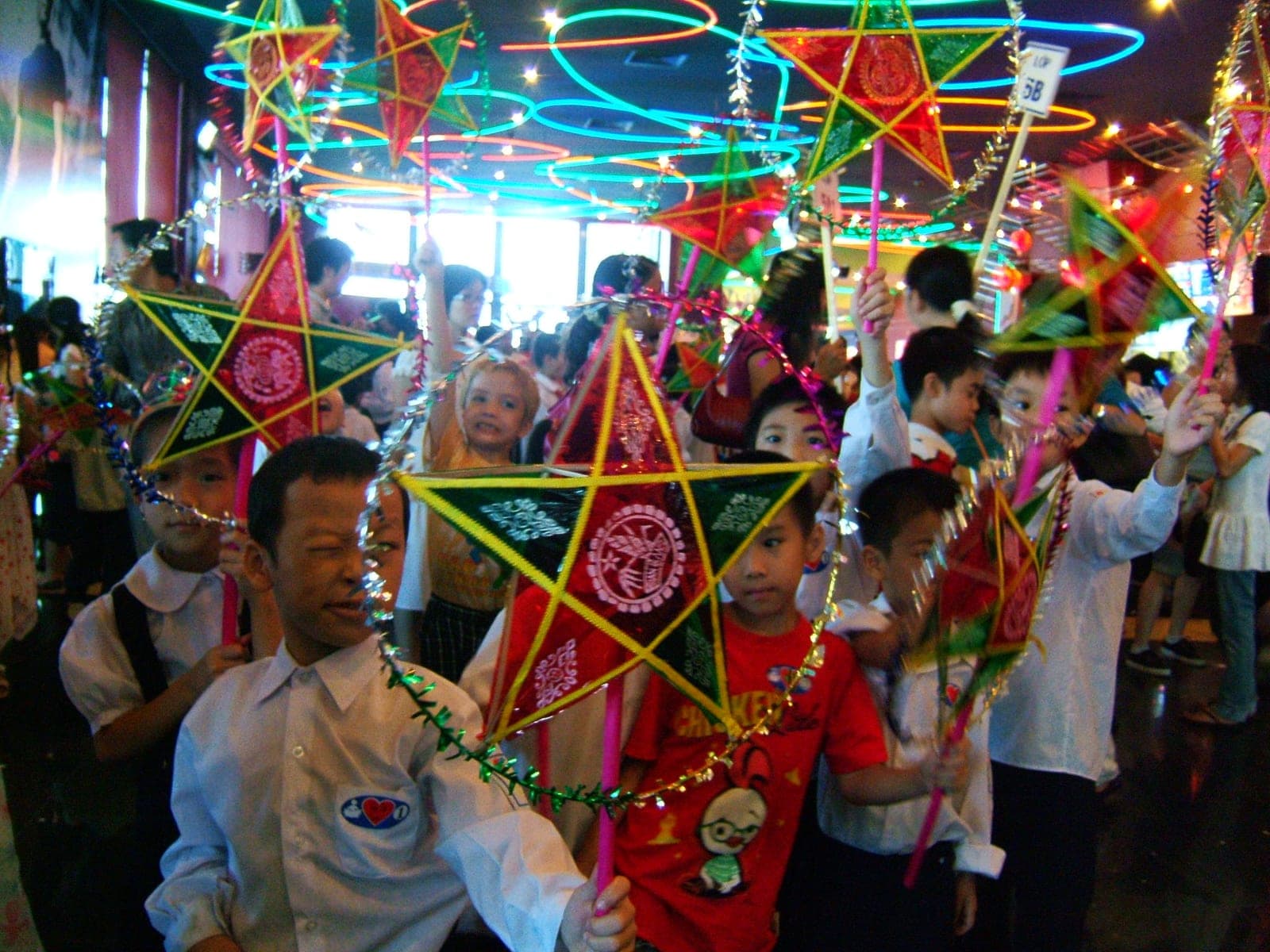
Children's festival. Lanterns, mooncakes, dragon dances, family gatherings. One of the most visually appealing festivals for tourists. See Mid-Autumn Festival.
2026: 25 September. 2027: 14 September.
National Day (2 September)
Independence Day — Hồ Chí MinhHồ Chí Minh (Ho Chi Minh)hoh chee minLargest city in Vietnam, formerly Sài Gòn; the commercial and economic capital of the country in the south.'s 1945 declaration. National holiday; parades in Hanoi and HCMC.
Regional and minority festivals
Lim Festival (Bắc Ninh, 13th day, 1st lunar month)
Quan họ folk-singing festival of the Bắc Ninh region. UNESCO intangible heritage. Atmospheric, day-trip from Hanoi.
2026: 1 March.
Phủ Giầy Festival (Nam Định, 3rd–8th days of 3rd lunar month)
Worship of Princess Liễu Hạnh, Mother Goddess. Vietnamese religious-folk tradition.
Huế Festival (biennial, even years, April or June)
The biggest performing-arts festival in Vietnam, hosted in Huế at the Imperial Citadel. Music, dance, royal court re-enactment. International artists. See Hue Festival.
2026: TBA (next biennial cycle).
Hội An Lantern Festival (every full moon of every lunar month)
Old Town pedestrianised, lit by silk lanterns, paper lanterns floated on the river. The most photogenic monthly event in Vietnam. See Hội An Lantern Festival.
Every month: 14th day of lunar month.
Bà Chúa Xứ Pilgrimage (An Giang, 22nd–27th days of 4th lunar month)
~2 million pilgrims to Châu Đốc to honour the Lady of the Country. The biggest religious pilgrimage in southern Vietnam. See Bà Chúa Xứ pilgrimage.
2026: ~7–12 June.
Cao Đài High Mass (Tây Ninh, 4 times a year)
Major Cao Đài religious ceremonies at the Holy See in Tây Ninh. Open to respectful observers.
Ok Om Bok (Trà Vinh, Sóc Trăng, full moon of 10th lunar month)
Khmer Moon Worshipping festival — boat racing, lantern release, sticky-rice-cake offerings. One of the most distinctive festivals in the deep south. See Ok Om Bok.
2026: ~24 November. 2027: ~14 November.
Cham Kate Festival (Ninh Thuận, October)
The Cham minority's major religious festival — temples (Po Klong Garai) come alive. Music, dance, traditional dress.
Reed Pipe Festival (Hmong communities, December)
Hmong New Year celebrations in northern mountain provinces — colourful traditional dress, courtship rituals, music. See Sapa and Hà Giang.
What to plan around
| If you're a visitor: | Recommendation |
|---|---|
| Avoid Tết travel unless you specifically want the Tết experience | Most things close; transport packed and expensive |
| Plan around Mid-Autumn if you want a photogenic, calm cultural moment | Mid-September; especially Hội An, Hanoi Old Quarter |
| Hội An Lantern Festival monthly — easy to time | 14th of any lunar month |
| Reunification + Labour Day long weekend | Domestic travel peaks; avoid if possible |
| Huế Festival (every even year) | Plan months ahead — once-in-two-years experience |
Christmas, Easter, New Year (Gregorian)
- Christmas (25 December): Catholic communities celebrate; HCMC and Hanoi have decorations in central districts. Not a public holiday but increasingly visible.
- Easter: marked only by Catholic communities (about 7% of the population).
- Gregorian New Year (1 January): public holiday; celebrated more in HCMC than Hanoi. Modest compared to Tết.
Honest take
Vietnam's festival calendar is rich but invisible to most short-trip foreign visitors — most of the festivals are family/religious affairs that don't market themselves outwardly. Visiting during Mid-Autumn or a Hội An full moon adds visible magic to a trip; visiting during Tết adds significant logistical pain.
For the genuinely festival-curious, time a trip around either Mid-Autumn (mid-September, photogenic, country still open), Bà Chúa Xứ (early June, anthropologically significant), or a Hội An Lantern Festival (any month, easy to time).
Why visit festivals-calendar-vietnam
Vietnam's festival calendar is a living connection to centuries of Buddhist, Confucian, and folk-spiritual tradition — often invisible to tourists who miss it by chance. Timing a trip around Mid-Autumn or a Hội An Lantern Festival transforms casual sightseeing into genuine cultural immersion: you'll witness lantern releases on the Thu Bồn River, taste mooncakes passed between families, and walk streets pedestrianised for celebration rather than commerce. The Bà Chúa Xứ pilgrimage in the Mekong Delta (2 million devotees in June) is one of Southeast Asia's most anthropologically significant religious events — chaotic, sincere, and utterly unlike the temples tourists usually visit.
When to go
Mid-Autumn (mid-September, lunar calendar) is the most tourist-friendly window — schools are out, weather is dry, and the country remains operationally normal. Hội An Lantern Festival happens on the 14th of every lunar month, so you can time a week-long trip almost any time. Avoid Tết (mid-to-late February 2026): the country effectively closes, flights are 3× price, and many attractions shut entirely. Reunification Day (late April) and Labour Day (1 May) also spike domestic travel and accommodation costs by 40–50%.
How to get there
Festivals are scattered across Vietnam: Mid-Autumn celebrations centre on Hanoi's Old Quarter, Hội An, and Huế's citadel. Hội An is 30 km south of Da Nang (1 hour by taxi, ~150k VND / $6 USD). The Bà Chúa Xứ pilgrimage anchors in Châu Đốc, An Giang province (9 hours by bus from HCMC, ~200k VND / $8 USD). Cao Đài High Mass takes place at the Holy See in Tây Ninh, 90 km northwest of HCMC (2 hours by minibus, ~250k VND / $10 USD). See day-trips from Da Nang and the Mekong Delta guide for logistics.
What to see and do
- Mid-Autumn lantern release on the Thu Bồn River in Hội An: paper boats lit with candles float downstream, a photogenic ritual both tourists and locals undertake together.
- Cao Đài High Mass in Tây Ninh's basilica-like Holy See: incense-filled ceremony with the sect's mystical syncretism on full display (no photography during the service).
- Ok Om Bok moon-worshipping festival at the Sóc Trăng Pagoda: Khmer boat racing, sticky-rice offerings, and the deep south's Muslim-Khmer-Buddhist harmony on display.
- Tết flower markets in Hanoi and HCMC: a week before Lunar New Year, parks fill with peach blossoms (north) and kumquat trees (south); free entry, frenetic energy.
- Hùng Kings' pilgrimage to Phú Thọc Temple (Hanoi day-trip): thousands climb the stairs in April; local devotion rarely encountered by tourists.
Where to stay nearby
In Hanoi or HCMC, guesthouses run 300–500k VND ($12–20 USD/night budget tier); mid-range hotels (Frangipani, Hoa Bình) are 600–1.2M VND ($24–50 USD) with air-con and breakfast. For festival timing, book 3–4 weeks ahead during Mid-Autumn and Tết. In Hội An, riverside guesthouses are 250–400k VND (budget) or 800k–1.5M VND (mid-range); Châu Đốc homestays near the Bà Chúa Xứ temple are 300–600k VND and fill during the June pilgrimage.
Practicalities
- No entry fee to most festivals (they're public, family-oriented); donations at temples are optional and modest (10–50k VND / $0.50–2 USD).
- Tết closures: approximately 70% of restaurants, shops, and minor attractions close for 7–10 days; plan food and transport accordingly.
- Foreigner gotcha: lunar dates shift each year — always cross-check with a lunar-calendar converter or vietnamkb regional pages before booking; mistiming by even a few days means you'll miss the main day.
- Safety: festivals are family events; crowds are large but orderly (except Tết transport). Pickpocketing risk is moderate during Mid-Autumn and Hội An Lantern; keep bags close in dense night crowds.
Frequently asked questions
Which Vietnamese festival is best for a first-time visitor to see?
Should I avoid traveling to Vietnam during Tết?
Do Vietnamese festivals fall on the same date every year?
Continue reading
Comments
No comments yet.