Vietnam's Stock Market: HoSE, HNX and the Road to Emerging Status
Vietnam runs two exchanges plus an OTC board. The VN-Index has tripled since 2012 but remains classified as a frontier market by MSCI.
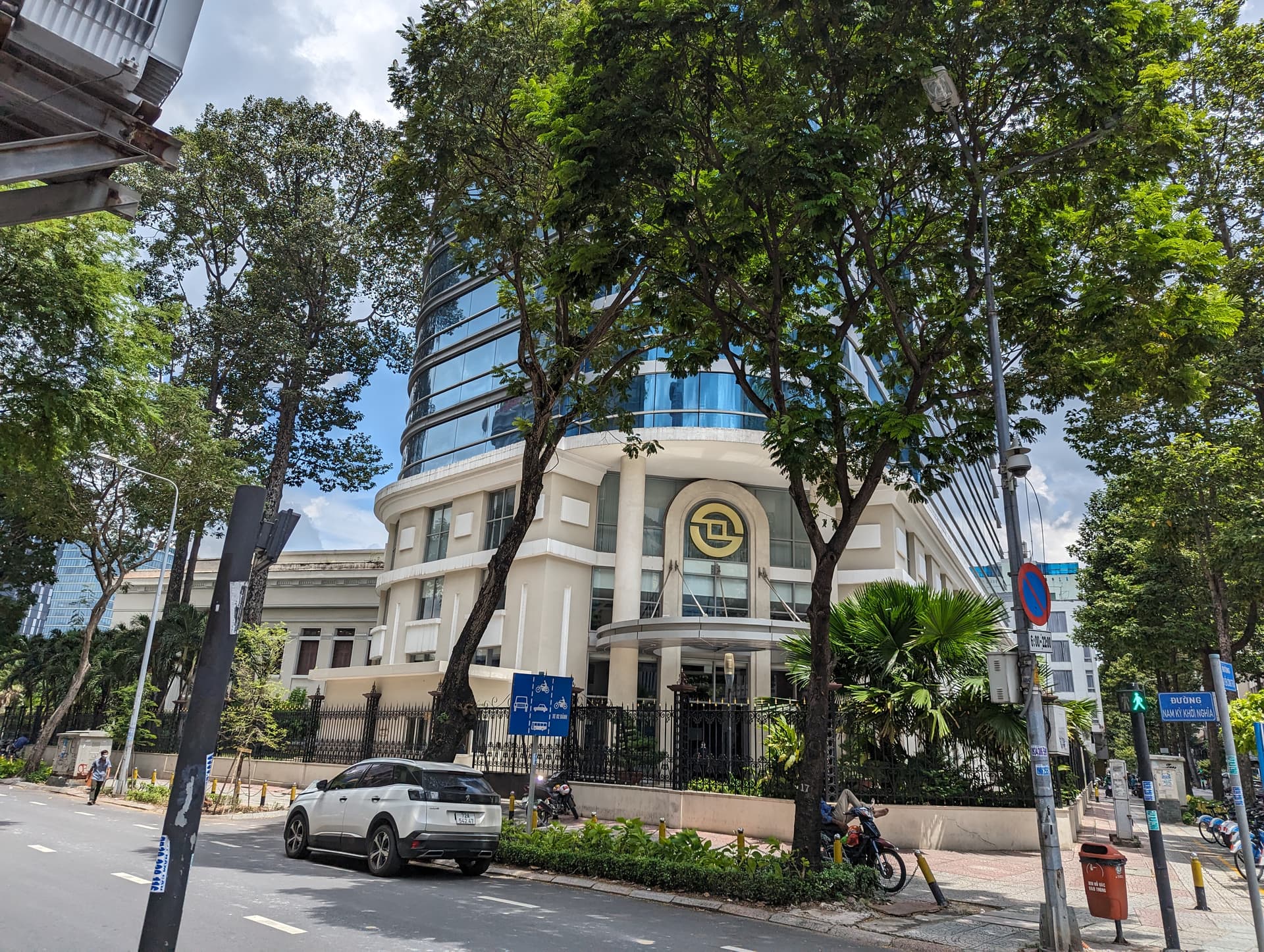
Vietnam has two stock exchanges and an over-the-counter board for unlisted public companies. Together they trade around 800 million to 1.2 billion US dollars per day in 2026, modest by Asian standards but the third most active in ASEAN after Singapore and Thailand on busy days.
What it is / Background
The Ho Chi Minh City Stock Exchange (HoSE) opened in July 2000 with two listings. The Hanoi Stock Exchange (HNX) followed in 2005, and the UPCoM (Unlisted Public Company Market) board was launched in 2009 as a halfway house for companies not yet meeting full listing requirements. In 2021 the two exchanges were merged under the Vietnam Stock Exchange (VNX) holding company, though they continue to operate separately.
The benchmark VN-Index, computed on HoSE, started at 100 in July 2000. It peaked above 1,500 in early 2022, crashed to around 900 during the corporate-bond panic of late 2022, and recovered to the 1,250 to 1,350 range through 2024 and 2025.
Current state
HoSE hosts the large-cap names: roughly 400 listings with a combined market capitalisation of about 220 billion US dollars in May 2026. HNX holds around 300 mostly mid-cap industrial and financial names. UPCoM has over 800 listings, many of them part-privatised state-owned enterprises.
Foreign ownership remains capped at 49 per cent in most sectors and 30 per cent in banking. This cap is the single biggest reason MSCI has not promoted Vietnam from frontier to emerging market status, despite multiple reform attempts since 2018. FTSE Russell placed Vietnam on its watch list for secondary-emerging status in 2018 and the listing has remained pending ever since.
T+2 settlement was introduced in 2022, and a long-awaited central counterparty clearing system went live in late 2025, eliminating the pre-funding rule that had blocked many foreign institutions.
Key players / Major firms
Largest HoSE-listed companies by market cap include Vingroup (and its subsidiaries Vinhomes and Vincom Retail), Vietcombank, BIDV, VietinBank, Hoa Phat Group (steel), Vinamilk (dairy), Masan Group (consumer goods), FPT (IT services), Mobile World Investment (electronics retail) and PetroVietnam Gas.
Major brokerages: SSI Securities, VNDirect, HSC (Ho Chi Minh City Securities), VCSC (Viet Capital Securities), and Mirae Asset and KIS Vietnam from Korea. Custody for foreign institutions runs mostly through HSBC, Standard Chartered and Deutsche Bank.
What's coming / Outlook
The State Securities Commission expects a FTSE Russell upgrade decision in late 2026, which would trigger an estimated 1.5 to 2 billion US dollars of passive inflows. An MSCI upgrade would take longer and depends on raising or removing the foreign ownership cap, which faces political resistance in strategic sectors.
A new exchange-traded derivatives platform for single-stock futures and options is in pilot. Equitisation of remaining state-owned giants such as Agribank, Mobifone and VNPT has been promised repeatedly and remains delayed.
What this means for visitors and expats
Foreign retail investors can open a trading account at any major brokerage with a passport and tax code; SSI and VNDirect have English platforms. Capital-gains tax is a flat 0.1 per cent of sale value (not gain), withheld at source. Dividend tax is 5 per cent.
For passive exposure, the VanEck Vietnam ETF (ticker VNM, listed in New York) is the most liquid international vehicle; the local Diamond ETF tracks foreign-room-restricted blue chips and is popular among institutional foreign buyers.
Sector at a glance
Vietnam's stock market remains a small but growing corner of the broader economy, channelling savings into listed companies and serving as a fundraising tool for state and private enterprises. The market is still classified as frontier rather than emerging by the major index providers, reflecting constraints on foreign access and depth relative to regional peers.
| Metric | Value |
|---|---|
| Approximate share of capital markets | Frontier status (not emerging) |
| Listed companies (approx.) | ~1,500 across HoSE, HNX and UPCoM |
| Daily trading volume (2026) | 800 million to 1.2 billion USD |
| Foreign ownership cap (typical) | 49% in most sectors; 30% in banking |
| Average P/E ratio of VN-Index (2026) | Approx. 11–13x (varies with cycles) |
Key companies and operators
| Name | Role | Notable details |
|---|---|---|
| Vingroup | Conglomerate | Largest listed firm by market cap; real estate, retail, technology |
| Vietcombank | Bank | Largest commercial bank; large-cap HoSE listing |
| BIDV | Bank | State-owned; roughly equal market cap to Vietcombank |
| Hoa Phat Group | Steel producer | Major integrated steelmaker; HoSE-listed |
| Vinamilk | Dairy/beverages | Regional dairy leader; consistent dividend payer |
| Masan Group | Consumer conglomerate | Food, distribution and retail operations |
| FPT Corporation | IT services | Technology outsourcing and software |
| Mobile World Investment | Retail | Electronics and appliances; regional expansion plans |
| SSI Securities | Brokerage | Largest retail brokerage; strong foreign-client franchise |
| VNDirect | Brokerage | Retail and institutional; English-language platform |
Workforce and wages
Vietnam's stock market itself directly employs around 5,000–8,000 professionals across exchanges, brokerages, custodians and regulatory bodies (approx. figures as of 2026). Entry-level positions in brokerages or the exchange—such as operations support, customer service or compliance—typically pay 300–400 USD per month in Hanoi or Ho Chi Minh City, with regional variations. Mid-career roles in risk, analysis or back-office administration range from 600–1,200 USD monthly, while senior traders, portfolio managers and brokers managing large accounts can earn 2,000–5,000 USD monthly plus performance bonuses.
Wages in the financial sector have risen steadily over the past five years but remain lower than those in Singapore or Hong Kong. Senior investment bankers and wealth managers in Hanoi or HCMC, particularly those serving foreign capital, may exceed these ranges substantially. Compensation tends to be higher in major cities (HCMC exceeding Hanoi by 10–20%), and bonuses are performance-dependent and vary widely across market cycles.
Foreign-facing roles—such as English-speaking traders and analysts—command a 20–40% premium over domestic-only positions. Interns and graduates fresh from university typically earn 150–250 USD monthly, often with free meals or transport provided. Non-salary benefits such as health insurance and annual leave are increasingly standard at larger firms.
Trends and outlook
- Foreign capital inflows on hold pending upgrades. If FTSE Russell elevates Vietnam to secondary-emerging in late 2026, expect 1.5–2 billion USD in passive fund rebalancing; MSCI upgrade remains distant unless foreign ownership caps ease.
- Derivatives and options market expansion. A single-stock futures and options pilot is underway; successful launch could attract more sophisticated institutional trading and hedging activity over the next 2–3 years.
- State-owned enterprise (SOE) equitisation slow but ongoing. Agribank, Mobifone and VNPT remain on the equitisation roadmap despite repeated delays; each listing could add 2–5 billion USD in liquidity when completed.
- Tech and fintech sector growth outpacing traditional banking. Digital payment platforms, insurance tech and wealth-management apps are drawing retail investors toward smaller, faster-growing listed firms outside the big-cap index.
- Regional competitiveness pressure. Thailand, Indonesia and the Philippines are all vying for comparable investor capital; Vietnam's differentiation relies on manufacturing growth and FDI-linked corporate profits.
Risks and caveats
- Political sensitivity of foreign ownership. Any push to raise or remove the 49% cap faces resistance from strategic-sector ministries; regulatory changes could be sudden and unfavourable to foreign holders.
- Shallow liquidity in mid-caps and UPCoM. Bid-ask spreads in stocks outside the top 30 can widen sharply during market stress, and some UPCoM listings trade infrequently, risking locked-in positions.
- Corporate governance and disclosure gaps. Not all listed firms maintain audit standards equivalent to developed markets; investor protections and enforcement remain weaker than MSCI-emerging equivalents.
- Macroeconomic and credit cycles. The 2022 corporate-bond crisis demonstrated vulnerability to credit tightening; future rate shocks or regional slowdowns could trigger sharp sell-offs. Early-stage market infrastructure and limited derivatives for hedging compound this risk.
Data on foreign ownership caps, market capitalisation and daily volumes derive from Vietnam Stock Exchange (VNX), the State Securities Commission and regional financial press as of mid-2026.
Related
Continue reading
Comments
No comments yet.