Bánh Mì: The French-Colonial Sandwich That Became Vietnamese
A baguette filled with pâté, pork, pickled vegetables and herbs — colonial-era hybrid food, now Vietnam's defining street snack.
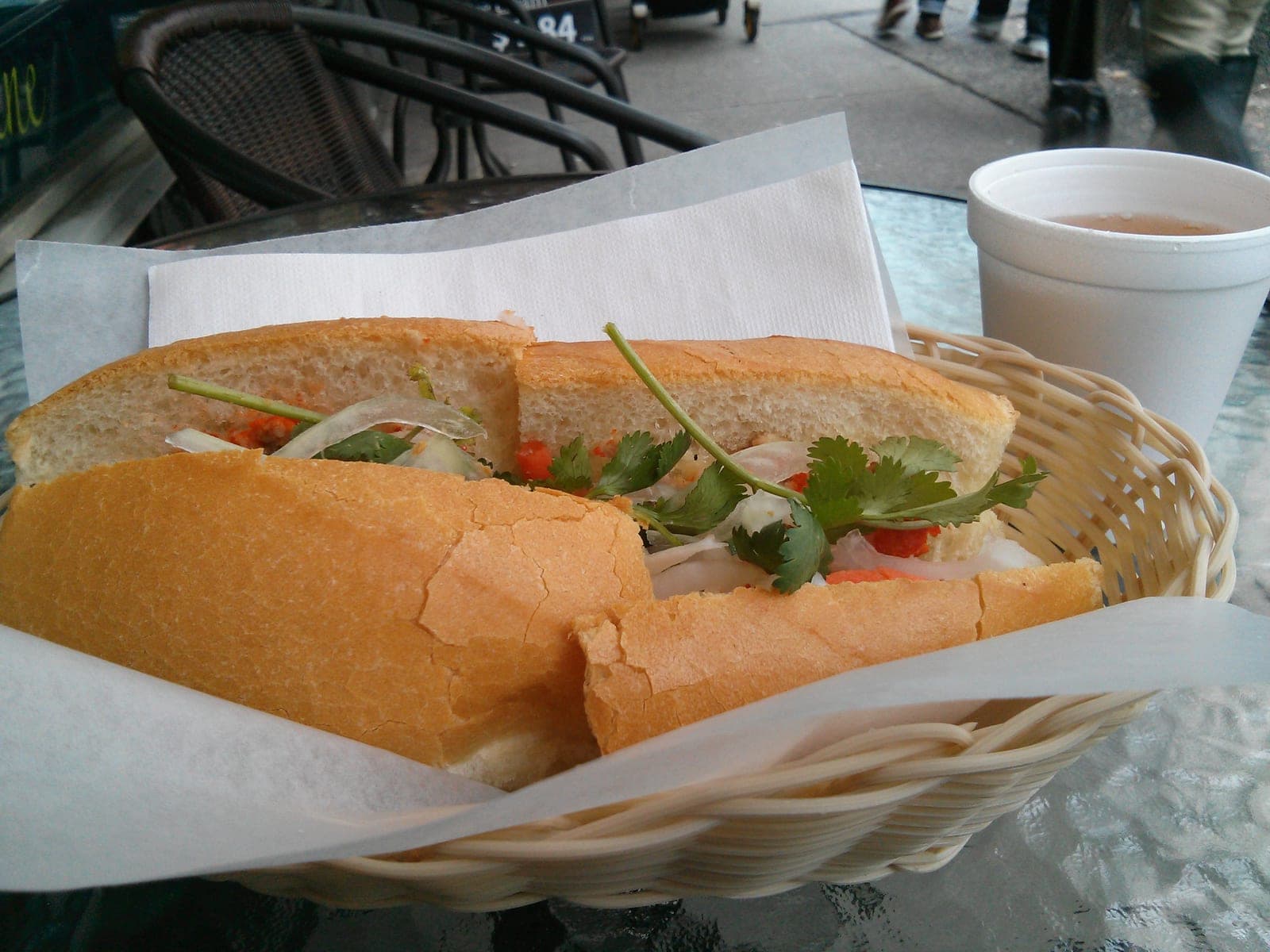
The bánh mì is a baguette — light, airy, thin-crusted — split lengthwise and filled with a Vietnamese take on cold cuts: pâté, mayonnaise, sliced cooked pork, pickled daikon and carrot, cucumber, fresh coriander, and chilli.
It's a perfect colonial hybrid: the bread from the French, the fillings from the Vietnamese pork tradition, and the whole assembly invented in the 1950s in Saigon by local bakers as the French left.
What's in a standard bánh mì
- A baguette (lighter and shorter than its French ancestor — Vietnamese bakers add rice flour for lift).
- Pâté — usually pork pâté, smeared on one side of the bread.
- Mayonnaise — sometimes egg-yolk-based.
- Meat or filling — varies by shop. Common: cold cuts (chả lụa sliced pork sausage), grilled pork (bánh mì thịt nướng), shredded chicken, fried egg, or all-vegetable.
- Pickled vegetables — daikon and carrot quick-pickled in vinegar and sugar.
- Fresh herbs — coriander, sometimes mint.
- Chilli — fresh sliced or sambal.
- Maggi seasoning — a few drops are standard. (Yes, the German one. The French brought it; Vietnamese cuisine adopted it.)
Variants worth knowing
- Bánh mì thịt nướng — grilled pork
- Bánh mì xíu mại — pork meatballs in tomato sauce
- Bánh mì gà — chicken
- Bánh mì chay — vegetarian (tofu, mushrooms, sometimes mock meat)
- Bánh mì trứng — fried egg, often breakfast-only
- Bánh mì opla — the southern version of fried-egg bánh mì, with the egg cooked sunny-side up on a small skillet
Where to get good ones
Bánh mì shops are everywhere — usually a small cart or storefront. Two paths:
- Famous chains and famous individuals: Bánh Mì Phượng in Hội AnHội An (Hoi An)hoy ahnUNESCO World Heritage ancient town in Quảng Nam province, famed for its lantern-lit old quarter and tailor shops. (Anthony Bourdain–blessed and now perpetually queued), Bánh Mì Huỳnh Hoa in Saigon, Bánh Mì 25 in Hanoi.
- Your nearest neighbourhood cart: a well-loved local cart will be quietly excellent and cost a third of the famous places.
Eating notes
- Almost always eaten standing up or walking. It's a snack and breakfast food more than a sit-down meal.
- Hours: most carts open early morning and close by mid-afternoon; some lunch-and-evening shops too.
- Vegetarians are well served — many shops do a chay version.
- Bring small bills — most carts don't have change for large notes.
Pronunciation
Bánh Mì (pronounced bahn mee — the à is a short 'ah', and ì is like the 'i' in 'sit'; together it's almost a single syllable, spoken quickly).
How to order it
- "Cho tôi một bánh mì thịt nướng" (cho toy mot bahn mee tit nuon) — "give me one grilled pork bánh mì"
- "Bánh mì gà, không cay" (bahn mee gah, khong kai) — "chicken bánh mì, not spicy"
- "Bánh mì chay" (bahn mee chai) — "vegetarian bánh mì"
Price ranges
| Tier | Indicative price (VND) | USD |
|---|---|---|
| Street stall | 25,000–40,000 | $1.00–$1.60 |
| Casual restaurant | 40,000–70,000 | $1.60–$2.80 |
| Tourist-trap zone | 80,000–150,000 | $3.20–$6.00 |
Best three neighbourhoods to try it
- Hội An (Old Town): Home to Bánh Mì Phượng; the entire pedestrian quarter is bánh mì-dense, though expect premium pricing and queues.
- Saigon District 1 (Ben Thanh market area): Street carts and small shops cluster around Nguyễn Huệ; authentic local quality at reasonable prices.
- Hanoi Old Quarter (Hàng Mành / Hàng Bông): Dense cart concentration in early mornings; Bánh Mì 25 anchors the zone, but single-operator stalls offer better value.
Common variants
- Northern vs Southern: Northern bánh mì (Hanoi) tends to be leaner, heavier on pâté; Southern (Saigon) uses more mayo and often includes egg or extra meat.
- With or without egg: Bánh mì trứng (fried egg, breakfast-only) and bánh mì opla (southern fried-egg variant, cooked on a small skillet) are both common but distinct from the base meat-and-pâté version.
- Vegetarian adaptations: Bánh mì chay substitutes mock meat, fried tofu, or mushrooms for pâté and pork; increasingly available even in rural areas.
How to order in Vietnamese
| What you want | Vietnamese | Approximate pronunciation |
|---|---|---|
| One grilled pork bánh mì | Một bánh mì thịt nướng | Mot bahn mee tit nuon |
| No chilli, please | Không cayBánh Mì (Banh Mi)ban meeVietnamese baguette sandwich filled with meats, pâté, pickled vegetables, fresh coriander, and chilli — a fusion legacy of French colonialism. | Khong kai |
| No cilantro / no coriander | Không coriander | Khong coriander |
| The bill, please | Tính tiền | Tinh tien |
| To take away | Mang về | Mang ve |
Price ranges
| Tier | Approximate price (VND) | Where you'll find it |
|---|---|---|
| Street stall | 25,000–40,000 | Cart or small stand on pavements |
| Local sit-down restaurant | 40,000–70,000 | Small dedicated bánh mì shops, casual neighbourhood spots |
| Tourist-oriented restaurant | 80,000–150,000 | City centre zones, famous locations, hotels |
Best neighbourhoods to find it
- Hanoi Old Quarter — dense cart concentration in early mornings; Bánh Mì 25 anchors the zone.
- Ho Chi Minh City District 1 — street carts cluster around Nguyễn Huệ and Ben Thanh market; authentic local quality.
- Hoi An — entire Old Town is bánh mì-dense; Bánh Mì Phượng is the most famous location.
Regional variants
- Hanoi (North): typically lean and pâté-heavy, minimal mayo, subtle herb balance. Bread tends to be crispier.
- Saigon (South): heavier on mayo, often includes fried egg or extra meat. More generous layering overall.
- Central (Hoi An, Da Nang): middle ground; emphasis on freshness of herbs and vegetables. Sometimes includes pork meatballs or shredded pork.
How to tell a good version from a bad one
- Broth and filling clarity: Pâté should be smooth and not greasy; pickled vegetables should be crisp, not soft.
- Herb freshness: Coriander and mint (if present) should smell vibrant and be bright green, not wilted or bruised.
- Queue as a proxy: If locals queue in the morning, the bread is likely fresh-baked and quality ingredients rotate quickly.
- Noodle and bread texture: Bread crust should crackle slightly when bitten; interior should be airy, not dense or dry.
- Balance: Fillings should not leak or fall apart during eating; ratio of bread to filling should feel proportionate, not hollow or over-stuffed.
Frequently asked questions
What is typically inside a standard bánh mì?
How much does a bánh mì typically cost?
Is there a difference between Northern and Southern bánh mì?
Continue reading
Comments
No comments yet.