Bún Thang: Hanoi's Delicate Celebration Soup
A clear chicken-and-egg vermicelli soup of fastidious garnish work, made traditionally for Tết and special occasions.
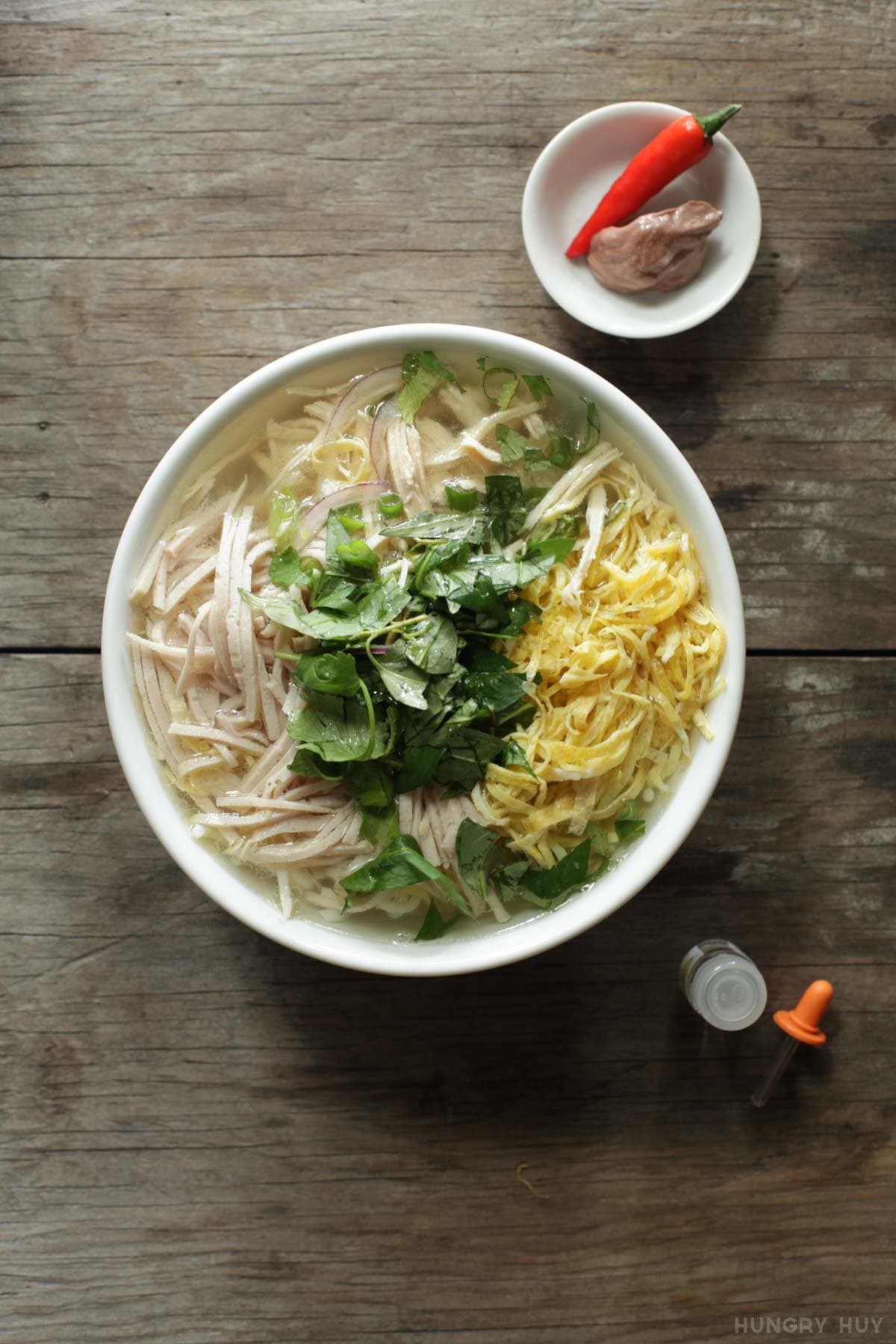
Bún thang is the most refined noodle soup of Hanoi, traditionally a Tết dish made with leftover boiled chicken and ham. The pleasure is in the precision of the garnish: thin strands of egg, chicken and ham fanned across a clear, almost translucent broth.
What it is
A shallow bowl of bún (thin rice vermicelli) under a clear chicken broth fortified with dried shrimp. Across the top, in neat ribbons: shredded poached chicken, finely sliced ham (giò lụa), threads of paper-thin omelette, strips of pickled daikon, a few coriander leaves. A small dish of mắm tôm (fermented shrimp paste) is served alongside, plus a wedge of lime and a tiny bottle of essence of giant water beetle (cà cuống) at old-school places.
Origin and history
Bún thang originated in Hanoi as a way to use up the boiled chicken and cured pork left after Tết feasts. The word "thang" means medicinal decoction — a reference to the slow, careful broth-making and the perception of the soup as restorative. By the 19th century it had become a celebratory dish in its own right rather than a leftover.
Where to try it
Quán Bún Thang Bà Đức at 48 Cầu Gỗ in the Old Quarter is the textbook old-Hanoi version for 60,000 to 80,000 VND. Bún Thang Hàng Hòm and the stall at 32 Cầu Gỗ are equally respected. Most stalls open only for breakfast and lunch and close by 2pm.
How to eat it
Squeeze in lime. Add a tiny — really, tiny — drop of mắm tôm and stir; this is the dish's secret weapon and a heavy hand will overwhelm the broth. Eat the garnish strands and noodles together with chopsticks; use the spoon to drink the broth at the end.
Regional variations
Bún thang is Hanoi's alone. Versions exist in Hải Phòng and parts of the northern coast, but they are essentially the same recipe with looser standards. The dish does not survive south of the Hải Vân pass.
Honest take
Bún thang rewards patience and an empty stomach. The flavours are subtle — there is no chilli oil, no lemongrass, no fermented punch — and a tourist palate used to bún bò HuếHuế (Hue)hwayFormer imperial capital of Vietnam under the Nguyễn dynasty, known for its citadel, royal tombs, and refined cuisine. may find it underwhelming. Eat it when you want to understand why some Hanoians think their city's cuisine is more sophisticated than the south's.
Related reading: Phở, Northern cuisine, Hanoi food guide, Hanoi, Bún chả.
Pronunciation
Bún Thang (pronounced boon thang — "bun" rhymes with "sun", "thang" is a single flat syllable, not rising).
How to order it
Cho tôi một bát bún thang (cho toy mot bat boon thang) — "give me one bowl of bún thang". At busier stalls, simply point and say bún thang.
Price ranges
| Tier | Indicative price (VND) | USD |
|---|---|---|
| Street stall | 60,000–80,000 | $2.50–$3.30 |
| Casual restaurant | 85,000–120,000 | $3.50–$5.00 |
| Tourist-trap zone | 120,000–200,000 | $5.00–$8.50 |
Best three neighbourhoods to try it
Old Quarter (Hoàn Kiếm) — the historic heart where bún thang is highest quality; Cầu Gỗ street is the epicentre. Tây Hồ (West Lake) — residential area with respected family-run stalls serving locals, less crowded than the Old Quarter. Bà Đức ward — where the most celebrated historic bún thang stalls operate, worth the short taxi ride north.
Common variants
Northern Hanoi style (classic) — delicate broth, emphasis on perfect garnish ribbons, served with cà cuống essence and mắm tôm paste. Hải Phòng-style — slightly heartier, less precious about garnish alignment, often served without the cà cuống. Modern restaurant versions — sometimes add extra protein or swap traditional ham for bacon; purists avoid these.
How to order in Vietnamese
| What you want | Vietnamese | Approximate pronunciation |
|---|---|---|
| One bowl of bún thang | Cho tôi một bát bún thangBún Thang (Bun Thang)boon tangRefined Hanoi noodle soup made from a delicate chicken broth, topped with thin-sliced chicken, egg, and Vietnamese pork sausage. | "cho toy mot bat boon thang" |
| Not spicy | Không cay | "khom kai" |
| No cilantro/coriander | Không mùi tây | "khom moo-ee tay" |
| The bill | Tính tiền | "tinh tee-un" |
| Takeaway | Mang về | "mang vay" |
Price ranges
| Tier | Approximate price (VND) | Where you'll find it |
|---|---|---|
| Street stall | 60,000–80,000 | Cầu Gỗ street, Old Quarter; early morning only |
| Local sit-down restaurant | 85,000–120,000 | Residential areas; Tây Hồ, Bà Đức ward |
| Tourist-oriented restaurant | 120,000–200,000 | Hoàn Kiếm; central tourist zones |
Best neighbourhoods to find it
- Old Quarter (Hoàn Kiếm) — Cầu Gỗ street is the epicentre; highest concentration and quality of traditional stalls.
- Tây Hồ (West Lake) — quieter residential area with family-run stalls favoured by locals.
- Bà Đức ward — home to the most celebrated historic bún thang establishments; slight journey north from the centre.
Regional variants
- Hanoi classic — delicate, nearly transparent broth; meticulous garnish ribbons; served with cà cuống essence and mắm tôm paste.
- Hải Phòng-style — broth tends to be slightly heartier; garnish less fussily arranged; typically omits the cà cuống.
- Modern urban versions — some restaurants add extra protein or substitute traditional giò lụa (cured pork) with bacon; traditional enthusiasts often avoid these.
How to tell a good version from a bad one
- Broth clarity — the broth should be pale, almost translucent; a cloudy or dark broth suggests the stock was made hastily or with too much intensity.
- Herb and garnish freshness — the coriander leaves and omelette strips should be vibrant and paper-thin; wilted herbs or thick, rubbery egg indicates sitting time.
- Noodle texture — thin rice vermicelli should be tender but not mushy; undercooked noodles suggest a rushed stall.
- Queue as proxy — in Hanoi's Old Quarter, a queue at breakfast typically signals quality; empty stalls before 8am often indicate mediocre broth or poor technique.
- Mắm tôm quality — a good version comes with fresh, aromatic shrimp paste; stale or overly pungent mắm tôm is a marker of lower standards.
Frequently asked questions
What is bún thang made of?
How much mắm tôm should you add?
How much does a bowl of bún thang typically cost in Hanoi?
Continue reading
Comments
No comments yet.