Cao Lầu: Hội An's Well-Water Noodle
Thick chewy noodles, char siu pork, crisp pork crackling and herbs — a dish made only in Hội An, traditionally with water from the Bá Lễ well.
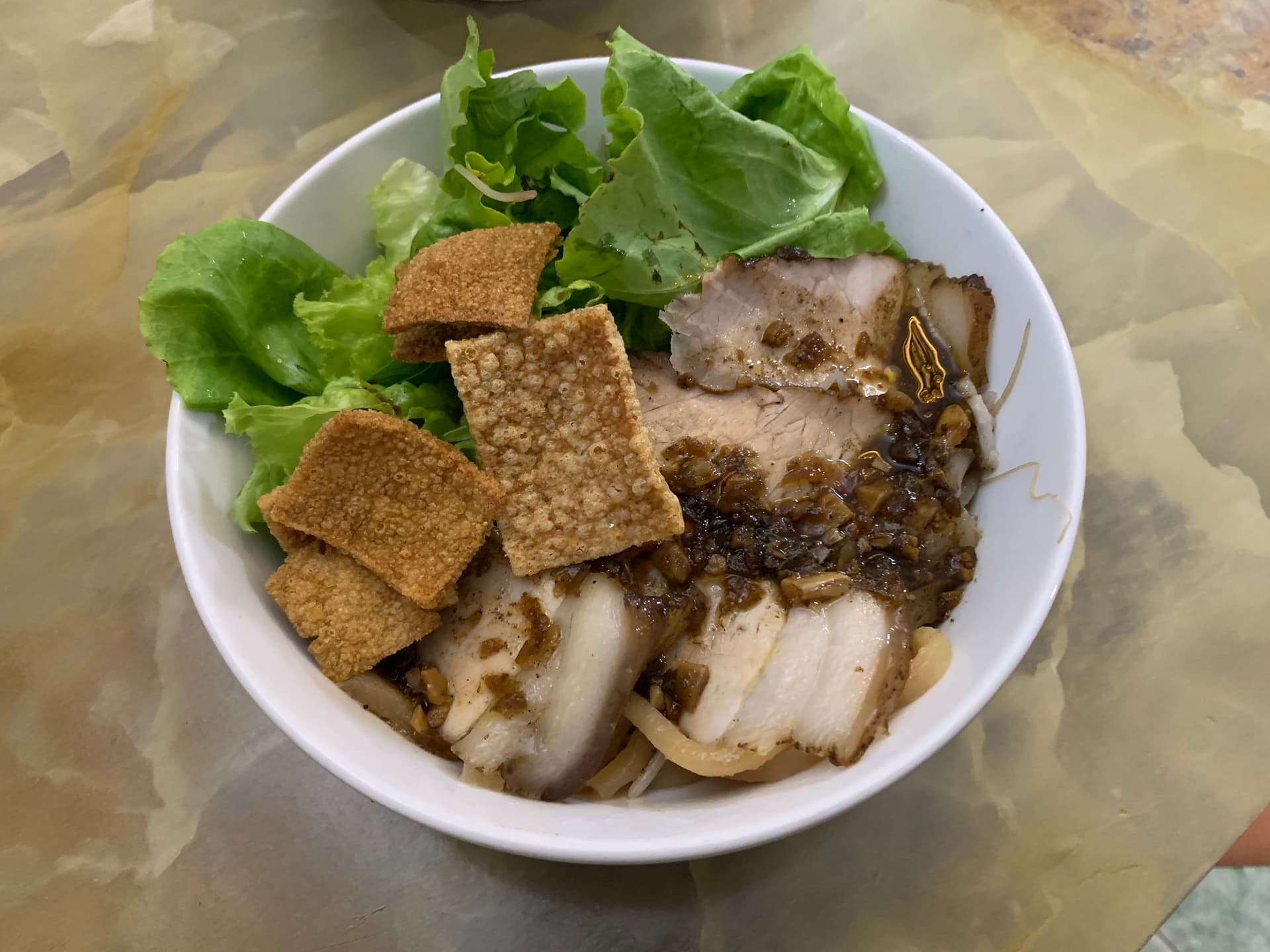
Cao lầu is Hội An's signature dish and one of the more peculiar noodles in Vietnam. Brown, chewy, almost soba-like, served barely wet with pork, herbs and crisp golden squares of fried noodle dough on top.
What it is
Thick rice noodles with an unusual bite — denser and less slippery than other Vietnamese noodles. They are layered with slices of char siu-style pork, fresh greens (typically lettuce, mint and rau răm), bean sprouts, a small splash of intensely flavoured pork broth, and a scattering of crunchy fried noodle pieces. Some versions add a drizzle of soy and chilli.
Origin and history
Cao lầu is unique to Hội An, and the noodles themselves are part of why. Traditionally the dough is made with water from the Bá Lễ well, a Cham-era well in the old town, and lye-water from the ash of trees on the Chàm islands offshore. This gives the noodles their characteristic chew and slight ochre colour. The dish shows clear Chinese and Japanese influence, fitting for a town that traded with both.
Where to try it
The old-town institutions are Cao Lầu Thanh on Thái Phiên street, Cao Lầu Bà Bé in the central market, and Morning Glory on Nguyễn Thái Học (the sit-down restaurant version). Market stalls charge 30,000 to 40,000 VND; Morning Glory closer to 90,000 VND. The market version tastes more authentic; Morning Glory is cleaner and easier for first-timers.
How to eat it
Mix everything together before you start — the broth is meant to season, not flood. Use chopsticks. The fried noodle crackers should be folded in for texture, not eaten separately.
Regional variations
There aren't any — or rather, the dish exists almost nowhere outside Hội An. Restaurants in Đà NẵngĐà Nẵng (Da Nang)dah nangMajor coastal city in central Vietnam, known for its beaches, the Marble Mountains, and modern infrastructure. or HCMC that serve cao lầu source noodles from Hội An, and it rarely travels well. Eat it in Hội An or wait.
Honest take
Cao lầu is not a knock-out-of-the-park flavour the way bún bò Huế is. It is a quieter, more textural dish: the pleasure is in the noodles themselves. Order it once on your first morning in Hội An; if it clicks, eat it every day after that.
Related reading: Mì Quảng, Hội An food guide, Central and southern cuisine, Hội An, Street food etiquette.
Pronunciation
Cao lầu (pronounced cow luh — cao rhymes with "how", lầu sounds like "luh" with a slight rising tone at the end).
How to order it
"Cho tôi một tô cao lầu" (cho toy mot toh cow luh) — "Give me one bowl of cao lầu". Add "không cay" (khong kai) if you want it mild (not spicy).
Price ranges
| Tier | Indicative price (VND) | USD |
|---|---|---|
| Street stall / market | 30,000–50,000 | $1.20–$2.00 |
| Casual restaurant | 60,000–80,000 | $2.40–$3.20 |
| Tourist-focused (Morning Glory) | 85,000–120,000 | $3.40–$4.80 |
Best three neighbourhoods to try it
- Hội An Old Town — where the dish was born; traditional market stalls on Thái Phiên and in the central market
- Cẩm Phô district — the source neighbourhood for the Bá Lễ well water and local ingredient suppliers
- Tân Thành ward — family-run stalls along riverfront alleyways with the least tourist markup
Common variants
- With/without soy drizzle — some stalls add a glug of soy sauce; purists argue it masks the noodle texture
- Market vs restaurant — market versions use more pork crackle, less broth; restaurants plate it cleaner
- Pork type — char siu pork is standard, but some stalls swap in steamed shoulder meat or add extra fresh prawn
How to order in Vietnamese
| What you want | Vietnamese | Approximate pronunciation |
|---|---|---|
| One bowl of cao lầu | Cho tôi một tô cao lầu | Cho toy moht toh cow luh |
| Make it spicy | Cho cay | Cho kai |
| Not spicy, please | Không cay | Khong kai |
| No cilantro / rau răm | Không rau răm | Khong zow rum |
| The bill, please | Tính tiềnCao Lầu (Cao Lau)cow lowHội An signature dish of thick chewy noodles with pork, greens, and crispy rice crackers, historically made with water from a specific local well. | Tenh tee-uhn |
| I want takeaway | Mang về | Mahng vuh |
Price ranges
| Tier | Approximate price (VND) | Where you'll find it |
|---|---|---|
| Street stall | 30,000–50,000 | Market stalls and street corners |
| Local sit-down restaurant | 60,000–90,000 | Casual family-run restaurants |
| Tourist-oriented restaurant | 85,000–120,000 | Morning Glory and formal establishments |
Best neighbourhoods to find it
- Hội An Old Town — the birthplace of cao lầu; Thái Phiên street and the central market have the most stalls
- Cẩm Phô district (Hội An) — neighbourhood supplying the Bá Lễ well water and traditional ingredients
- Tân Thành ward (Hội An) — quieter riverfront area with family-run stalls and less tourist markup
- Đà Nẵng nearby — some restaurants source Hội An noodles, though the dish tastes better in its home town
Regional variants
- North vs Central — cao lầu is almost exclusively a Central (Hội An) dish; northern rice noodle soups (like bún chả) are quite different in broth and texture
- Market stall style — more pork crackling, less broth, faster service; aimed at locals on morning visits
- Restaurant style — cleaner plating, more generous portions of greens, slightly more broth; slower pace allows time to mix properly
- Modern additions — some restaurants add grilled shrimp or extra protein; traditionalists consider this unnecessary
How to tell a good version from a bad one
- Noodle texture — should be chewy and slightly springy, not soft or gummy; a sign of water quality and proper preparation
- Pork clarity — the broth should smell distinctly of pork, not masked by fish sauce or other heavy seasonings
- Crackle contrast — fried noodle pieces should still be crisp even after light mixing, adding texture through the entire bowl
- Queue length — in Hội An markets, stalls with lines typically indicate fresher ingredients and faster turnover
- Herb freshness — mint and rau răm should smell bright; wilted or brown-edged greens suggest they've been sitting
Frequently asked questions
Why does cao lầu typically only taste right in Hội An?
What's typically in a bowl of cao lầu?
How much does cao lầu typically cost in Hội An?
Continue reading
Comments
No comments yet.