Cao Bằng Motorbike Loop
Northeast border country — Bản Giốc waterfall, Pác Bó cave, Phong Nậm valley, limestone karst, and far fewer tourists than the Hà Giang loop.
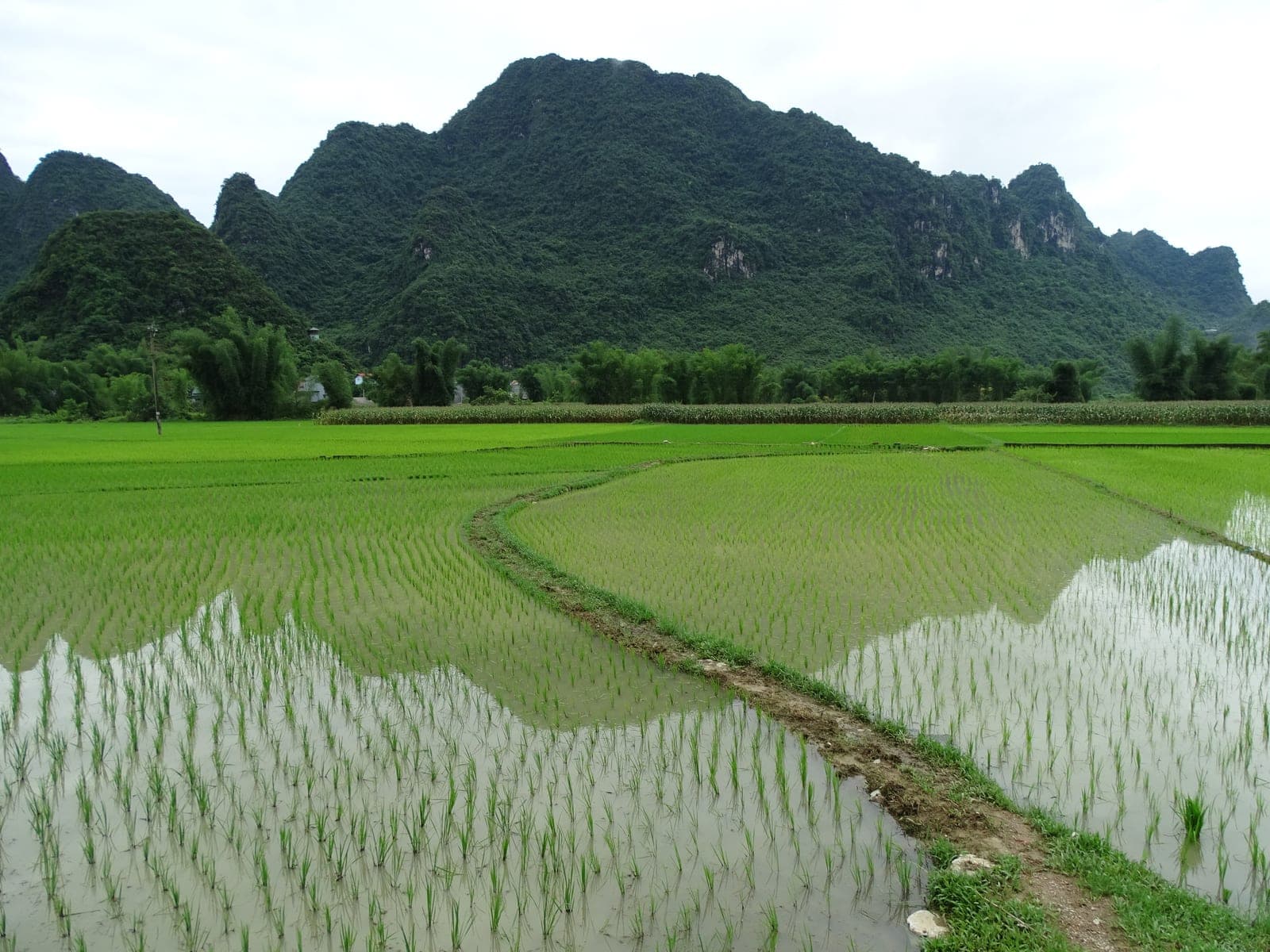
The Cao Bằng loop sits in Vietnam's northeast, hugging the Chinese border. It covers the country's largest waterfall (Bản Giốc), Hồ Chí Minh's 1941 hideout cave at Pác Bó, the spectacular Phong Nậm valley, and a network of small ethnic-minority villages.
It's the quieter alternative to the Hà Giang loop — equally beautiful scenery, much less foreign-tourist traffic, easier road surfaces.
The standard 3-day route
Day 1: Cao Bằng city → Trùng Khánh → Bản Giốc (90 km, ~3.5 hr)
- Northeast from Cao Bằng on QL3
- Stop at Mã Phục pass (panoramic viewpoint)
- Lunch in Trùng Khánh town
- Continue to Bản Giốc waterfall — Vietnam's largest waterfall, shared border with China
- Sleep at a homestay or hotel near the falls
- Highlight: the falls themselves, especially in the late afternoon light
Day 2: Bản Giốc → Pác Bó → Cao Bằng (150 km, ~5 hr)
- Visit Ngườm Ngao Cave near Bản Giốc in the morning
- Drive west to Hà Quảng district
- Stop at Pác Bó — the limestone cave where Hồ Chí Minh lived in 1941 on returning from China. The Lenin stream (Suối Lê-nin), the Karl Marx mountain (Núi Các Mác), small museum.
- Back to Cao Bằng city
- Highlight: the political-historical depth + landscape
Day 3: Cao Bằng → Phong Nậm valley → return (90 km, ~3 hr)
- South to Phong Nậm valley
- Through villages of the Tày ethnic minority — stilt houses on rice paddies
- Karst peaks, water buffalo, slow pace
- Return to Cao Bằng for the night, or push on the next morning to Hà NộiHà Nội (Ha Noi)hah noyCapital of Vietnam, in the north. Population ~8 million. 1,000+ years as a Vietnamese capital.
- Highlight: rural Vietnamese landscape at its most photogenic
What you ride
- Manual transmission Honda Win or Wave 110 is the standard.
- Rentals from Cao Bằng city: $8–15/day. Hà Nội Backpackers and Mr Linh's Adventure Tours both run Cao Bằng tours that include bike rental.
- The roads are generally good — fewer potholes than Hà Giang, gentler grades.
Getting to Cao Bằng
| Mode | From Hanoi | Duration | Cost |
|---|---|---|---|
| Sleeper bus | Mỹ Đình station | 7 hr | ~250k VND |
| Day bus | Various | 6.5 hr | ~200k VND |
| Private car | Door-to-door | 5.5 hr | ~3M VND |
| Self-drive motorbike | Via Lạng Sơn | 8 hr | n/a |
Most riders take the overnight bus and start riding from Cao Bằng city.
Fuel and food
- Petrol stations are reasonable along QL3 but become sparser on the back roads to Phong Nậm. Top up before each leg.
- Food: small Tày family-run shops with simple rice-and-broth meals; markets in Trùng Khánh and Cao Bằng for fruit and snacks.
Where to sleep
| Location | Options |
|---|---|
| Cao Bằng city | Sunny Hotel, Ánh Dương Hotel, several mid-range business options |
| Bản Giốc area | Sài Gòn-Bản Giốc Resort (mid-range), Yến Nhi Homestay |
| Phong Nậm | Tày family homestays in stilt houses; ~$15/night including meals |
When to do this loop
- September–November: harvest season, golden rice paddies. The most photogenic window.
- March–April: pleasant weather, fewer crowds.
- December–February: cold (5–15°C in upland areas), foggy, less crowded.
- June–August: hot, wet, but the waterfall is at full flow.
Compared with Hà Giang
| Hà Giang | Cao Bằng | |
|---|---|---|
| Difficulty | Steep, technical | Easier grades |
| Crowds | Heavy | Light |
| Iconic landmark | Mã Pí Lèng pass | Bản Giốc waterfall |
| Riding days | 4 | 3 |
| Foreign tourist density | Very high | Modest |
| Cultural depth | Hmong + Lo Lo + Dao | Tày + Nùng + Dao |
If you've already done Hà Giang and want another northern loop, Cao Bằng is the obvious next.
Risks
- Border crossings at Pác Bó / Tà Lùng — don't accidentally cross into China.
- Limestone wet surfaces in rain — extra slow.
- Cold mornings in winter — layers essential.
- Travel insurance with motorbike clause — see travel insurance and traffic safety.
Combining with other northern destinations
Cao Bằng combines well with:
- Ba Bể Lake (Bắc Kạn) — 4 hours south, add 1 night.
- Lạng Sơn — 3 hours east, Chinese border town.
- Hà Giang loop — 8 hours west; for an epic 8-day northeast-northwest combined motorbike tour.
Honest take
Cao Bằng is the loop for travellers who've done some Vietnamese motorbike touring and want something quieter than Hà Giang. The roads are kinder, the people are warm, and the landscapes are genuinely world-class. Bản Giốc waterfall alone justifies the trip.
Why visit cao-bang-loop
The Cao Bằng loop is Vietnam's best-kept motorbike secret — a 3–4 day circuit through limestone karst, ethnic-minority villages, and the country's largest waterfall without the tour-bus crowds of Hà Giang. You ride past water-buffalo herds in rice paddies, camp under karst peaks, and visit the cave where Hồ Chí Minh hid in 1941. The roads are smoother than their western counterparts, making this ideal for mid-level riders seeking both adventure and cultural immersion on an intimate scale.
When to go
September–November is peak season: harvest-golden rice fields, clear skies, perfect riding temperatures (20–25°C). March–April brings fresh growth and manageable crowds. June–August sees Bản Giốc waterfall at full volume but oppressive heat and rain; the road to Phong Nậm becomes slick. December–February is cold (5–15°C in uplands), foggy, and quiet — bring thermal layers. Avoid late May through early June (monsoon onset).
How to get there
Fly or overnight sleeper bus from Hà Nội to Cao Bằng city (6–7 hours, ~200–250k VND by bus; see table above). Rent a motorbike locally ($8–15/day) or join a tour operator like Mr Linh's Adventure Tours that includes bike and guide. From Cao Bằng, the loop radiates northeast to Bản Giốc (90 km, 3.5 hours), west to Pác Bó (5+ hours from the falls), and south to Phong Nậm valley (3 hours).
What to see and do
- Bản Giốc waterfall — Vietnam's largest and most dramatic, straddles the Chinese border; best photographed late afternoon when light hits the twin tiers.
- Pác Bó cave — narrow limestone cavern where Hồ Chí Minh returned from exile; includes a tiny museum and two symbolic streams (Suối Lê-nin, Núi Các Mác).
- Ngườm Ngao Cave — vast underground cathedral near Bản Giốc with boat passage and stalactite halls; entry ~100k VND.
- Phong Nậm valley — emerald rice paddies framed by karst spires; ride through Tày stilt villages, swim in mountain streams, stay overnight in family homestays.
- Mã Phục pass — high-altitude viewpoint on Day 1 with panoramic vistas over northern Cao Bằng.
Where to stay nearby
Cao Bằng city (budget/mid): Sunny Hotel, Ánh Dương Hotel ($12–20/night). Bản Giốc area (mid): Sài Gòn-Bản Giốc Resort ($25–35/night with river views) or Yến Nhi Homestay (~$15/night). Phong Nậm (budget): Family-run stilt-house homestays (10–15/night including meals). Book ahead Sept–Nov; other months, walk-in rooms are easy.
Practicalities
- Entry/hours: Bản Giốc (60k VND, 7am–5pm); Pác Bó cave (50k VND, same); no formal fees for Phong Nậm village exploration.
- Safety: Ride defensively; roads have blind curves. Wear helmet, long sleeves. Border zone — stay on marked roads; don't wander toward China.
- Weather risk: Rain makes limestone surfaces lethal; reduce speed 30% when wet.
- Foreigner pitfall: Don't attempt Phong Nậm in one day from Cao Bằng — ride slow, get lost on village tracks, overstay. Budget 4 days minimum; 3 days is rushed.
Frequently asked questions
How many days do you need for the Cao Bằng loop?
Is the Cao Bằng loop easier than the Hà Giang loop?
What kind of motorbike do I need and how much does it cost?
Continue reading
Comments
No comments yet.