Hội An full-moon lantern nights: 2026 and 2027 dates
A month-by-month planning calendar for Hội An full-moon lantern nights through 2026 and 2027, with traffic, crowd, and old-town access notes.
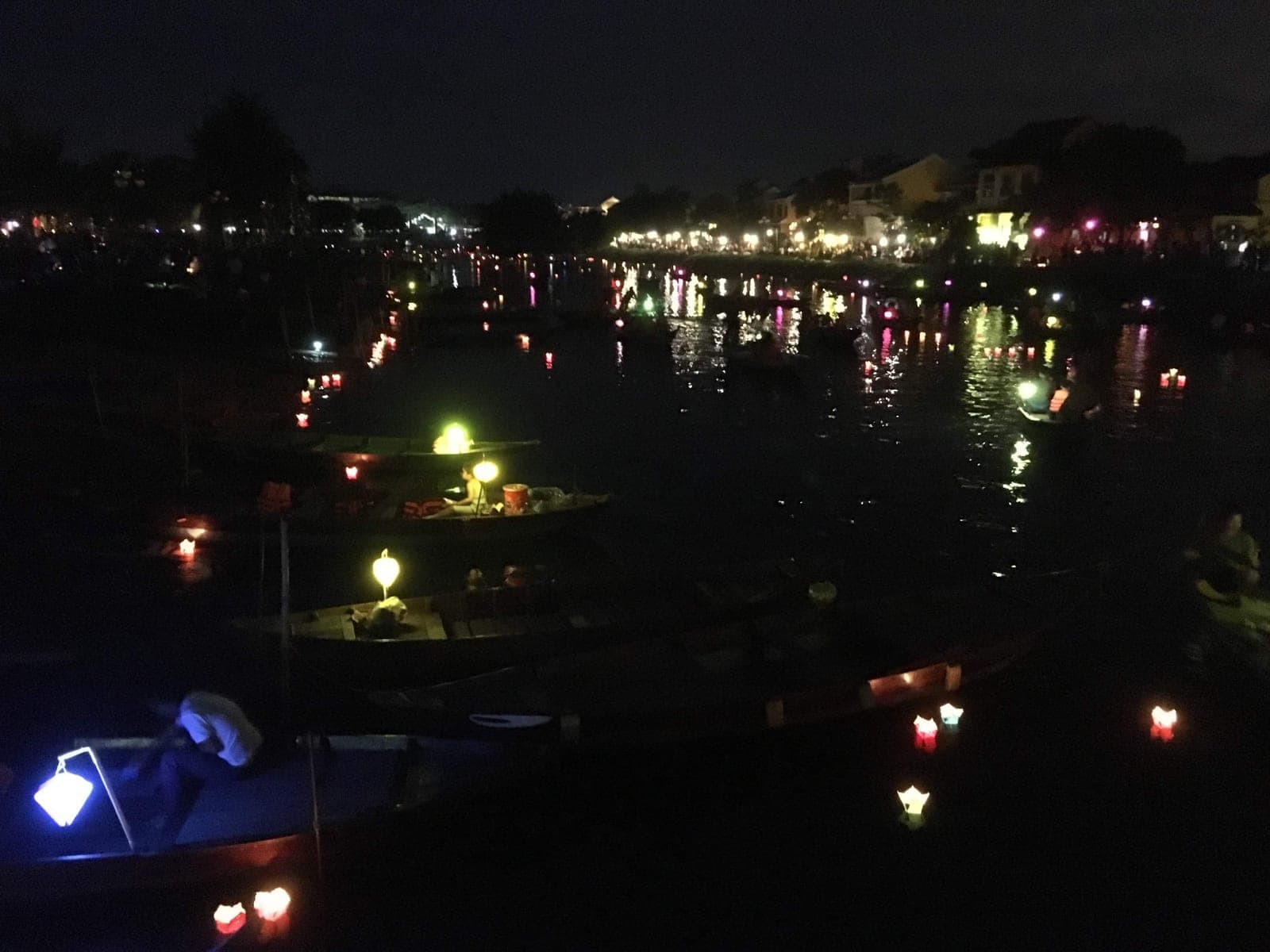
Why this calendar exists
Hội An's lantern nights fall on the 14th day of every lunar month, which means the Gregorian date shifts from month to month and does not repeat in a simple pattern. Travellers building an itinerary months in advance typically want a fixed list of dates rather than a rule they have to calculate themselves. This page lays out the approximate 2026 and 2027 lantern-night dates, explains what changes in the old town on those evenings, and covers the traffic and crowd patterns worth planning around. For the tradition itself, its origins, and what happens on the night, see the companion page on the Hội An full-moon lantern festival.
Dates below are calculated from the lunar calendar and are typically accurate, but conversions can occasionally shift by a day depending on the source used. Confirm the exact date with your hotel close to your travel dates, particularly if planning around one specific night.
How the 14th-day rule works
The Vietnamese lunar calendar runs on a roughly 29 or 30-day cycle tied to the moon, so the 14th day of each lunar month typically lands one day before the astronomical full moon. In Gregorian terms, the lantern night usually moves backward or forward by several days each month, and it resets sharply whenever a leap lunar month is inserted into the calendar (roughly every two to three years, to keep the lunar and solar calendars aligned). There is no leap lunar month expected in the 2026-2027 window covered here, so the cycle should move in a fairly predictable rolling pattern.
Because of this drift, a lantern night can fall on a weekend one month and a weekday the next, which changes the crowd size you should expect.
Approximate 2026 lantern-night dates
The following dates are estimates for the 14th day of each lunar month in 2026, converted to the Gregorian calendar. Treat each as a planning anchor rather than a fixed guarantee, and check closer to your trip:
- January 2026 — early January
- February 2026 — early-to-mid February (near Tết, expect the town to be unusually quiet the week before and packed the week after)
- March 2026 — mid-March
- April 2026 — early April
- May 2026 — early May
- June 2026 — late June
- July 2026 — late July
- August 2026 — mid-to-late August
- September 2026 — mid-September (may coincide with or sit close to Mid-Autumn Festival — this is typically the single biggest lantern night of the year)
- October 2026 — mid-October
- November 2026 — early-to-mid November
- December 2026 — mid-December
Approximate 2027 lantern-night dates
The same rolling pattern continues into 2027, with the cycle shifting slightly earlier in the Gregorian calendar across the year:
- January 2027 — early January
- February 2027 — early February (close to Tết again — expect a similar quiet-then-crowded pattern)
- March 2027 — early March
- April 2027 — late March into early April
- May 2027 — late April into early May
- June 2027 — mid-June
- July 2027 — mid-July
- August 2027 — mid-August
- September 2027 — early September (again likely to sit near Mid-Autumn Festival)
- October 2027 — early October
- November 2027 — late October into early November
- December 2027 — early December
If you are locking in flights or hotel bookings around a specific lantern night, search "[month] [year] lantern festival Hội An exact date" a few weeks ahead, or ask your accommodation to confirm — many hotels in the old town post the coming month's date at reception.
What actually changes in the old town that night
On lantern nights, the core streets of the Hội An Ancient Town — Tran Phu, Nguyen Thai Hoc, Bach Dang along the riverfront, and the surrounding lanes — close to motor vehicles for the evening, typically from around dusk until roughly 10 pm. Motorbikes and cars are not permitted inside this pedestrian zone during those hours, unlike a normal evening in the old town, where motorbikes still move slowly through some side streets. Electric lighting is switched off in the affected blocks and replaced with candlelit paper and silk lanterns.
This no-motor-vehicle window is the main practical difference from an ordinary night in Hội An, and it is the reason the streets feel unusually calm underfoot even though they are visually crowded with people. If you are riding a rented motorbike into town for the evening — see motorbike rental for general guidance — plan to park outside the pedestrian perimeter and walk in.
Traffic and access outside the pedestrian zone
Vehicle traffic does not disappear on lantern nights — it concentrates on the roads ringing the old town instead. Streets like Hai Ba Trung and the approaches near the market typically see heavier-than-usual congestion from around 5 pm as day-trippers arrive from Đà NẵngĐà Nẵng (Da Nang)dah nangMajor coastal city in central Vietnam, known for its beaches, the Marble Mountains, and modern infrastructure.. Taxi and ride-hailing pickup near the old-town edges can be slow during the first hour after dusk; walking a block or two away from the main entrances before requesting a car in most cases gets you a faster pickup.
If staying outside the old town, budget extra time on lantern nights, and consider arriving on foot or by bicycle if your accommodation is within easy walking distance. For visitors combining a Hội An stop with a wider Central Vietnam trip, road and traffic conditions elsewhere in the region are covered on the Đà Nẵng region page.
Crowd forecasting by date type
Crowd size on any given lantern night depends more on the calendar context than the season:
- Weekend lantern nights (Friday or Saturday) typically draw the largest crowds, since they combine with domestic weekend travel from Đà Nẵng and Huế.
- Lantern nights near Tết or Mid-Autumn Festival are consistently the busiest of the year — arrive early or accept that the riverside will be dense with people.
- Weekday lantern nights outside major holidays are usually noticeably calmer and may be a better choice if a quieter, more contemplative experience matters more to you than seeing the absolute peak spectacle.
- Rainy-season months (roughly September to December, alongside typical weather patterns for the region) can reduce crowds somewhat, though a wet lantern night has its own photogenic appeal if you come prepared with light rain gear.
None of these patterns are fixed rules — actual attendance shifts year to year with tourism trends — so treat this as a way to set expectations rather than a precise forecast.
Planning your visit around the calendar
A few practical steps make the difference between a smooth lantern night and a frustrating one:
- Confirm the specific date for your travel month a few weeks ahead rather than relying solely on this page's estimates.
- Book old-town-adjacent accommodation if the lantern night is a trip priority — walking in avoids the worst of the traffic buildup. See where to stay in Hội An.
- Arrive before the vehicle restriction starts, ideally by 5 pm, to see the streets before crowds and the pedestrian-only rule are in full effect.
- If travelling with a rented motorbike, identify a parking spot outside the pedestrian perimeter in advance rather than searching on the night.
- Have a backup plan for dinner reservations, since riverside restaurants fill quickly on lantern nights, especially weekend and holiday-adjacent ones.
Frequently asked questions
Does the full-moon lantern night fall on the same Gregorian date every month?
Are motorbikes and cars really banned in the old town on lantern nights?
Which 2026 or 2027 lantern night is likely to be busiest?
Is a weekday lantern night worth choosing over a weekend one?
How accurate are the dates listed on this page?
Can I still ride a motorbike into Hội An on a lantern night?
Related
Continue reading
Comments
No comments yet.