Xôi: Vietnamese Sticky Rice in All Its Forms
From breakfast xôi xéo with fried shallots to celebratory red xôi gấc — sticky rice is the carbohydrate backbone of Vietnam.
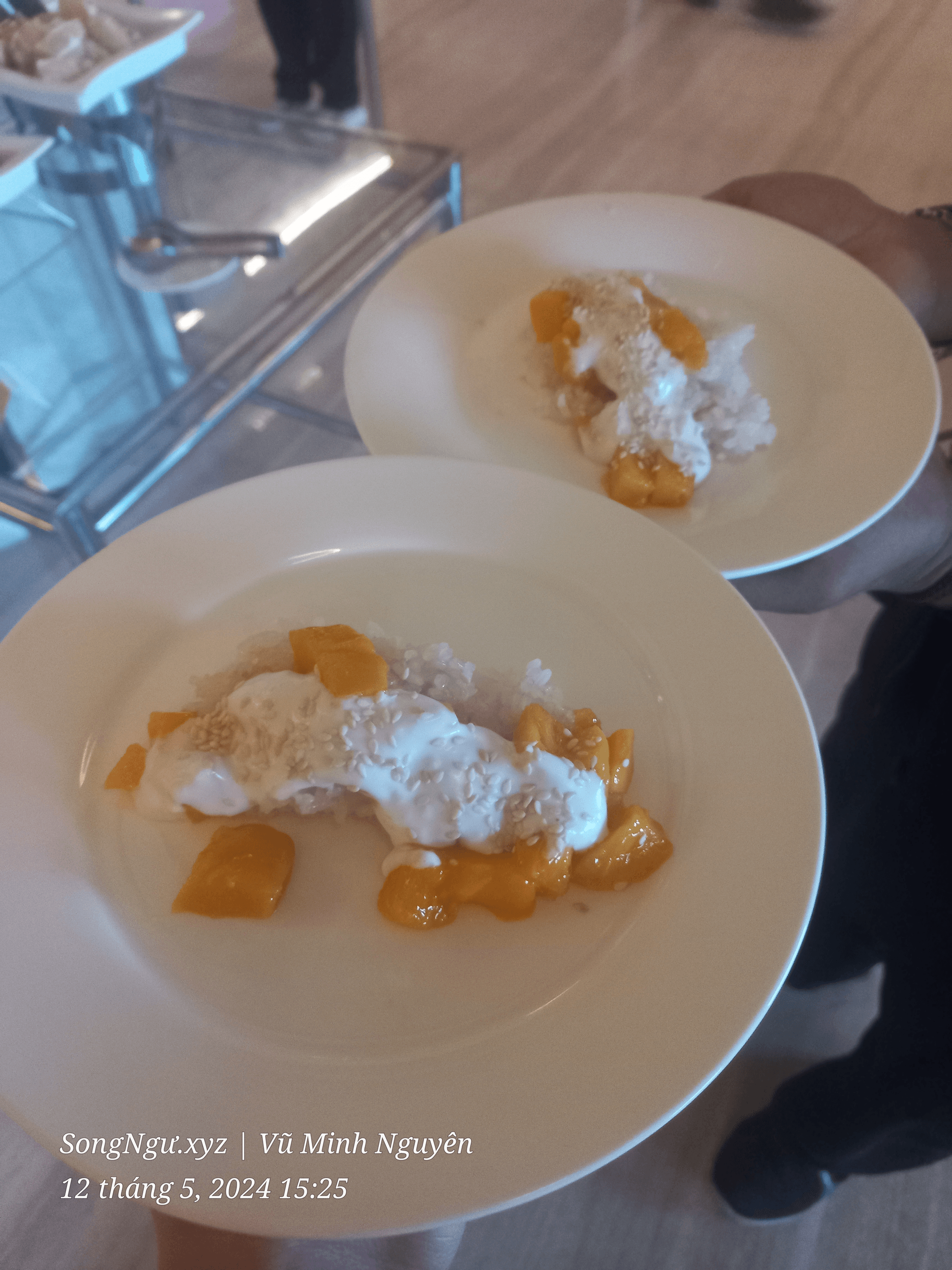
Xôi is glutinous rice steamed until tender and slightly chewy, eaten at every meal in Vietnam but most often for breakfast. The variations — savoury, sweet, plain, dyed — number in the dozens, and the dish carries cultural weight Westerners often miss.
What it is
Glutinous rice soaked overnight, then steamed in a stacked bamboo or aluminium steamer over boiling water. Plain xôi is white. Add turmeric and mung-bean paste and you get xôi xéo. Add gấc fruit and you get bright red xôi gấc. Add black-eyed peas, peanuts, sesame, dried shrimp, mango, durian, or coconut milk, and you get the full repertoire.
The main versions
Xôi xéo — Hanoi's breakfast classic. Yellow rice with mashed mung bean, crispy fried shallots and a drizzle of shallot oil. About 15,000 to 25,000 VND a portion.
Xôi gấc — bright red sticky rice from the gấc fruit, used at weddings, Tết and ancestor offerings because red signals luck.
Xôi lạc / xôi đậu — sticky rice studded with peanuts or black-eyed beans. Cheap, plain, very filling.
Xôi mặn — savoury sticky rice with Chinese sausage, shredded chicken, fried shallots, sometimes a fried egg. Common in the south.
Xôi xoài — sticky rice with mango and coconut cream. Borrowed from Thailand but sold widely in HCMC and Đà NẵngĐà Nẵng (Da Nang)dah nangMajor coastal city in central Vietnam, known for its beaches, the Marble Mountains, and modern infrastructure..
Where to try it
In Hanoi, Xôi Yến at 35B Nguyễn Hữu Huân is the famous all-night xôi house — go for xôi xéo with chả lụa and pâté. Cheaper street-side xôi xéo is sold from wicker baskets all over the Old Quarter for the price of a coffee. In HCMC, Xôi Bà Chiểu in Bình Thạnh district is a good neighbourhood spot for xôi mặn.
How to eat it
Most xôi is sold wrapped in a banana leaf or a plastic bag and eaten standing up or walking. A wooden chopstick or a folded piece of leaf does the job — proper cutlery is rarely involved. Eat it within an hour; sticky rice goes from chewy to claggy as it cools.
Honest take
Xôi xéo from a market stall in Hanoi on a cold morning, eaten on a low stool with a glass of hot tea, is one of the great cheap breakfasts in Asia. It is also probably the cheapest properly satisfying meal you can buy in Vietnam.
Related reading: Northern cuisine, Hanoi food guide, Street food etiquette, Hanoi, Bánh cuốn.
Pronunciation
Xôi (pronounced soy — the "ô" is a flat mid-tone vowel, neither oh nor uh; the "i" at the end is barely voiced). Common variants: Xôi xéo (soy say-uh) — the flagship Hanoi breakfast version.
How to order it
"Cho tôi một phần xôi xéo" (cho toy-ee mot fahn soy say-uh) — "Give me one portion of turmeric sticky rice". Alternatively: "Một xôi gấc cùng với chả lụa" (mot soy gahk koom voi cha loo-ah) — "One red sticky rice with Chinese sausage".
Price ranges
| Tier | Indicative price (VND) | USD |
|---|---|---|
| Street stall | 15,000–25,000 | 0.60–1.00 |
| Casual restaurant | 25,000–40,000 | 1.00–1.60 |
| Tourist-zone cafe | 35,000–50,000 | 1.40–2.00 |
Street xôi from a basket in Hanoi's Old Quarter is the bargain; restaurant portions are larger and may include sides like chả lụa or pâté.
Best three neighbourhoods to try it
Hanoi's Old Quarter — xôi xéo sellers operate from wicker baskets at dawn on every corner; Xôi Yến (35B Nguyễn Hữu Huân) is the legendary all-night spot. Bình Thạnh, HCMC — Xôi Bà Chiểu and local stalls serve xôi mặn (savoury rice with sausage and egg) more frequently than Hanoi. Thanh Xuân, Hanoi — quieter neighbourhood markets with excellent plain xôi lạc (peanut sticky rice) at market-stall prices.
Common variants
Xôi xéo vs. xôi mặn — The north favours sweet turmeric and mung-bean; the south prefers salty rice with Chinese sausage and fried egg. Temperature matters — Hot xôi is chewy and soft; cooled xôi becomes dense and rubbery. Buy from a stall that steams it fresh, not a pre-cooked pile. Regional garnish — Northern baskets often come with chả lụa and pâté on the side; southern versions are self-contained and heavier on protein.
Continue reading
Comments
No comments yet.