Bánh Cuốn: Hanoi's Steamed Rice Pancakes
Translucent rice-flour pancakes filled with minced pork and wood-ear mushroom, eaten with fish sauce, herbs and a slice of pork sausage.
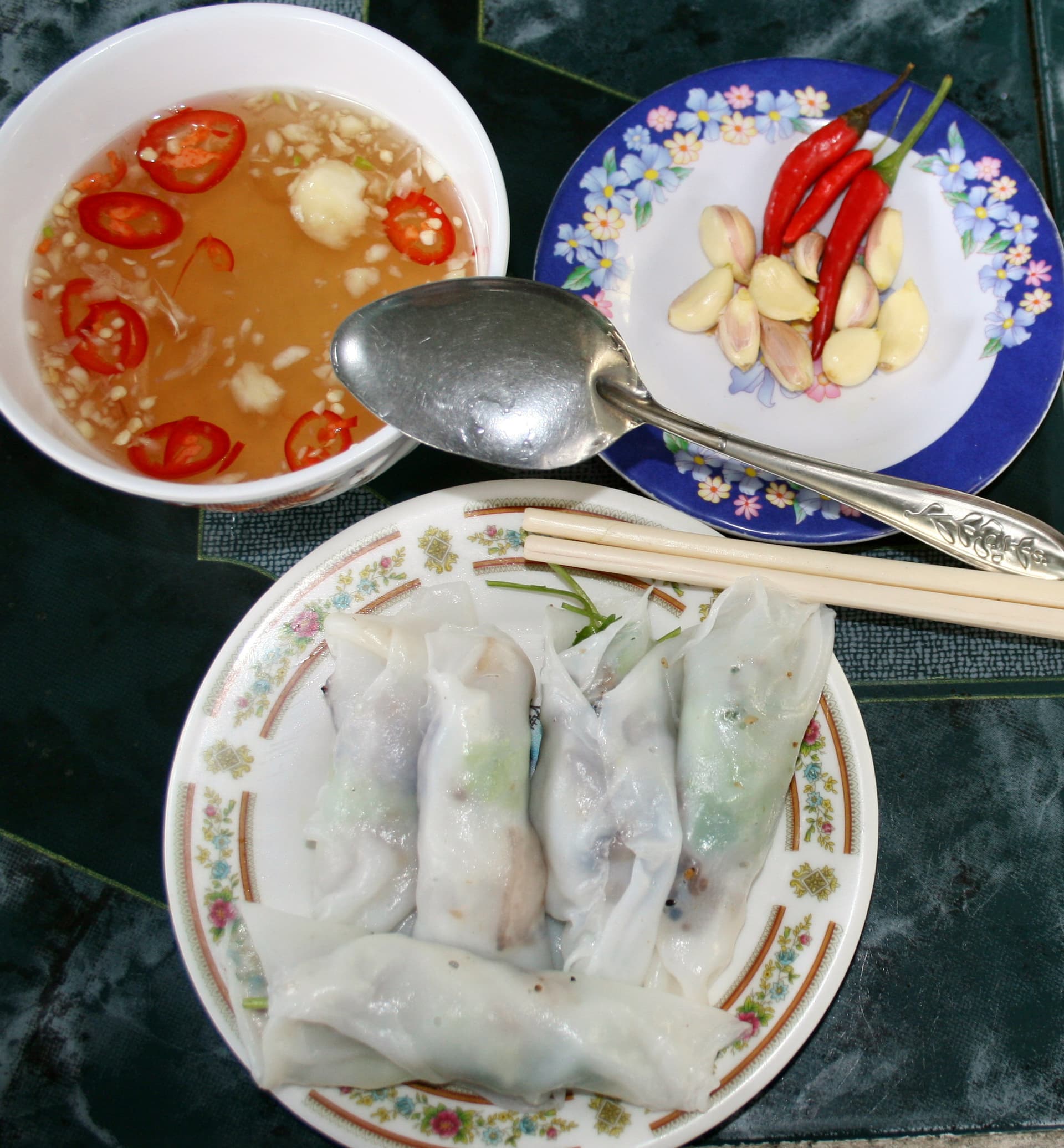
Bánh cuốn is the Hanoi breakfast that visitors most often miss because they go for phởPhở (Pho)fuhVietnam's national noodle soup: a clear beef or chicken broth served with flat rice noodles, fresh herbs, and lime. instead. Wafer-thin rice pancakes steamed over a cloth, rolled around a filling of minced pork and wood-ear mushroom, eaten with fish-sauce dip, fried shallots and a wedge of pork sausage.
What it is
A rice-flour batter (sometimes mixed with tapioca for stretch) ladled onto a tight cotton cloth stretched across a pot of boiling water. After about thirty seconds, the cook lifts the now-set pancake off with a bamboo stick, lays it on a tray, adds a smear of pork-and-mushroom filling, rolls it up and snips it into pieces. Served with shallot oil, crispy fried shallot, sliced chả lụa (steamed pork sausage), fresh herbs, and a small bowl of nước chấm for dipping.
Origin and history
Bánh cuốn is unmistakably northern and unmistakably old, recorded since at least the 18th century. The dish is closest cousin to Cantonese cheung fun, and the steamed-on-cloth technique probably arrived from southern China centuries ago. The Hanoi version became the standard.
Where to try it
In Hanoi, Bánh Cuốn Bà Hoành at 66 Tô Hiến Thành is the long-running family-run institution for around 50,000 VND. Bánh Cuốn Gia Truyền at 14 Hàng Gà in the Old Quarter is the convenient old-town option. Bánh Cuốn Bà Xuân near Hoàn Kiếm is open all day. Outside Hanoi, the dish is sold but rarely with the same skill.
How to eat it
The dip is the dish. Squeeze in lime, add chilli if you like, drop a few drops of cà cuống (giant water-beetle essence) if the stall offers it — a few drops perfume the entire bowl. Pick up a piece of bánh cuốn with chopsticks, dip, eat. Alternate with bites of chả lụa and herbs.
Regional variations
The Hanoi version is the lightest and thinnest. Bánh cuốn Cao Bằng, from the northern border region, is thicker and served in a bowl of bone broth — closer to a noodle soup than a pancake. The Saigon version is sweeter and the filling is usually pre-cooked rather than warm.
Honest take
A plate of bánh cuốn with a glass of iced tea and a side of chả lụa is one of the best 60,000 VND breakfasts in Vietnam. It is also one of the dishes most affected by who is cooking — a clumsy bánh cuốn is rubbery and dull; a good one is gossamer. Go to the named places.
Related reading: Bún thang, Northern cuisine, Hanoi food guide, Hanoi, Xôi.
Pronunciation
Bánh Cuốn (pronounced bahn koo-oan — the á is a mid-level tone, the ô is like the 'o' in "go", and the final n is nasal rather than hard).
How to order it
"Cho tôi một dĩa bánh cuốn" (cho toy mot yee-uh bahn koo-oan) — "give me one plate of bánh cuốn". If you want extra chả lụa on the side: "Cho thêm chả lụa nữa" (cho them chah loo-uh noo-uh).
Price ranges
| Tier | Indicative price (VND) | USD |
|---|---|---|
| Street stall | 40,000–60,000 | $1.60–$2.40 |
| Casual restaurant | 60,000–90,000 | $2.40–$3.60 |
| Tourist-trap zone | 100,000–150,000 | $4.00–$6.00 |
Best three neighbourhoods to try it
- Hanoi Old Quarter — the birthplace of bánh cuốn; street-level stalls around Hàng Gà and Tô Hiến Thành serve the most authentic versions.
- Hoàn Kiếm lakeside — daytime-focused stalls near the lake offer lighter, faster-moving versions for breakfast crowds.
- Cao Bằng province (far north) — for the thicker, broth-based variant that's entirely different from Hanoi's delicate style.
Common variants
- Bánh cuốn Hanoi — the lightest version with minced pork and mushroom, served dry with dipping sauce and chả lụa on the side.
- Bánh cuốn Cao Bằng — thicker pancakes in a warm bone-broth bowl, almost soup-like; popular in northern border regions.
- Bánh cuốn Saigon — sweeter filling, pre-cooked rather than warm, reflects southern preferences for sugar in dipping sauce.
How to order in Vietnamese
| What you want | Vietnamese | Approximate pronunciation |
|---|---|---|
| One plate of bánh cuốn | Cho tôi một dĩa bánh cuốn | Cho toy mot yee-uh bahn koo-oan |
| Spicy, please | Cay một chútBánh Mì (Banh Mi)ban meeVietnamese baguette sandwich filled with meats, pâté, pickled vegetables, fresh coriander, and chilli — a fusion legacy of French colonialism. | Cay mot chut |
| Not spicy | Không cay | Khong cay |
| No cilantro / coriander | Không rau mùi | Khong raw moo-ee |
| The bill, please | Tính tiền với | Tinh tee-en vui |
| Takeaway | Mang đi | Mang dee |
Price ranges
| Tier | Approximate price (VND) | Where you'll find it |
|---|---|---|
| Street stall | 40,000–60,000 | Early-morning cart in alleys; minimal seating |
| Local sit-down restaurant | 70,000–100,000 | Neighbourhood shop with a dozen tables; repeat-customer clientele |
| Tourist-oriented restaurant | 120,000–180,000 | District 1 or Old Quarter tourist zones; English menus |
Best neighbourhoods to find it
- Hanoi Old Quarter — the original and still the best; Tô Hiến Thành and Hàng Gà stalls are the standard.
- Hoàn Kiếm lakeside — lighter versions for breakfast crowds; early morning arrival recommended.
- Ba Đình district — local morning spots; less tourist-heavy than Old Quarter.
- Cao Bằng province — the thicker, broth-based variant that's entirely distinct from Hanoi's delicate style.
Regional variants
- Hanoi (north) — Translucent, thin pancake; minced pork and wood-ear mushroom filling; served dry with nước chấm and chả lụa on the side.
- Cao Bằng (far north) — Thicker pancakes served in a warm bone broth, almost soup-like; preferred in border regions.
- Saigon (south) — Sweeter dipping sauce with more sugar; filling typically pre-cooked rather than warm; reflects southern palate preferences.
- Central regions — Less common but occasionally thicker than Hanoi; sometimes features shrimp or fish cake in the filling.
How to tell a good version from a bad one
- Pancake texture — The rice sheet should tear cleanly and feel gossamer-thin between chopsticks, not rubbery or thick.
- Broth (where applicable) — Clear and aromatic, not cloudy or greasy; should carry pork or bone flavour, not salt-heavy.
- Freshness of filling — Pork should be warm and just-minced-tasting, not pre-cooked hours ahead; mushroom should be tender, not gritty.
- Queue as proxy — Mid-morning lines (if not from tourists) typically indicate quality; stalls with no regulars by 9 AM may be struggling.
- Herbs and garnish — Fresh cilantro, mint, and perilla should smell pungent; fried shallot should be golden and crisp, not soft or dark.
Frequently asked questions
What is bánh cuốn made of?
Where is the best place to try bánh cuốn in Hanoi?
How much does bánh cuốn typically cost?
Continue reading
Comments
No comments yet.