Mường Hoa Valley, Sapa: Terraces, Villages and the Ancient Rock Field
Mường Hoa Valley is the terraced valley below Sapa town, home to Lao Chải, Tả Van and the Sa Pa ancient rock field. Here is where it is, what to see, and how to visit on foot or by mountain train.
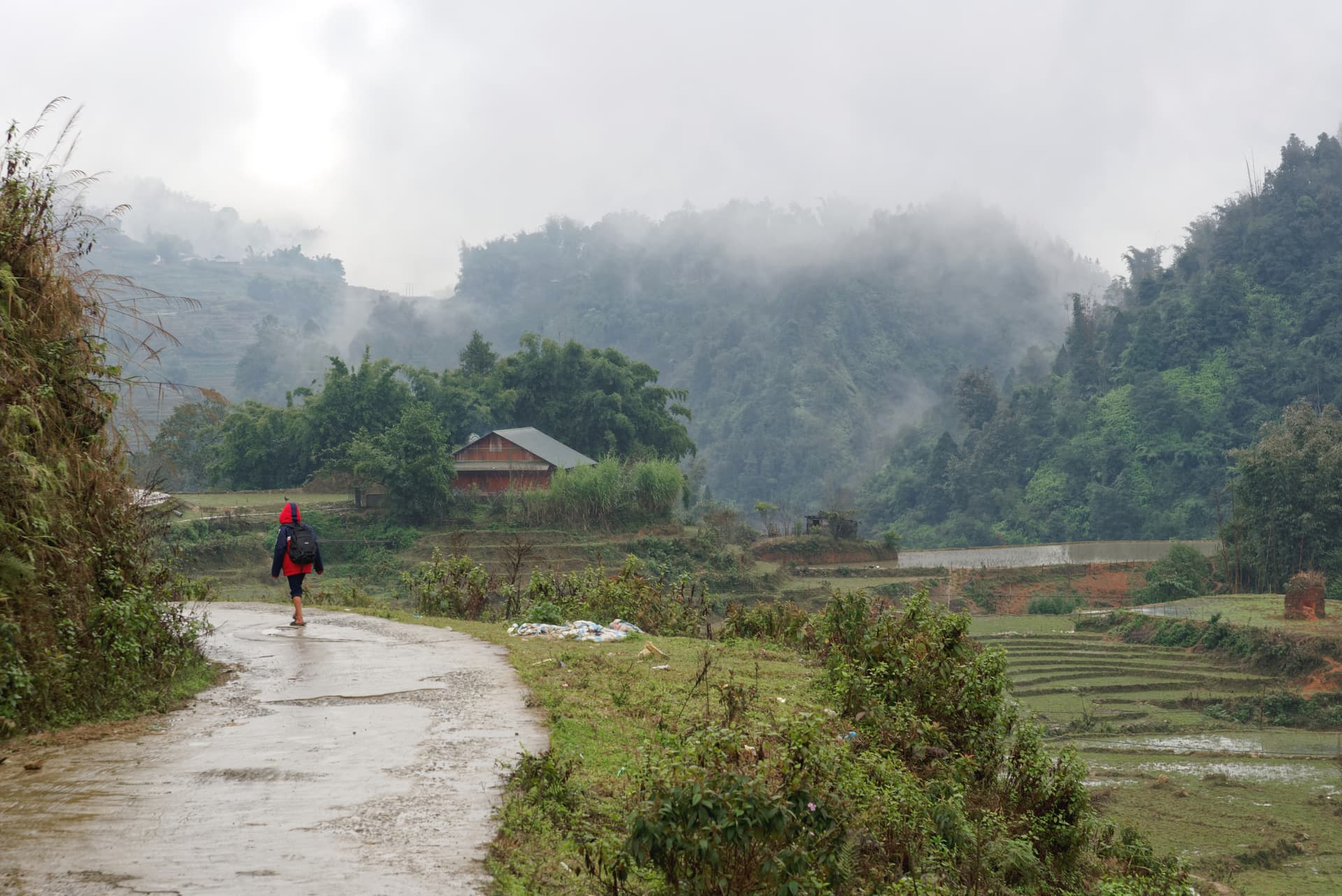
Mường Hoa Valley is the terraced valley south-east of Sapa town in northern Vietnam, following the Mường Hoa stream. Its hillsides are cut into rice terraces, its villages include Lao Chải and Tả Van, which have homestays and the famous Lao Chải–Tả Van walk, and its floor holds the Sa Pa ancient rock field of carved boulders. When people say "the Sapa valley", this is usually the one they mean.
People come for the terraces and the walk through them, and many stay on for a homestay night in one of the villages.
Where is Mường Hoa Valley?
The valley lies south-east of Sapa town and follows the Mường Hoa stream down from the hills. The villages are strung along it, among them Lao Chải and Tả Van, with Bản Hồ further along on the longer trails. The Sa Pa ancient rock field sits in the valley in Tả Van commune, about 8 km from Sapa town.
Sapa town itself is at about 1,500 m, and Sapa is roughly 300–320 km north-west of Hanoi. Most village treks from Sapa stay below 2,000 m, so altitude is a minor concern for healthy adults, though people arriving straight from sea level may feel breathless on the climbs. See altitude sickness in Sapa for the details. For how to reach Sapa from the capital, read Hanoi to Sapa route options or the overview in the Sapa region guide.
What is there to see in the valley?
The terraces. The look changes with the season, covered in the best-time section below. The classic Lao Chải to Tả Van descent runs through H'mông rice terraces along the Mường Hoa stream, and our trekking routes page calls it heavily commercialised but still photogenic.
The villages. The villages around Sapa are home to several ethnic-minority communities: H'mông (Black Hmong, Flower Hmong), Red Dao, Tày and Giáy. Dress and house styles differ from village to village, and a local guide can explain which is which. Lao Chải and Tả Van are linked by the famous Lao Chải–Tả Van walk, and both offer homestays.
The rock field. The carved boulders of the Sa Pa ancient rock field are the valley's one major historic attraction, covered in the next section.
Views of the high ground. In clear weather the Hoàng Liên Sơn mountains, including Fansipan at 3,143 m, form the backdrop. In winter fog can hide the views for days at a time.
What is the Sa Pa ancient rock field?
The Sa Pa ancient rock field (Bãi đá cổ Sa Pa) is an open-air scatter of carved boulders in the Mường Hoa Valley, in Tả Van commune.
- Size. It covers roughly 8 km² and holds nearly 200 carved boulders.
- Discovery. It was discovered in 1925 by Victor Goloubew, a Russian-born French archaeologist of the École française d'Extrême-Orient.
- Status. In October 1994 Vietnam's Ministry of Culture and Information recognised it as a national-level historical relic.
- Carvings. The marks include stair-like terraces, human figures, paths, writing-like signs, circular sun-like grooves and fertility symbols.
What the carvings mean is still debated, and nobody has settled when they were made or what they mean. Treat any single confident explanation you hear on the trail as one theory among several.
How do you visit Mường Hoa Valley?
There are three practical ways.
1. Guided or independent trek
Walking is the best way to see the valley. These routes from our trekking routes page run through it:
| Route | Distance | Time | Difficulty | Crowds |
|---|---|---|---|---|
| Lao Chải–Tả Van | 10 km | 4h | Moderate | High |
| Tả Van–Bản Hồ | 12 km | 5h | Moderate | Low |
| Mường Hoa valley loop | 20 km | 7h | Hard | Medium |
Typical prices from the same page: a day trek with a guide is $25–35 per person, a 2D1N trek with a homestay is $50–80 per person, and an independent homestay is 200,000–400,000 VND including dinner. If you want the quieter terraces, choose the Tả Van–Bản Hồ walk over the famous Lao Chải–Tả Van one.
2. The Mường Hoa mountain train
The Mường Hoa mountain train is a funicular about 2 km long that opened on 31 March 2018. It runs from Sa Pa station, in the Sun Plaza building in town, to Mường Hoa station at the Fansipan cable-car base, passing through two tunnels and over four viaducts. It is operated by Sun World Fansipan Legend. Our Fansipan page lists the fare at 100,000 VND, but check the price at the station.
The train is a transport link between town and the cable-car base, an alternative to a taxi for that leg. See the FAQ below for how it differs from the cable car.
3. Taxi or motorbike
Taxis in Sapa are metered or negotiated, so agree a fare before heading into the valley if you do not want to walk the whole way. Do not ride a motorbike down from Sapa into the valley unless you are an experienced rider. The road is steep with hairpins, and the weather changes fast.
When is the best time to visit?
- September to early November. The rice is golden and ready for harvest. This is the most spectacular and the most crowded period.
- April to May. The terraces are flooded for planting and look mirror-like. This is the second most spectacular season.
- December to February. Cold and often foggy, with occasional snow on Fansipan. It is quiet and cheap, but views can vanish.
- June to August. Green, hot and rainy, with leeches on the trails.
Where should you stay?
- A village homestay in Tả Van or Lao Chải. Basic but warm, with terrace views, and the most atmospheric way to experience the valley.
- Sapa town. Convenient for the mountain train and restaurants, but increasingly overbuilt. Pick a hotel away from the main tourist row.
- Topas Ecolodge. A boutique resort on a ridge 18 km from Sapa, with terrace and mountain views. It is expensive but a different experience.
More options are in where to stay in Sapa. The Sapa love market is a town event that is now largely staged for tourists; read that page before planning around it.
Practicalities
- It rains often even in the dry months, so pack a poncho.
- Trail surfaces are slippery mud or rock, so wear shoes with good grip.
- Textile sellers follow trekkers on the popular trails. A polite, firm "no thanks" works.
- Bring cash for homestays, though some now accept QR payment.
- Book a genuine operator (Sapa Sisters, Ethos, Sapa O'Chau or Indigo Cat) before you arrive. The names are widely copied, so read fake tour offices first.
- Hire a female H'mông or Dao guide through an operator that pays guides fairly, and tip your guide.
Frequently asked questions
How far is Mường Hoa Valley from Sapa town?
Can you see the rock carvings without a guide?
Is the Mường Hoa mountain train the same as the Fansipan cable car?
What is the best month for photos in Mường Hoa Valley?
Continue reading
Comments
No comments yet.