Hanoi vs HCMC phở: the honest differences
Northern phở is lean and clear, southern phở is sweeter and richer, and the herbs arrive in different places on the table.
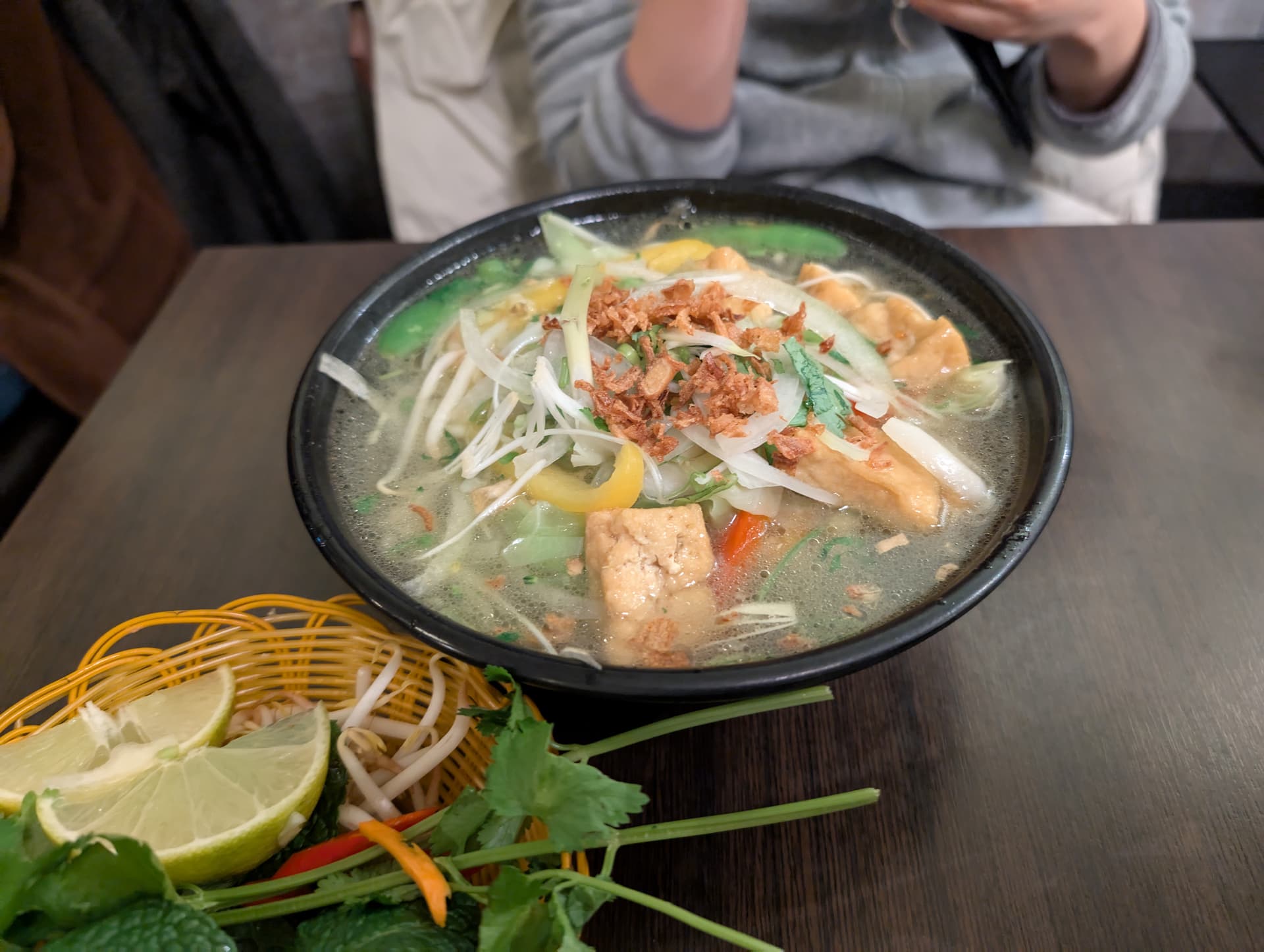
Phở is not one dish. Order a bowl in the Old Quarter of Hanoi and order a bowl in District 5 of Ho Chi Minh City, and you'll be eating two related but distinct soups — different broth, different garnish, different sweetness, and a different idea of what phở is even for. Neither side is wrong. Understanding the split makes both versions better.
Why the two styles exist
Phở originated in the north, likely in and around Hanoi and the Red River Delta, in the early 20th century. When the country split in 1954, roughly a million people moved south, many bringing phở recipes with them. In the south, cooks adapted the dish to local tastes — more herbs were available year-round, palm sugar was cheap, and southern cooking in general runs sweeter than northern cooking. Over seven decades the southern version diverged enough to become its own distinct style, often called phở Sài Gòn, while the original stayed closer to what's now called phở Hà NộiHà Nội (Ha Noi)hah noyCapital of Vietnam, in the north. Population ~8 million. 1,000+ years as a Vietnamese capital. or phở Bắc.
If your trip covers both cities, it's worth trying phở in each — see the Hanoi and Ho Chi Minh City region guides for broader context on each city's food culture.
The broth: clear versus rich
The single biggest difference is the broth itself.
- Hanoi broth is typically clear, pale, and restrained — simmered from beef bones with minimal sweetness, seasoned mainly with fish sauce and a light hand of spice. The goal is transparency, both visually and in flavour: you should be able to taste the bones, the char of roasted onion and ginger, and not much else.
- HCMC broth is typically darker, sweeter, and more heavily spiced. Rock sugar or palm sugar is common, along with a more generous use of warming spices like cinnamon and star anise. The result is a rounder, more forward-flavoured broth that some northerners consider over-seasoned and some southerners consider properly developed.
Neither broth is "correct" — they reflect genuinely different culinary philosophies. Northern cooking in general favours subtlety and lets a small number of ingredients speak; southern and central Vietnamese cooking (influenced partly by Khmer and Chinese Teochew traditions in the Mekong Delta) tends toward bolder, sweeter, more layered flavour.
Herbs: on the table or in the bowl
This is the difference visitors notice fastest.
- In Hanoi, a bowl of phở typically arrives close to finished. You might get a small plate of quẩy (fried dough sticks) and a wedge of lime, plus scallion and cilantro already in the broth. Bean sprouts and a large herb plate are unusual — some traditional Hanoi shops don't serve them at all, on the view that a well-made broth doesn't need dressing up.
- In HCMC, the bowl typically arrives with a generous side plate of raw herbs and vegetables — Thai basil, saw-tooth herb (ngò gai), bean sprouts, lime wedges, and sliced chilli — that the diner adds themselves, along with hoisin sauce and sriracha squeezed in at will. The soup you start with is not the soup you finish with; you're expected to customise it.
This "assembly required" southern style versus "arrives complete" northern style is worth knowing before you sit down.
Noodles and cut of meat
Noodle width and cut conventions differ too, though less dramatically than broth and herbs:
- Northern phở noodles (bánh phở) tend to be a touch narrower and are often served with simply sliced beef — tái (rare, cooked by the hot broth) or chín (well done) being the standard choices.
- Southern phở noodles run slightly wider and softer, and bowls more often come "loaded" with a mix of cuts in one order — tái, nạm (flank), gân (tendon), and viên (meatball) together, sometimes labelled đặc biệt (special).
If you don't specify, most vendors will serve a reasonable default, but it's fine to ask for a specific cut by name.
Sweetness as the real dividing line
If you had to reduce the entire north-south phở debate to one axis, it would be sugar. Southern Vietnamese cuisine as a whole uses more sugar in savoury cooking than northern cuisine does — this shows up in phở broth, in kho (braised) dishes, and elsewhere. Visitors coming from Hanoi to HCMC sometimes describe the local phở as "dessert-adjacent" on first taste; it's an adjustment, not a flaw, and most people find they enjoy both once they stop expecting one to taste like the other.
Sample vendors to compare
Trying both styles back to back makes the difference concrete. A few reference points, offered as a starting point rather than a ranking, since any "best phở" list changes over time:
- Hanoi: Phở Bát Đàn and Phở Gia Truyền on Bát Đàn street are long-running, no-frills shops representative of the austere northern style — expect a queue, a simple menu, and no herb plate.
- Hanoi: Phở Thìn (Lò Đúc) is a well-known variant that stir-fries the beef before adding broth — a regional twist rather than the plainest version, but still recognisably northern in seasoning.
- HCMC: Phở Hòa Pasteur in District 3 is a long-established, tourist-aware but broadly authentic example of the fuller southern style with a complete herb plate.
- HCMC: Phở Lệ in District 5 is popular with locals and known for a rich, well-seasoned broth typical of the southern approach.
Menus, hours, and ownership can change, so treat these names as a starting point to confirm locally rather than a fixed list.
Practical tips for ordering either style
- In Hanoi, don't assume herbs or sauces will appear — ask if you want them ("cho thêm rau" for extra herbs).
- In HCMC, taste the broth before adding hoisin and sriracha; adding sauce first can mask the broth you're paying for.
- Phở is traditionally a breakfast and lunch dish in both regions; many of the best-regarded shops close by mid-afternoon.
- Travelling between the two cities to compare styles yourself? The Hanoi to Sapa route and HCMC to Hanoi train vs flight pages cover the logistics.
- Street stalls typically charge less than sit-down restaurants for a comparable bowl; expect a wider price range in tourist-heavy districts of either city.
Which style is "better"
This is a genuinely unresolved local debate, not something a guide can settle. Hanoi partisans consider their version the authentic original and see southern additions as excess. HCMC partisans consider their fuller, more customisable bowl the more generous evolution. In most cases, the honest answer is that both are legitimate regional cuisines worth trying on their own terms rather than ranked against each other.
Frequently asked questions
What is the main difference between Hanoi and HCMC phở?
Why is southern phở sweeter than northern phở?
Do I need to ask for herbs in Hanoi phở shops?
Is one style of phở more authentic than the other?
Can I find both styles in the same city?
What should I order if I want the mildest, most traditional bowl?
Related
Continue reading
Comments
No comments yet.