Lan Hạ Bay Beaches
Quieter than Hạ Long, accessible from Cát Bà — three hundred tiny karst islets with hidden beaches you reach by kayak or junk.
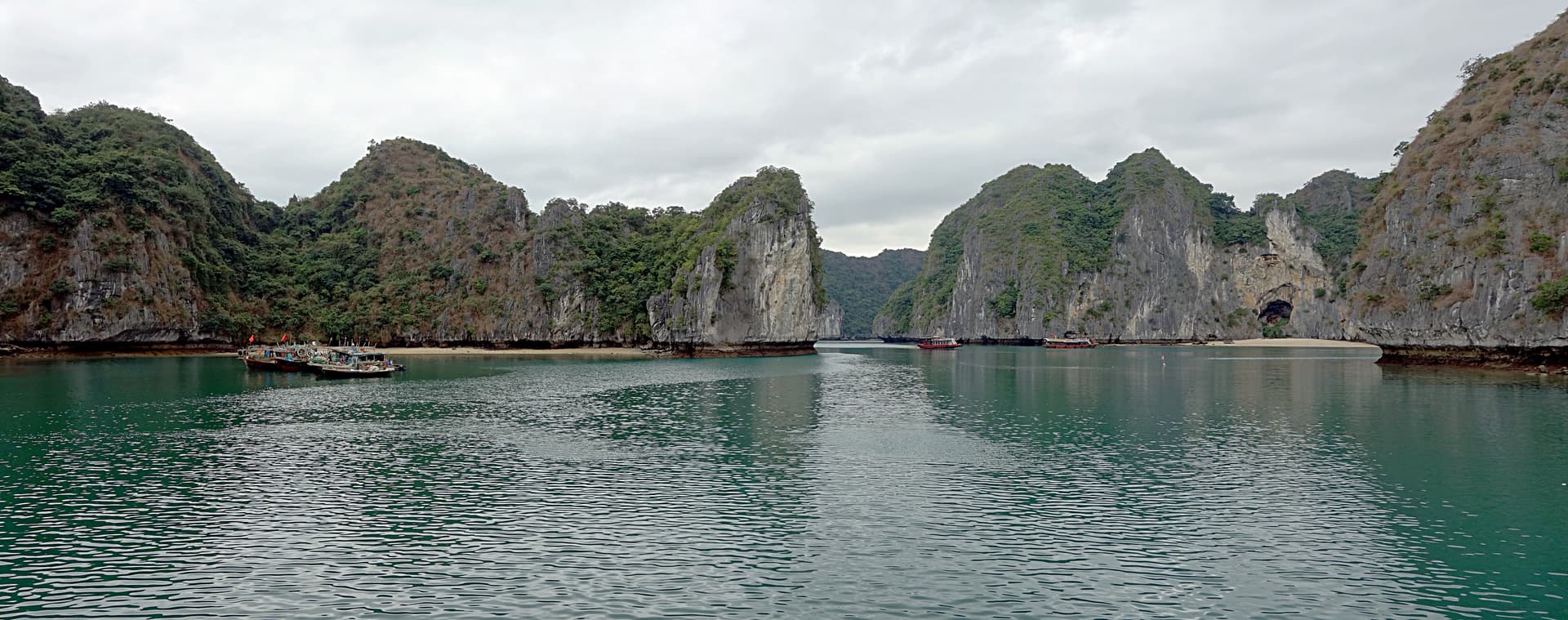
Lan Hạ Bay is the southern, less-photographed half of the karst archipelago around Cát Bà island. It has 400+ islets, a few hundred small white-sand beaches tucked into limestone coves, and a fraction of Hạ Long Bay's cruise traffic.
What it is
A 70 km² bay between Cát Bà island and Long Châu archipelago, protected since 2013 as part of Cát Bà Biosphere. Junks here load from Cát Bà town's Bến Bèo harbour rather than Tuần Châu near Hạ LongHạ Long (Ha Long)hah longBay in northeastern Vietnam featuring thousands of limestone karst islands; a UNESCO World Heritage site and top cruise destination. city, which keeps numbers down. The water clarity is better than Hạ Long proper and the beaches more accessible.
What to see and do
- Beach islets — Cát Dứa (Monkey Island), Tiền Đông, Ba Trái Đào ("Three Peaches"). Most require kayak access.
- Kayaking from a junk — 1–2 hour kayak sessions are standard on every overnight cruise.
- Climbing — Asia Outdoors runs deep-water solo at Butterfly Valley.
- Snorkelling — visibility 3–6 m at the outer islets; coral patchy.
- Floating villages — Cái Bèo is one of the largest in Vietnam, 300+ households.
- Sunset swim at Tiền Đông beach — small, often empty after the cruise boats leave.
How to get there
Lan Hạ is accessed via Cát Bà island. From Hanoi this is a 3h30 bus + ferry combination — see Cát Bà island.
For day trips, leave from Bến Bèo harbour on the southeast side of Cát Bà town. For overnight junks, most boats include hotel pickup from Hanoi as part of a 2D1N or 3D2N package.
For independent travellers: rent a sampan from Bến Bèo for 800,000–1.5m VND/day with driver, and design your own route.
When to go
October–April is the dry, clear season. April and May are the warmest swimmable months before the summer humidity. June–September is hot, can be wet, and the bay sees afternoon storms. August–September brings typhoon risk; cruises cancel.
Avoid Vietnamese public holidays (Reunification, Tết) when Cát Bà swells with domestic crowds.
Cost and operators
| Trip | Operator examples | Price |
|---|---|---|
| Day trip Lan Hạ kayak/snorkel | Cat Ba Discovery, Cat Ba Express | $25–40 |
| 1-night 2-day cruise | Sena, Mon Cheri, Orchid | $130–250 |
| 2-night 3-day cruise | Orchid Premium, Era | $300–500 |
| Climbing day | Asia Outdoors | $65 |
| Private sampan day | Bến Bèo | from $40 |
Cruises sleeping in Lan Hạ rather than Hạ Long are typically newer and quieter. Orchid Cruise and Sena Cruises are reliable mid-range options.
Practicalities
- Lifejackets are standard for kayaking; insist if not offered.
- Bring reef-safe sunscreen; coral is fragile.
- Toilet facilities on small beach islets — none, plan accordingly.
- Mobile signal is patchy past Cát Bà; download maps.
- Cash for harbour-side rentals.
Honest take
If you can do only one northern bay, Lan Hạ beats Hạ Long for beaches, water clarity, and cruise quality. The headline karst scenery is essentially the same — it is one continuous geological formation — but the experience is more spacious. The trade-off is the longer overland journey to Cát Bà. For an overnight cruise: book one of the smaller Lan Hạ-only operators and skip the Tuần Châu mass-market boats.
Why visit lan-ha-bay-beaches
Lan Hạ Bay offers what Hạ Long Bay marketed but doesn't deliver: genuine coves, accessible white-sand beaches, and junks with room to move. The karst backdrop is identical geology, but the experience is quieter, the water noticeably clearer (usually 5–8 m visibility), and kayaking from your boat actually feels like discovery rather than a queue. Most visitors are Vietnamese day-trippers or Southeast Asian tour groups, not the megaship corridor you hit at Hạ Long City.
When to go
October to April is the dry season with the calmest waters and clearest visibility for snorkelling. November–December and March–April are peak visiting months: warm, sunny, minimal rain. May gets hazy and increasingly humid. June–September brings afternoon storms and afternoon heat above 35°C; typhoon season (August–October, peak in September) closes some boat routes. Avoid Vietnamese public holidays (Tết mid-January–February, Reunification Day 30 April, National Day 1–2 September) when domestic crowds double prices.
How to get there
Reach Lan Hạ via Cát Bà island: 3–4 hours overland from Hanoi (bus + ferry, ~200,000 VND). From Cát Bà town's Bến Bèo harbour, day-trip boats depart 8:30–9 am and return by 5 pm; overnight cruises include hotel pickups from Hanoi. Independent travellers can rent a private sampan with driver from Bến Bèo for 800,000–1.5 million VND/day.
What to see and do
- Kayak through hidden coves — 1–2 hour paddling sessions on every cruise; Tiền Đông and Cát Dứa (Monkey Island) have the quietest landing beaches.
- Snorkel at outer islets — visibility 5–8 m on calm days; coral patchy but fish are abundant. Bring reef-safe sunscreen.
- Visit Cái Bèo floating village — one of Vietnam's largest (300+ households); hiring a local longtail to weave through the settlement gives genuine cultural context unavailable on Hạ Long.
- Deep-water solo climbing — Asia Outdoors runs multi-pitch routes at Butterfly Valley; mixed ability sessions, 3-hour intro €65.
- Sleep on the water — overnight cruises anchor in Cát Bèo or remote coves; the starfield and pre-dawn quiet justify the expense.
Where to stay nearby
Budget: Cát Bà Island guesthouses in town cost 150,000–300,000 VND/night (dorm beds 100,000 VND). Mid-range: Cát Bà hotels (Cat Ba Island View, Sao Mai) run 400,000–700,000 VND. Premium: Sena Cruises and Orchid Cruise overnight packages (2D1N, $130–250; 3D2N, $300–500) include meals and anchorage.
Practicalities
- Entry: No formal bay fee; day boats charge 400,000–800,000 VND. Cruise packages include all meals.
- Hours: Boats operate year-round, but typhoon season (Aug–Sep) cancels routes. Pre-book Oct–April.
- Safety: Lifejackets mandatory on kayaks; if not offered, refuse to go. Toilet facilities on small islets are non-existent; use boat facilities before paddling.
- Foreigner pitfall: Agree prices and payment terms (cash, no deposit, pay on return) with sampan drivers before leaving harbour, or face mid-trip upcharges for "fuel surges" or phantom site fees.
Related: Cát Bà island · Hạ Long Bay region · Cát Bà NP · Best beaches overall
Frequently asked questions
How is Lan Hạ Bay different from Hạ Long Bay?
When is the best time to visit Lan Hạ Bay?
How do you get to Lan Hạ Bay from Hanoi?
Continue reading
Comments
No comments yet.