Mù Cang Chải Trekking
The most photographed rice terraces in Vietnam — Yên Bái's golden September–October landscape, with proper trekking around La Pán Tẩn and Chế Cu Nha.
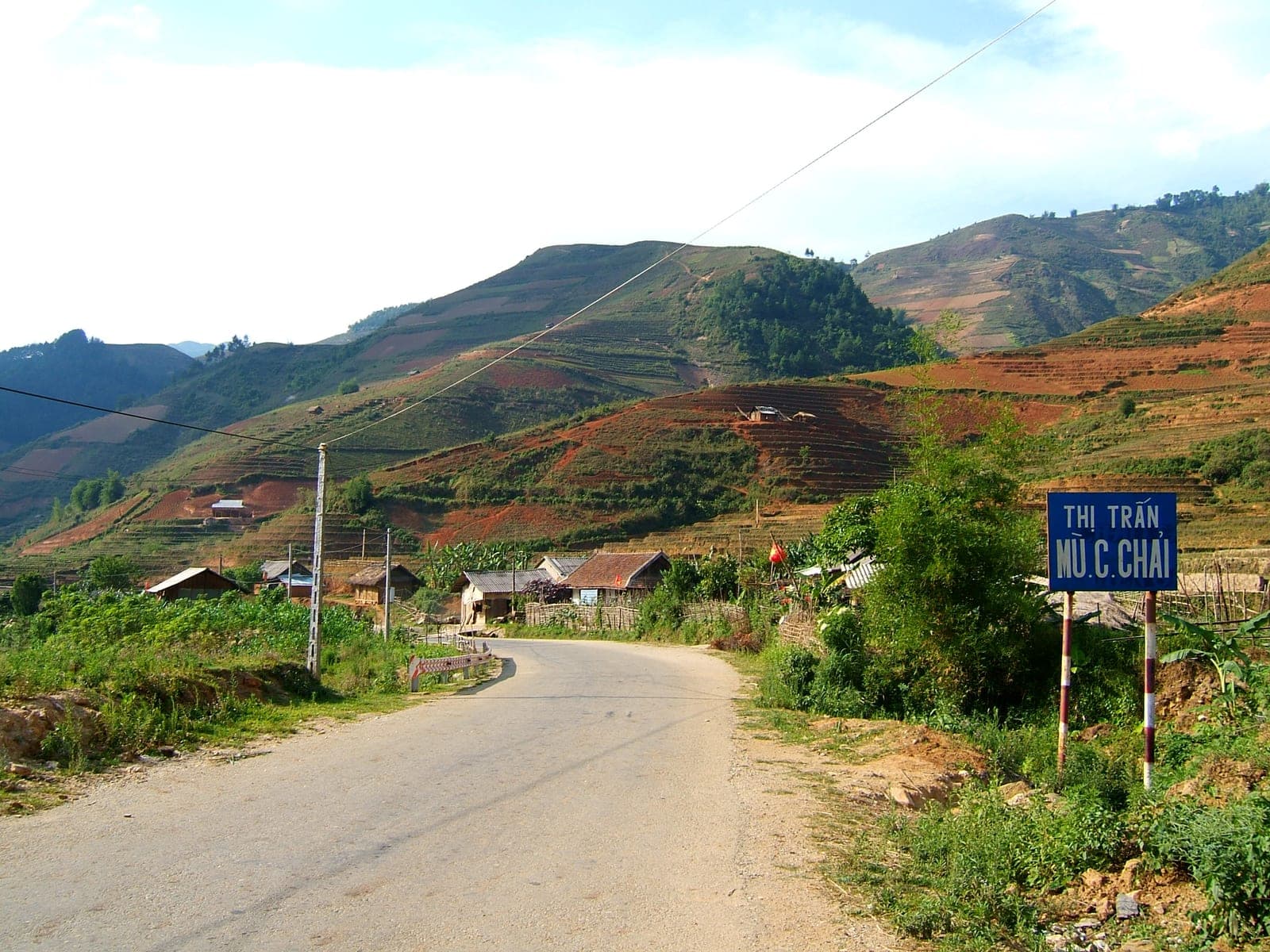
Mù Cang Chải is the rice terrace district in Yên Bái province, about 280 km west-northwest of Hanoi. Three communes — La Pán Tẩn, Chế Cu Nha and Dế Xu Phình — were declared national landscape monuments in 2007 and the entire province in 2019.
What it is
A high mountain district at 800–1,800 m where Hmong farmers have terraced almost every south-facing slope into rice paddies. The terraces are working farmland, not a park; they look spectacular for about three weeks in late September to early October when the rice ripens to gold before harvest.
The headline terraces
| Site | Commune | Best for |
|---|---|---|
| Raspberry Hill (Đồi Mâm Xôi) | La Pán Tẩn | The famous round terraces |
| Móng Ngựa | La Pán Tẩn | Horseshoe shape |
| Khau Phạ Pass viewpoint | Cao Phạ | Wide valley vista |
| Chế Cu Nha terraces | Chế Cu Nha | Steep stair pattern |
| Sáng Nhù | Mồ Dề | Quieter alternative |
Raspberry Hill is so popular that local Hmong families now charge 20,000 VND per person to walk to the photo spot.
Trekking routes
- La Pán Tẩn village loop — 8 km easy, terraces and homestays.
- Chế Cu Nha–La Pán Tẩn traverse — 14 km, proper walking, half day.
- Khau Phạ to La Pán Tẩn — 18 km, full day, ends with the famous viewpoint.
- Tú Lệ–Lìm Mông–Cao Phạ — 2 days, Thái villages, the Lìm Mông "stairway" road.
- Multi-day Tà Xùa connector — for fit trekkers, 3–4 days connecting to Sơn La's cloud-hunting peak.
How to get there
Mù Cang Chải town is on QL32, 280 km from Hanoi or 175 km from Sapa via Lai Châu.
| From | Method | Cost | Time |
|---|---|---|---|
| Hanoi | Sleeper bus (Hung Thanh, Khanh Thuy) | 280,000 VND | 7–8h |
| Hanoi | Private car | 3.5m VND | 6h |
| Hanoi | Motorbike (rent in Hanoi) | from $10/day + fuel | 9h riding |
| Sapa | Bus via Lai Châu | 250,000 VND | 6h |
The Hanoi–Mù Cang Chải sleeper bus leaves around 20:00 from Mỹ Đình bus station, arriving 03:00–04:00 — bring warm layers.
When to go
Late September to mid-October is the only "must visit" window — the golden harvest. Mid-May to early June is the second-best window, when the terraces are flooded for planting and reflect the sky. Outside these times the terraces are green or bare and you might wonder what the fuss is about.
The golden window is busy. Hotels in town and homestays in La Pán Tẩn must be booked 4–6 weeks ahead.
Cost and operators
| Item | Price (VND) |
|---|---|
| Raspberry Hill entry | 20,000 |
| Local Hmong guide (day) | 400,000–500,000 |
| Homestay La Pán Tẩn | 200,000–400,000 incl. dinner |
| Mid-range hotel in town | 600,000–1m |
| Rented scooter | 200,000/day |
| Hanoi 3D motorbike tour | $250–350 pp |
Operators: Vietnam Backstreet Tours, Asia Outback, Mu Cang Chai Tours, and the women-led Co Cua homestay collective. Most foreigners now visit on Hanoi-based motorbike or jeep tours.
Practicalities
- Roads are paved but switchback-heavy; Khau Phạ Pass is one of the country's four "great passes".
- Phone signal is patchy off QL32; Viettel works best.
- Weather changes fast; layer up and pack a rain jacket.
- Drone use is technically permitted but check with local authorities at busy viewpoints.
- ATMs in town only.
Honest take
In the golden window, Mù Cang Chải genuinely is one of Vietnam's most photogenic places. Outside that window, you are paying for terraces that look much like any other paddy. If you can time a trip for late September to early October — and book well ahead — it is a bucket-list four-day round-trip from Hanoi. Combine with Pù Luông (similar terrain, slightly different season) or extend on to Sapa for a 7–10 day northwest loop.
Related: Sapa trekking routes · Pù Luông trekking · Hà Giang trekking and villages · Best time to visit
Why visit Mù Cang Chải
Mù Cang Chải offers the most dramatic working rice-terrace landscape in northern Vietnam — not a heritage theme park, but Hmong farms that genuinely serve as subsistence agriculture. The terraces' geometric stair-step pattern, carved into slopes at 1,000+ m elevation, creates an otherworldly aesthetic that shifts colour with the season: flooded mirror-like blues in May–June, emerald greens by July–August, and the iconic golden harvest in late September–early October. The trekking here is accessible to most fitness levels while the mountain villages remain genuinely off-circuit compared to the Sapa circuit.
When to go
The golden-rice window (late September to mid-October) is the unmissable season — expect crowds, higher prices, and the need to book homestays 4–6 weeks ahead. May–early June offers the quieter flooded-terrace aesthetic with fewer tourists and better bargaining on accommodation. July–September the paddies are green but undramatic. October rains begin mid-month; November–April is dry but the terraces are mostly bare or being prepared. Avoid June–August if you dislike humidity and leeches after rainfall.
How to get there
Sleeper buses from Hanoi's Mỹ Đình station (Hung Thanh or Khanh Thuy) depart ~20:00 and cost 280,000 VND, arriving Mù Cang Chải town 03:00–04:00; the 7–8 hour ride is the budget option. A private car or arranged motorbike tour runs 3.5–4m VND for a group and takes 6 hours via QL32. From Sapa, take a bus via Lai Châu (250,000 VND, 6 hours). See Day trips from Hanoi for operator listings.
What to see and do
- Raspberry Hill (Đồi Mâm Xôi) sunrise hike — scramble to La Pán Tẩn's most-photographed circular terrace; pay 20,000 VND to the local Hmong family and arrive before 06:00 to avoid crowds.
- Chế Cu Nha loop trek — 8–10 km through steeper, less-visited terraces and three small communes; hire a local guide (400,000–500,000 VND/day) to navigate off-trail sections and unlock homestay stories.
- Khau Phạ Pass viewpoint drive — scenic motorbike/car run to one of Vietnam's four legendary mountain passes with a sweeping valley panorama; combine with Cao Phạ commune exploration.
- Homestay immersion in La Pán Tẩn — stay 2–3 nights with a Hmong family, join field work, and eat corn wine and sticky rice with neighbours; Co Cua collective offers women-hosted stays with ethical pricing (250,000–350,000 VND incl. meals).
Where to stay nearby
In Mù Cang Chải town, budget options like Mu Cang Chai Hotel (500,000–700,000 VND) and mid-range choices such as Eden Hotel (800,000–1.2m VND) have reliable hot water and WiFi. Homestays in La Pán Tẩn village (200,000–400,000 VND incl. dinner) are the cultural anchor — book through Co Cua or directly with families. Premium: the newly renovated Terraced Homestay (600,000 VND) offers modern bathrooms while retaining the village immersion.
Practicalities
- Entry fee: 20,000 VND per site (Raspberry Hill, Chế Cu Nha); most other viewpoints are free.
- Opening hours: dawn to dusk; no formal gates.
- Safety: trails are steep with loose stone; wear proper hiking boots and avoid solo walking after heavy rain (flash-flood risk in gullies).
- Fitness: easy routes (La Pán Tẩn loop) are 6–8 km; full-day treks are 14–18 km with 400–600 m elevation gain.
- Foreigner pitfall: do not arrive in the golden window without pre-booked accommodation — all homestays and mid-range hotels fill 4–6 weeks ahead, forcing late arrivals into overpriced mini-hotels 40 km away in Sapa.
Frequently asked questions
When is the best time to see the golden rice terraces in Mù Cang Chải?
How do I get to Mù Cang Chải from Hanoi?
Do I need a guide for trekking around La Pán Tẩn and Chế Cu Nha?
Continue reading
Comments
No comments yet.