Best quiet places in Vietnam — where to escape the tourist crush
Eight Vietnamese destinations where the tourist density drops below the national average — and an honest read on what you give up to find quiet.
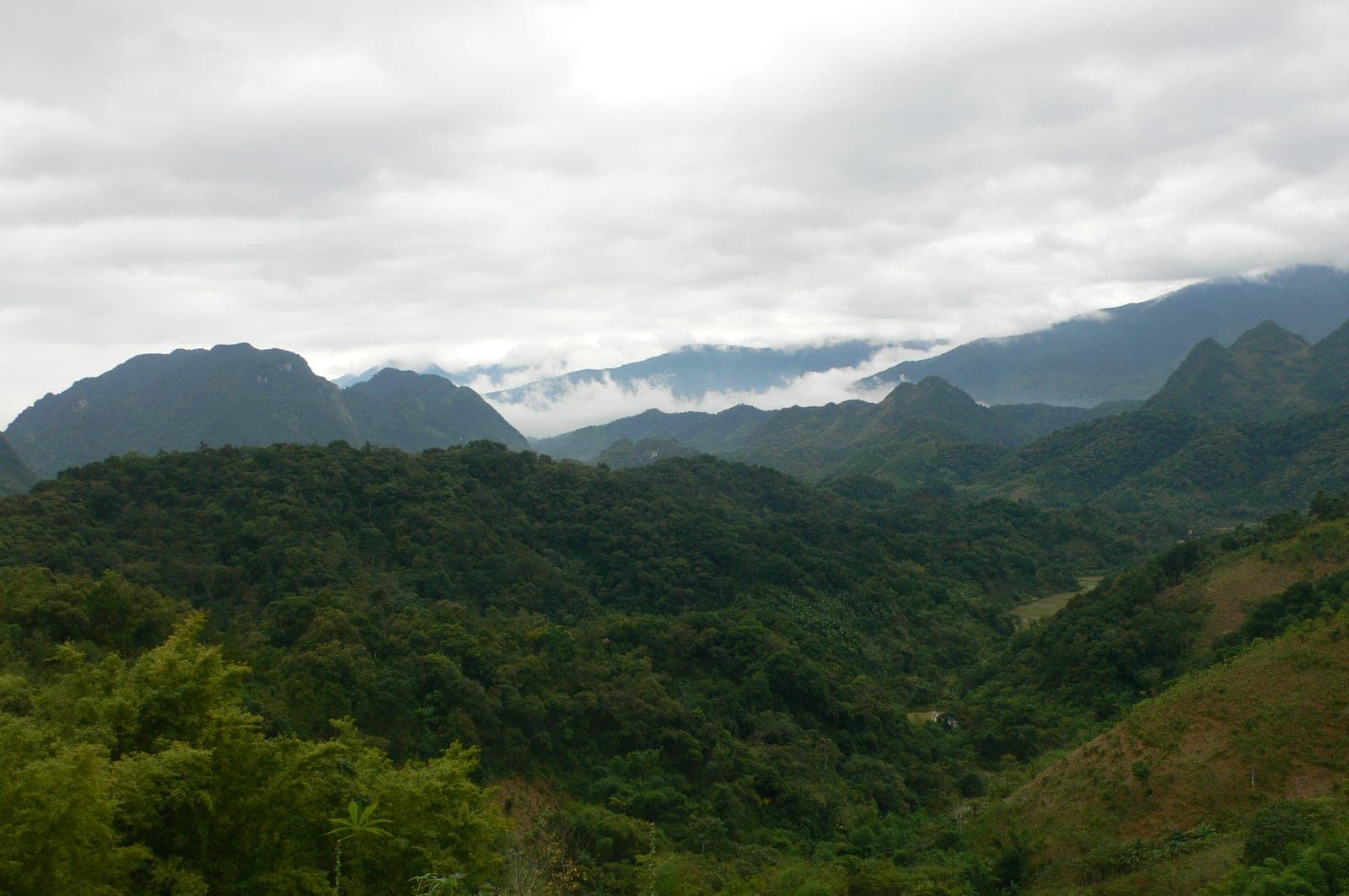
Most of Vietnam's reputation rests on a dozen well-trafficked destinations. The country actually has hundreds of places where the foreign-tourist count drops to near-zero. The trade-off: less English, less curated experience, and less smooth tourist infrastructure.
This is the list of quiet alternatives that still deliver — by region.
In the north
1. Cao Bằng province
The Hà Giang loop's quieter cousin. Bản Giốc waterfall sits on the Chinese border, Ngườm Ngao cave is impressive, and the karst-and-river landscape rivals Hà Giang without the influencer crowd.
- How to reach: bus or car from Hanoi (6–7 hours)
- Where to stay: homestays in Quảng Uyên district
- Trade-off: limited English; long road in
2. Bắc Hà market town
The "anti-Sapa" — Sunday markets with H'mông minority groups, no resort-tourism strip, fewer tour buses. A genuine working market, not a curated tourist showpiece.
- How to reach: bus from Lào Cai
- When: Sunday for the main market
- Trade-off: small town; you stay for the day, not the week
3. Mai Châu valley
Whitewashed Thai-minority villages, rice paddies, bicycle-friendly flat valley. Easier access than Sapa or Hà Giang.
- How to reach: 3 hours from Hanoi by car
- Trade-off: small valley; 2 nights is enough
In central Vietnam
4. Phong Nha town
The town itself, not just the caves nearby. A backpacker-popular stop has matured into a low-key base for several days of cave-trips, river kayaking, and farmstays.
- How to reach: train from Đà NẵngĐà Nẵng (Da Nang)dah nangMajor coastal city in central Vietnam, known for its beaches, the Marble Mountains, and modern infrastructure. or Hanoi to Đồng Hới
- Trade-off: rainy-season May–September is wet
5. Quy Nhơn
The "central beach you don't have to share". Vietnamese domestic tourists know about it; foreign tourism is a fraction of Nha Trang or Đà Nẵng. Real beach without the crowds.
- How to reach: domestic flight (UIH) or train
- Trade-off: less English; less "destination food" scene
In the south
6. Côn Đảo
Pristine, expensive to reach, sea turtles. The original quiet beach island. The cost of the flight keeps the volume down.
- How to reach: domestic flight from HCMC
- Trade-off: pricey; limited budget options
7. Nam Du archipelago
A cluster of 21 islands off the former Kiên Giang province (part of An Giang since the 1 July 2025 merger), accessible from Rạch Giá. Backpacker-known but pre-mass-tourism — bungalow accommodation, basic restaurants, snorkelling.
- How to reach: ferry from Rạch Giá (~3 hours)
- Trade-off: limited infrastructure; weather-dependent
8. Châu Đốc
The Cambodian-border Mekong town. Floating Cham villages, Bà Chúa Xứ temple, a fish-farm river-life that's vanished from much of the delta.
- How to reach: bus from HCMC (~5 hours) or boat from Phnom Penh
- Trade-off: hot all year; less curated
What "quiet" actually means in Vietnam
Vietnam's busiest tourist destinations (Hội An old town at sunset, Hạ Long Bay Tuần Châu pier, central Sapa town) have hundreds of foreign visitors per hour in peak season. The "quiet" alternatives have dozens per day, with significant variation by month.
The honest trade-offs:
- English signage drops to near-zero — Google Translate becomes essential.
- Tourist infrastructure thins out — fewer hotels, longer waits at airports, less choice in restaurants.
- Booking is more spontaneous — Booking.com listings are sparse; messaging guesthouses via Zalo or Facebook becomes routine.
- Transport timetables are looser — buses run when full, not on schedule.
For travellers who want the rewards (no influencer cheek, real-life Vietnam), the trade-offs are usually worth it.
What about quiet in the major destinations?
Even Hội An has quiet moments — early morning before 8am, late afternoon before lantern-lighting. Even Hạ Long Bay has Lan Hạ side, which is meaningfully quieter than the Tuần Châu side.
Strategies for quiet within the famous places:
- Visit at dawn: every major site is empty for two hours after sunrise
- Visit in shoulder season: October–November (central excluded for typhoons), May–June (north heat-tolerant only)
- Visit on weekdays: Vietnamese domestic tourism is heavily Friday–Sunday
- Choose adjacent districts: Cát Bà beats main-line Hạ Long; Tam Cốc beats Tràng An
The "quiet trade-off" matrix
| You give up | You gain |
|---|---|
| English speakers | Vietnamese homestay hospitality |
| Smooth transport | Time to talk to locals |
| Booking ease | Negotiated prices |
| Curated experiences | Unexpected encounters |
| Modern hotel comforts | Genuine local-life proximity |
| Restaurant choice | Family-cooked meals |
Quiet places aren't "better" — they're different. The right pick depends on what you brought to the trip.
Frequently asked questions
What is the quietest place to visit in Vietnam?
What do you give up by choosing a quiet destination over a popular one?
Can you find quiet moments in busy places like Hội An or Hạ Long Bay?
Related
Continue reading
Comments
No comments yet.