Off the Beaten Path Vietnam: 14 Days
Two weeks skipping the standard route. Cao Bang, Ha Giang, Phong Nha, Pu Luong, Con Dao, Ca Mau. Less Hoi An, more Vietnam.
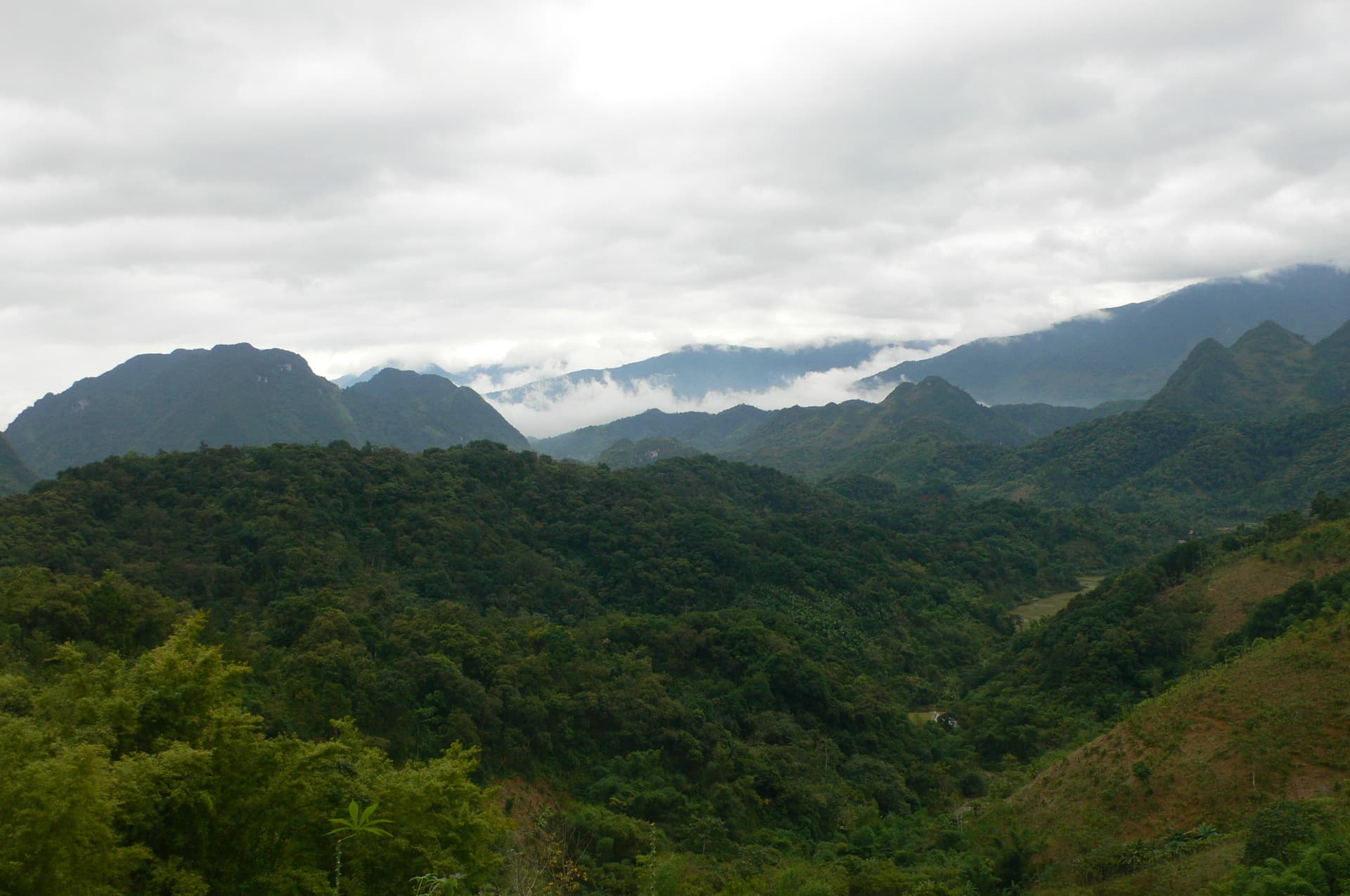
The standard Vietnam route exists for good reasons (it works), but it also means Ha Long Bay's main archipelago is crowded, Sapa's main town is a building site, and Hoi An's old town gets overwhelmed nightly. This itinerary keeps the same logical north-south flow but substitutes less-developed places at each stage. It assumes you have travelled before and are not visiting Vietnam for the postcard image.
The shape of the trip
Hanoi 1 (transit), Cao Bang 3, Ha Giang loop 4, Pu Luong 2, Phong Nha 2, HCMC 1 (transit), Ca Mau 1, Con Dao 2. Skips: Ha Long, Sapa, Hue, Hoi An, the standard Mekong route.
Day-by-day
| Day | Base | Activity |
|---|---|---|
| 1 | Hanoi | Arrive, sleeper bus to Cao Bang evening |
| 2 | Cao Bang | Ban Gioc waterfall, Nguom Ngao cave |
| 3 | Cao Bang | Pac Bo cave (Ho Chi Minh historical site), Tham Khoang |
| 4 | Cao Bang/Ha Giang | Cross-mountain transfer to Bao Lac, then Meo Vac |
| 5-7 | Ha Giang loop | Ma Pi Leng, Dong Van, Yen Minh |
| 8 | Ha Giang town | Loop complete, sleeper to Hanoi |
| 9 | Pu Luong | Drive 5 hours from Hanoi to Pu Luong nature reserve |
| 10 | Pu Luong | Trek to ethnic minority villages, bamboo rafting |
| 11 | Phong Nha | Drive to Tho Ha (or fly Hanoi-Dong Hoi) |
| 12 | Phong Nha | Hang Va or Tu Lan cave day, Bong Lai valley |
| 13 | HCMC | Fly to HCMC for connection |
| 14 | Ca Mau | Fly to Ca Mau, U Minh forest, southernmost point |
| 15 | Con Dao | Fly via HCMC, Con Dao beaches and prison |
| 16 | Con Dao | Diving or hiking, fly out via HCMC |
What is special about each stop
Cao Bang and Ban Gioc waterfall: Vietnam's largest waterfall, on the Chinese border. The whole north-east is dramatic karst with rice terraces, ethnic Tay and Nung minorities, and very few foreign visitors. Drive there yourself (private car) or take the limousine van.
Pu Luong nature reserve: less famous than Sapa but with the same kind of rice-terrace and ethnic minority valleys. Pu Luong Retreat and Pu Luong Eco Garden have raised the accommodation standard. Real trekking, almost no other foreigners.
Phong Nha cave system: the smaller caves (Hang Va, Tu Lan, Hang Tien) get a fraction of the Hang En traffic and are equally extraordinary. Bong Lai valley is a string of family-run cafes and swim spots run by farmers.
Ca Mau: the southernmost province, mostly mangrove and shrimp farms. U Minh Ha forest, the Cape Ca Mau marker, and very local Vietnamese tourism. You will see no other westerners.
Con Dao: former French and South Vietnamese prison islands now an ecotourism destination with empty beaches, sea turtles, dugong, and harrowing historical sites (the tiger cages).
How to get between segments
- Hanoi to Cao Bang: sleeper bus (7 hours).
- Cao Bang to Ha Giang (Meo Vac): private car 6 hours through Bao Lac. There is no public bus on this route; it is the most scenic stretch.
- Ha Giang to Hanoi: sleeper bus.
- Hanoi to Pu Luong: private car 5 hours (no good public option).
- Pu Luong to Phong Nha: long drive or back to Hanoi then fly to Dong Hoi.
- Phong Nha to HCMC: Dong Hoi flight to HCMC, 90 minutes.
- HCMC to Ca Mau: 50-minute flight or 6-hour bus.
- HCMC to Con Dao: 45-minute flight.
Estimated cost
Per person, mid-range:
| Item | USD |
|---|---|
| Accommodation 15 nights | 600-1,100 |
| Private cars (Cao Bang, Pu Luong) | 350-550 |
| Sleeper buses | 80-150 |
| Internal flights (4-5) | 280-480 |
| Ha Giang loop costs | 250-450 |
| Phong Nha cave tour | 150-300 |
| Food and drink | 250-380 |
| Activities, entries | 150-280 |
| Total (excluding international flights) | 2,110-3,690 |
When to do this trip
October-November is the strongest window. Cao Bang and Pu Luong rice terraces are golden, Ha Giang is at peak, Phong Nha caves are open (they close September-mid-November for flood season at the high end, so check), Con Dao seas are calming. March-April is also good.
What it skips
- Everything famous. Ha Long, Sapa, Hue, Hoi An, HCMC sights, Phu Quoc.
- Easy logistics. Several legs require private transfers; you cannot wing this trip.
- English everywhere. Off the standard route, English drops sharply. Have Google Translate offline ready.
- Predictable food. You will eat what is being served, not from a varied menu.
Practical notes
This is harder travel than the standard route. Private cars are needed for the awkward links (Cao Bang-Ha Giang, Hanoi-Pu Luong) and they are not cheap. Some areas have no ATMs; carry enough cash in small denominations. Mobile coverage drops in Cao Bang and parts of Phong Nha; download offline maps.
If you can extend by 3 days, add Mu Cang Chai (between Ha Giang and Pu Luong) and Ban Don in the central highlands.
Related: Ha Giang, Con Dao, Phong Nha town, adventure itinerary, photography itinerary.
What this itinerary is good for / not good for
Good for:
- Experienced independent travellers who speak some Vietnamese, read offline maps, and don't mind being the only foreigners in a village
- Photographers and nature lovers seeking dramatic karst, rice terraces, cave systems, and pristine beaches without Instagram crowds
- Adventurous eaters and culture-hunters willing to eat what's local and sleep in modest homestays or eco-lodges
Not good for:
- First-time Vietnam visitors or anyone uncomfortable with poor English, rough roads, or lack of tourist infrastructure
- Solo female travellers on a tight budget (private car costs dominate; shared tours are rare)
- Families with young children or travellers wanting luxury hotels and English-speaking guides at every stop
Realistic pace
Standard. This itinerary spans 16 days with 6 internal travel days (sleeper buses to Cao Bang and Hanoi, flights to Dong Hoi and Ca Mau, one long private drive). The longest single leg is Cao Bang to Meo Vac (6 hours by car on a mountain road). Most days average 4–6 hours of activity (trekking, caving, exploring); rest days in Con Dao are genuine downtime.
Bad-weather backup plan
October–November trips hit occasional rain but stay on schedule. If monsoon rains flood Phong Nha caves (September–mid-November), skip the cave day and do Bong Lai valley walks or return to Hanoi early for a flight to Ca Mau. Winter (December–February) rarely disrupts; Tet (late January) may spike accommodation prices but doesn't close sites. Con Dao seas can swell in June–August, reducing boat availability; substitute island hiking or extend in Ca Mau's U Minh forest. If Ca Mau flights cancel (rare), fly to Can Tho, bus south 3 hours.
Solo, family, motorbike-fatigue verdicts
- Solo-friendly: With caveats — English is scarce and private cars are pricey; join a guided Ha Giang loop group to share costs and language barriers.
- Family-friendly: With age caveats — OK for ages 12+ who hike and camp in basic lodges; young children struggle with long drives, cave humidity, and limited activity options.
- Motorbike fatigue risk: High on the Cao Bang–Meo Vac leg (6 hours on switchbacks); medium on Pu Luong treks; low elsewhere.
Frequently asked questions
When is the best time to do this off-the-beaten-path itinerary?
Is this itinerary suitable for first-time visitors to Vietnam?
How much does this itinerary typically cost?
Continue reading
Comments
No comments yet.