Mekong Delta street food: floating market, home kitchens
A tour of the Mekong Delta plate — hủ tiếu Sa Đéc, bún mắm, bánh xèo Châu Đốc, bánh cống, and the Cái Răng floating market that feeds them.
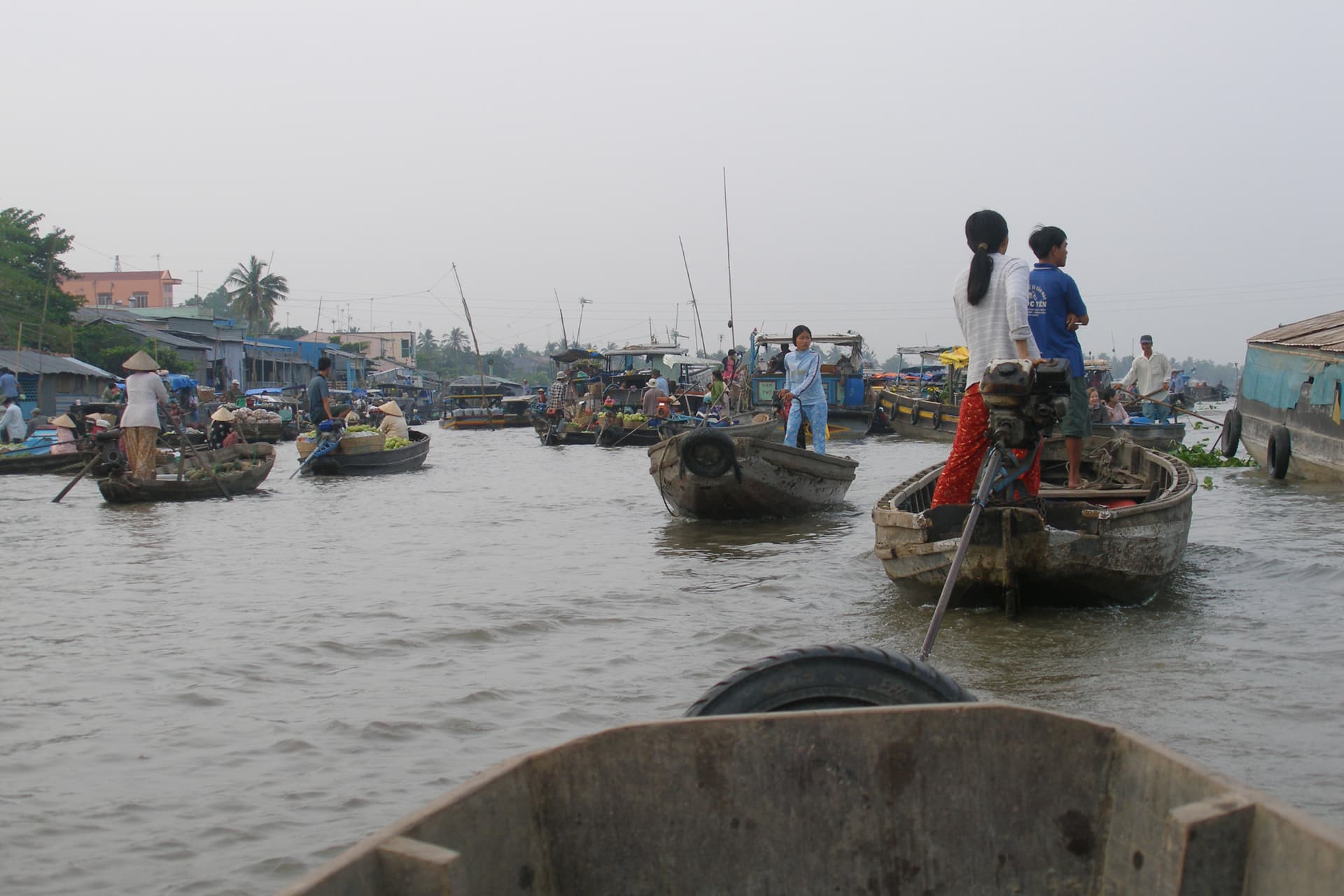
The Mekong Delta eats differently to the rest of Vietnam. Rivers and canals stand in for roads in much of the region, so a large share of the produce, fish and even cooked food that reaches a plate has typically travelled by boat at some point. The result is a cuisine built on river fish, coconut, fresh herbs and a fermented-fish backbone that is distinct from what most visitors have already tried in phởPhở (Pho)fuhVietnam's national noodle soup: a clear beef or chicken broth served with flat rice noodles, fresh herbs, and lime.-and-bánh mìBánh Mì (Banh Mi)ban meeVietnamese baguette sandwich filled with meats, pâté, pickled vegetables, fresh coriander, and chilli — a fusion legacy of French colonialism. Vietnam. This guide covers the dishes worth seeking out, the floating market that still supplies part of the delta's food trade, and how homestay cooking fits into a delta itinerary.
Hủ tiếu Sa Đéc: the delta's own noodle soup
Most visitors meet hủ tiếu in Saigon as hủ tiếu Nam Vang, the Phnom Penh-style bowl with the full house of toppings. Sa Đéc, a Đồng Tháp river town, has its own quieter version. The noodles here are typically made locally and are a little softer than the Saigon style, and the broth leans sweeter, built on pork bone with dried shrimp for depth. Toppings tend to be simpler — pork, a few prawns, scallion — which lets the noodle itself do more of the work. Sa Đéc is also worth visiting for its centuries-old noodle-making workshops, where rice sheets are still steamed and dried in the open air on sunny mornings; several will let visitors watch the process before breakfast.
Bún mắm: the fermented-fish signature
If one dish defines the delta's flavour profile, it is bún mắm. The broth starts from mắm cá linh or mắm cá sặc — fermented river fish — simmered until the solids dissolve, then strained and rounded out with lemongrass and rock sugar. The bowl arrives dark and opaque, loaded with pork belly, prawns, squid and stewed aubergine, alongside a large plate of herbs: banana flower, water spinach, mint and perilla. Châu Đốc, in An Giang near the Cambodian border, is generally considered the dish's heartland, and morning markets there typically have a bún mắm pot going before 7 a.m. Cần Thơ and Trà Vinh both run their own variants, usually darker and more concentrated than the Châu Đốc original. For a fuller breakdown of the dish, see the dedicated bún mắm guide.
Bánh xèo Châu Đốc: a delta-sized pancake
Bánh xèo — the turmeric-yellow rice-flour crepe filled with pork, shrimp and bean sprouts — is cooked all over Vietnam, but the Châu Đốc version tends to run larger than the central Vietnamese style found around Huế and Đà Nẵng, closer to a full skillet than a folded snack. It is eaten the same way everywhere: torn apart with chopsticks, wrapped in mustard leaf or lettuce with a handful of herbs, and dipped in nước chấm. In the delta, cooks sometimes swap plain pork for local touches — shredded duck, wild mushrooms or extra coconut milk in the batter — depending on the season and what the market had that morning. Confirm with the vendor what filling is on offer before ordering, since it can change day to day.
Bánh cống: the delta's mung bean fritter
Less internationally known than bánh xèo, bánh cống is a Sóc Trăng and Cần Thơ specialty — a small, deep-fried cake of mung bean, rice flour and shrimp, topped with a whole prawn and fried until the edges crisp. It is served the same way as most delta fried snacks: wrapped in lettuce and herbs, dipped in a sweet-sour nước chấm with pickled carrot and daikon. Bánh cống stalls are typically found around Ninh Kiều in Cần Thơ in the late afternoon and evening, and it pairs naturally with a walk along the riverfront after a day on the water.
Cái Răng floating market
Cái Răng, roughly 6 km from central Cần Thơ, is the largest and best-known floating market in the delta and a common reason travellers build a Mekong stop into their itinerary at all. Wholesale boats trade produce — pineapple, watermelon, cabbage, dragon fruit — with each boat hanging a sample of its goods from a tall pole (a "bẹo" pole) so buyers can identify the cargo from a distance without shouting over the water. Trading starts early, typically from around 5 a.m., and by mid-morning much of the wholesale activity has wound down, so an early departure from a Cần Thơ hotel or homestay dock is generally worth the effort. Smaller boats sell coffee, noodle soup and fruit directly to tourist boats, which is often the easiest way to try a bowl of noodles cooked on the water. Trading activity has reportedly thinned over the past decade as more produce moves by road, so it is worth setting expectations accordingly rather than expecting the market of decades-old photographs.
Homestay cooking and home kitchens
Away from the market stalls, a meaningful share of delta food culture happens in home kitchens, and homestay stays across Cần Thơ, Bến Tre and Vĩnh Long provinces are typically built around a shared, home-cooked dinner rather than a restaurant menu. A common format is a multi-course meal centred on a single freshwater fish — elephant-ear fish (cá tai tượng) fried whole and wrapped in rice paper with herbs, or steamed fish in a clay pot — alongside a soup, a stir-fried vegetable and rice. Many homestays also offer a short cooking class in the afternoon, walking guests through a market visit followed by preparing two or three dishes together. This is generally a more reliable way to see how delta households actually cook day to day than watching a restaurant kitchen, since ingredients and techniques track the home rather than a menu built for turnover.
Getting to the delta and getting around
Cần Thơ is the natural base for a delta food trip and is reachable from Ho Chi Minh City by bus in around three to four hours, or by a short domestic flight from HCMC's airport. From Cần Thơ, day trips to Sa Đéc, Châu Đốc or Sóc Trăng typically run two to four hours each way by road, so most visitors pick one or two towns per trip rather than attempting the full circuit. Renting a motorbike is an option for exploring smaller towns independently — see the motorbike rental guide for what to check before signing a rental agreement — though many travellers find hiring a local boat driver or car with driver more practical for the market visit itself, since parking near the Cái Răng dock is limited. For general orientation to the region's largest city, the Cần Thơ guide covers where to stay and how to structure a base there.
Food safety on the water and at the market
Ice, fish sauce dishes shared at the table, and produce rinsed in canal water are all worth a moment's thought in the delta specifically, since some rural stalls have less consistent access to treated water than city restaurants. In most cases food cooked to order and served hot is a safer bet than anything sitting out at ambient temperature on a boat for an extended period. Bottled water is widely available in Cần Thơ and other delta towns, and travellers with a sensitive stomach may want to pack basic rehydration salts. For broader guidance on eating safely while travelling in Vietnam, see the water and food safety guide.
Frequently asked questions
What is the best base town for a Mekong Delta food trip?
What time should I visit the Cái Răng floating market?
Is bún mắm very different from other Vietnamese noodle soups?
Are homestay meals safe to eat?
How is bánh xèo in the delta different from the central Vietnamese version?
Do I need a car to visit multiple delta food towns?
Related
Continue reading
Comments
No comments yet.